For many families caring for elderly parents from a distance, the current state of senior technology offers a fragile sense of security. A smart sensor or an AI companion might detect a fall or an irregular sleep pattern and send an urgent notification to a smartphone miles away, but that alert is only the beginning of a new crisis. The gap between a digital notification and a physical human presence is where the most critical failures in elderly care occur. The industry has mastered the art of detection, yet it has largely failed to automate the response. This week, a new partnership in South Korea attempts to close that gap by treating digital monitoring and physical care not as separate services, but as a single, synchronized pipeline.
The Framework of the Wonderful Platform and Todak Care Partnership
On the 15th, Wonderful Platform, a specialist in AI senior care, and Todak Care, a subsidiary of the digital healthcare firm Aimmed, signed a Memorandum of Understanding (MOU) to establish a joint business model for integrated senior care and caregiving services. While the formal announcement followed on the 17th, the agreement marks a strategic convergence between software-driven monitoring and hardware-driven human intervention. The partnership is led by Wonderful Platform CEO Koo Seung-yeop and Todak Care CEO Kim Young-seok, focusing on a model that merges AI-driven data collection with the operational capacity to deploy professional caregivers in real-time.
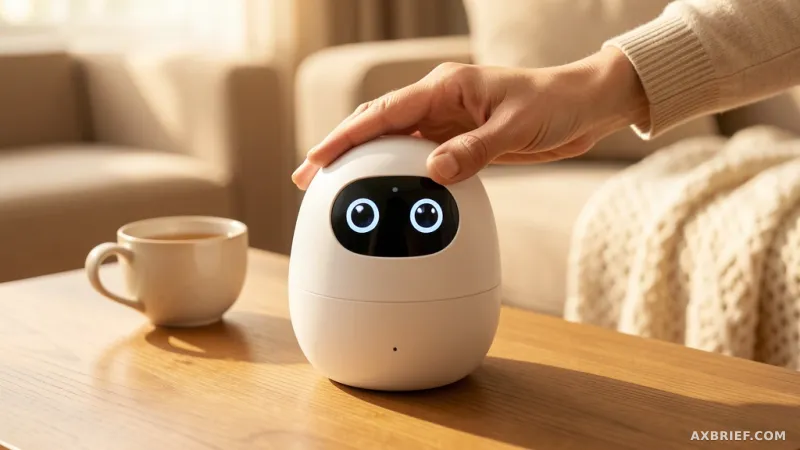
The scope of this collaboration rests on three primary pillars: the advancement of healthcare and senior care services, the discovery of new business models, and the pursuit of joint market opportunities. At the center of this ecosystem is Dasom, Wonderful Platform's AI senior care robot. Dasom is designed to provide emotional support and monitor the health and safety of seniors. However, under this new agreement, Dasom's role expands from a companion to a trigger for professional medical intervention. When Dasom identifies a risk or an anomaly, the system does not simply alert a family member; it initiates a workflow that leverages Todak Care's caregiver matching and management infrastructure.
To accelerate adoption, the two companies are implementing a mutual benefit system. Customers using the Dasom AI service receive preferential access or benefits when utilizing Todak Care's caregiving services, and vice versa. This cross-promotion is designed to lower the financial and administrative barriers for families who previously had to manage multiple vendors for monitoring and physical care. Furthermore, because Todak Care is a subsidiary of Aimmed, the partnership integrates medical-grade data into the care loop. By linking health examination data and chronic disease management from Aimmed, the system can create a more personalized care profile for each senior, ensuring that the AI's detection thresholds are tuned to the specific medical needs of the individual.
Shifting from Digital Monitoring to Physical Response
To understand the significance of this integration, one must contrast it with the prevailing model of AI care. Most existing solutions operate on a notification-based logic: the AI detects a problem, sends a message, and then waits for a human guardian to decide on the next step. This creates a dangerous dependency on the guardian's availability and judgment. If a guardian is at work or asleep, the digital signal remains a signal, never becoming an action. This is the fundamental limitation of monitoring services; they optimize for information, not for intervention.
The Wonderful Platform and Todak Care model transforms this signal into a service. In this new workflow, the AI robot acts as a real-time sensor that pushes data directly into a logistics engine. When Dasom detects an anomaly, the signal is routed to Todak Care, which manages the matching and deployment of a verified caregiver. This effectively converts a digital alert into a physical arrival. The tension between knowing there is a problem and solving that problem is resolved by automating the bridge between the two.
This pipeline is further strengthened by the inclusion of Aimmed's healthcare infrastructure, which adds a layer of preventive intelligence. The total value chain now looks like this: Aimmed provides the preventive data through health screenings, Dasom provides real-time detection through AI monitoring, and Todak Care provides the post-detection care through human intervention. This creates a closed-loop system where data flows seamlessly from prevention to detection to action. By utilizing health examination data, the AI can distinguish between a normal fluctuation in a senior's behavior and a genuine medical emergency, reducing false positives and increasing the reliability of the caregiver deployment.
This structural shift suggests that the future of senior tech is not in the robot itself, but in the orchestration of the services the robot triggers. The robot is no longer the product; it is the interface for a comprehensive care delivery system. By integrating the matching system of Todak Care, the partnership solves the most persistent problem in the industry: the timely arrival of qualified personnel. The result is a higher density of care for the senior and a significantly lower cognitive and emotional load for the family protector.
Economic Implications and the Integrated Care Ecosystem
Beyond the technical workflow, this partnership addresses the escalating economic pressures facing family caregivers. The cost of professional caregiving is rising sharply, and the time spent searching for reliable, vetted caregivers often adds a layer of stress to an already burdened family. By bundling AI monitoring with a streamlined matching service, the partnership offers a more cost-effective path to comprehensive care. Families no longer need to pay for separate, disconnected services that do not communicate with one another; instead, they enter an ecosystem where the monitoring tool actively manages the care resources.
This integration also opens new B2B and B2B2C channels. Todak Care's existing networks with corporations and insurance companies provide a ready-made pipeline for Dasom's AI solutions to reach a wider audience. Conversely, seniors who are introduced to digital care through Dasom are more likely to transition into Todak Care's professional services as their needs increase. This creates a virtuous cycle of user acquisition and retention, lowering the cost of customer acquisition for both firms while increasing the lifetime value of the user.
From a market perspective, this represents a move toward a standardized Korean model of integrated senior care. By breaking down the silos between digital health, AI robotics, and human labor, Wonderful Platform and Todak Care are prototyping a system where data is not just collected, but is actively used to trigger physical labor. This is a critical evolution in the healthcare landscape, as it moves the industry away from passive observation and toward active, data-driven management.
As the partnership moves from the MOU stage to full operational deployment, the focus will shift to the precision of the hand-off between the AI and the human caregiver. The success of this model depends on the speed and accuracy with which a digital anomaly is translated into a physical visit. If the integration is seamless, it will redefine the role of AI in the home, moving it from a luxury companion to an essential component of the medical infrastructure.
This convergence of AI detection and human action marks the end of the era of simple monitoring and the beginning of the era of integrated response.