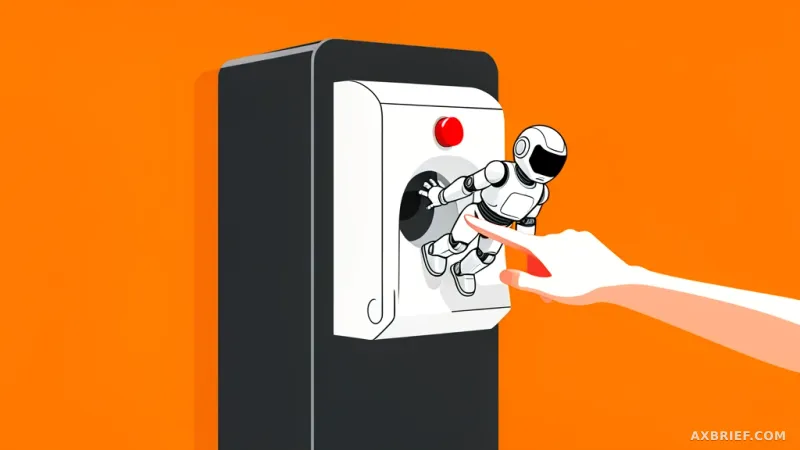

The email arrived in the inboxes of thousands of Intuit employees on a quiet afternoon, carrying a message from CEO Sasan Goodarzi that signaled a brutal new reality. The memo was clinical and decisive: the company would be reducing its global workforce by 17% to simplify its corporate structure and concentrate its resources on artificial intelligence. For those inside the company, it was a shock; for the broader tech industry, it was a loud confirmation that the era of the traditional Software as a Service (SaaS) model is facing an existential crisis.
The Paradox of Record Profits and Mass Layoffs
Intuit, the financial software giant behind TurboTax, QuickBooks, and Credit Karma, has officially cut approximately 3,000 positions. As of July 2025, this represents a significant portion of its 18,200-person global headcount. According to the internal communication from Sasan Goodarzi, the move is designed to strip away organizational complexity and accelerate the integration of AI across the company's core product suite. The goal is not merely to add AI features to existing tools but to fundamentally reallocate human and financial capital toward an AI-first operational model.
What makes this restructuring particularly jarring is that Intuit is not acting out of financial desperation. On the contrary, the company's balance sheet is thriving. In the second quarter of the fiscal year ending in January, Intuit reported revenue of 4.65 billion dollars, a 17% increase over the previous year. Even more striking is the bottom line: net income surged to 693 million dollars, representing a massive 48% year-over-year growth. The company expects third-quarter revenue to continue this upward trajectory with an estimated 10% increase.
Amidst this wave of terminations, the compensation for leadership remains untouched and substantial. Sasan Goodarzi's total compensation for the 2025 fiscal year reached 36.8 million dollars, including cash incentives and stock awards. When questioned about whether executives or board members would take pay cuts to offset the layoffs, Intuit offered no immediate response. This creates a stark internal contradiction: a company celebrating record-breaking profits and executive wealth while simultaneously purging nearly a fifth of its workforce.
The S&P 500 Warning and the AI Rebalancing
If the financial statements are so healthy, why the sudden aggression? The answer lies not in the income statement, but in the stock ticker. Over the last 12 months, Intuit's share price has consistently underperformed the S&P 500. For investors, the 48% jump in net income is a lagging indicator of past success, whereas the stock price is a leading indicator of future viability. The market is sending a clear signal: it no longer values the traditional SaaS growth engine. Investors are skeptical that the current revenue model can survive the transition to an AI-driven economy.
Intuit is not alone in this strategic panic. A broader trend of AI rebalancing is sweeping through the tech sector. Giants like Amazon, Meta, Microsoft, and Oracle have all slashed thousands of jobs, not because they are failing, but because they are pivoting. According to data from Statista, job losses in the tech industry have already surpassed 100,000 this year, with projections suggesting that 2024 and 2025 will see even more aggressive cuts. These companies are dismantling legacy team structures to fund the astronomical costs of AI infrastructure and the hiring of specialized AI talent.
This shift represents a fundamental change in how software is built and sold. For decades, the SaaS model relied on a specific user experience: a dashboard, a series of menus, and a user who manually navigated through features to achieve a goal. However, AI-native services are rendering this interface obsolete. In an AI-native world, the user does not click through a menu; they state an intent, and the AI generates the result. When the interface disappears, the complex feature sets that traditional SaaS companies spent years building become liabilities rather than assets. They are legacy weights that slow down the pivot to a more intuitive, agentic experience.
Intuit's decision to cut 3,000 people is a forced evolution. The company realizes that if it remains a traditional SaaS provider with AI bolted on as a chatbot, it will be cannibalized by AI-native startups that are leaner, faster, and devoid of legacy baggage. By stripping 17% of its workforce, Intuit is attempting to burn away the old version of itself to make room for a version where TurboTax and QuickBooks are not just tools, but autonomous financial agents.
The industry has reached a tipping point where financial health is no longer a shield against restructuring. The binary choice for the modern software enterprise is now clear: undergo a painful, forced evolution into an AI-native entity or risk becoming a legacy relic in a world of autonomous agents.