A nurse in a crowded hospital ward needs to verify a patient's medication history. To do so, she reaches into her pocket and pulls out her personal smartphone. In that single motion, a critical security vulnerability is created, and a friction-filled workflow begins. This specific moment of tension—the gap between professional necessity and the limitations of general-purpose consumer hardware—is exactly what Microsoft intends to eliminate. The company is moving away from the idea that every professional interaction must happen through a screen and a series of app taps, proposing instead a world where the interface disappears entirely in favor of autonomous AI agents.
The Architecture of Project Solara and the MDEP Shift
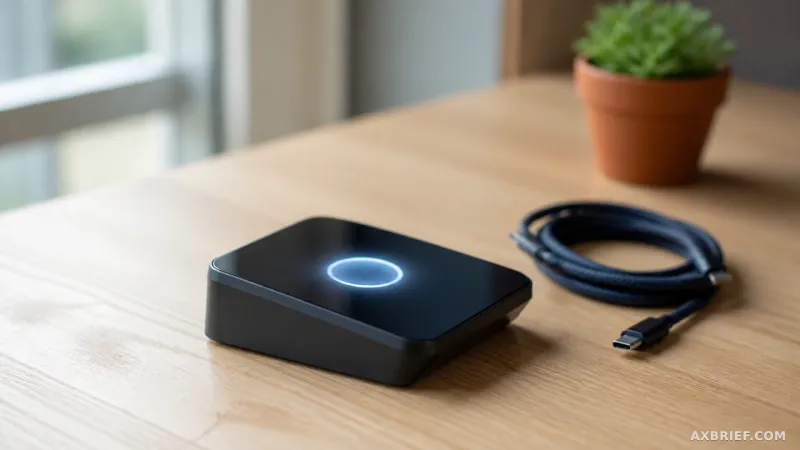
Microsoft has officially unveiled Project Solara, a device platform designed to execute AI agents rather than traditional applications. In a surprising strategic pivot, Microsoft has bypassed its own Windows ecosystem for this venture, opting instead for the Microsoft Device Ecosystem Platform (MDEP). MDEP is a specialized, enterprise-grade version of Android originally developed for Teams Rooms hardware. By leveraging an Android foundation, Microsoft can target low-power, small-form-factor devices that would be too resource-heavy for a full Windows installation.
The vision for Project Solara extends far beyond the smartphone. The Microsoft Applied Sciences lab is exploring a variety of hardware footprints, including smart glasses, rings, earbuds, and specialized scanners. These devices are intended for environments where traditional PCs or phones are impractical or prohibited. Every device within the Solara ecosystem is powered by Azure, utilizing a sophisticated orchestration layer that allows multiple AI agents to run and be controlled simultaneously. This allows for the deployment of purpose-built, low-power AI hardware optimized for specific sectors like healthcare and retail.
To bring this hardware to market, Microsoft is not selling devices directly. Instead, it is providing reference designs to hardware manufacturers, allowing partners to implement the technology into industry-specific products. Qualcomm and MediaTek have joined as the initial chip partners to ensure the silicon is optimized for these agentic workloads. The ecosystem also integrates with existing enterprise management tools, including Microsoft Defender, Intune, and Entra ID, ensuring that IT departments maintain the same level of security and governance they expect from the Microsoft stack. Furthermore, the platform enables remote monitoring via Cloud Code, allowing users to track work states on a Mac Mini server or mobile phone while the primary compute happens in the cloud.
The Efficiency War and the Rise of Autonomous Workflows
While Project Solara provides the physical vessel, the intelligence driving it is caught in a brutal war of efficiency and autonomy. The industry is shifting from a focus on raw model size to a focus on operational cost and the reduction of human intervention. This is evident in the release of Claude Opus 4.8, which demonstrates a significant leap in efficiency. The model utilizes 15% fewer steps and reduces token consumption by 35% compared to its predecessors. In the SWEBench Pro software engineering benchmark, Opus 4.8 achieved a score of 69.2%, outperforming Opus 4.7 at 64.3%, GPT 5.5 at 58.6%, and Gemini 3.1 Pro at 54.2%. It also reached 1,890 ELO on the GDP vala benchmark.
The real breakthrough, however, is the introduction of Dynamic Workflow mode. When Opus 4.8 determines a task is too complex for a single pass, it autonomously generates sub-agents to handle specific components of the problem. This architectural shift is reflected in the Graph walks benchmark (1 million token version), where the model scored 68.1%, nearly doubling the 40.3% score of version 4.7. To manage this compute, the model introduces a fast mode that is 2.5 times faster and 3 times cheaper, allowing users to control the depth of reasoning via the `/effort` command with levels including Low, High, XI, and Max.
This drive toward efficiency is mirrored in the broader market. SpaceX has reportedly acquired the AI code editor Cursor for 60 billion dollars. Cursor has already disrupted the pricing model by releasing the Composer 2.5 model, which delivers performance comparable to Claude Opus 4.7 at one-tenth of the cost. Both entities plan to utilize xAI's Colossus 2 supercomputer to train next-generation coding models from scratch. Simultaneously, Alibaba has introduced Qwen 3.7 Max, which is approximately six times cheaper than Claude Opus and capable of building AI computing kernels that outperform official manufacturer versions by 10 times within just 35 hours. The competition has moved past who has the smartest model to who can provide the most cost-effective intelligence.
This shift is fundamentally altering how professional services operate. The global law firm Kirkland & Ellis is investing 500 million dollars to build a private, internal AI knowledge base. With 180 external technical experts on contract, the firm is integrating the collective knowledge of hundreds of partners and lawyers into a system that applies partner-level expertise to every case. This investment signals the death of the billable hour. As routine tasks like discovery and litigation are automated, the firm is moving toward value-based pricing. The goal is to move beyond a System of Record—which merely stores facts—to a system based on Causal Chains and Decision Traces, allowing the AI to provide the reasoning behind a decision rather than just the result.
To support this, a new information architecture called the Context Graph is being implemented. Unlike traditional Retrieval-Augmented Generation (RAG) or graph searches that seek a specific answer, the Context Graph is designed for decision support. It models information through three lenses: Entities (objects), Events (decisions, transactions, approvals), and Context (policies and reasoning processes). This allows the AI to determine whether a request should be approved or rejected based on historical precedent and policy, rather than just retrieving a relevant document.
Project Solara represents the physical manifestation of this intelligence shift. Unlike the Amazon Echo's Alexa, which relies on a single agent to handle all requests, Solara is designed for a multi-agent enterprise environment where IT departments manage dedicated agents for specific roles. This is already being piloted by major brands including AccuWeather, Best Buy, CVS Health, Levi’s, and Target, who are testing reference designs in real-world operational settings. The integration of Neo4j for graph databases, using Claude as the runtime and OpenAI embeddings with a Next.js frontend, demonstrates the hybrid nature of the modern AI stack.
Corporate operational efficiency is no longer a matter of which operating system holds the most market share, but rather how quickly a task-optimized agent can execute a professional workflow.