The modern AI era is defined by a brutal hardware tax. For most developers and enterprises, the path to deploying local large language models is blocked by the exorbitant cost of H100 rentals or the recurring drain of premium API subscriptions. This dependency has created a divide where only those with cutting-edge silicon can truly experiment with on-device intelligence. However, a recent technical breakthrough demonstrates that the barrier to entry might be lower than the industry believes, provided one is willing to dive into the C++ kernels of the inference engine.
Legacy Silicon and the MoE Challenge
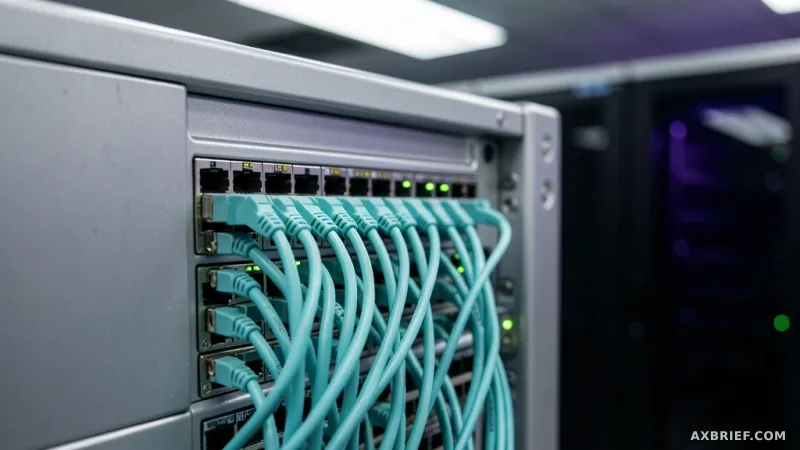
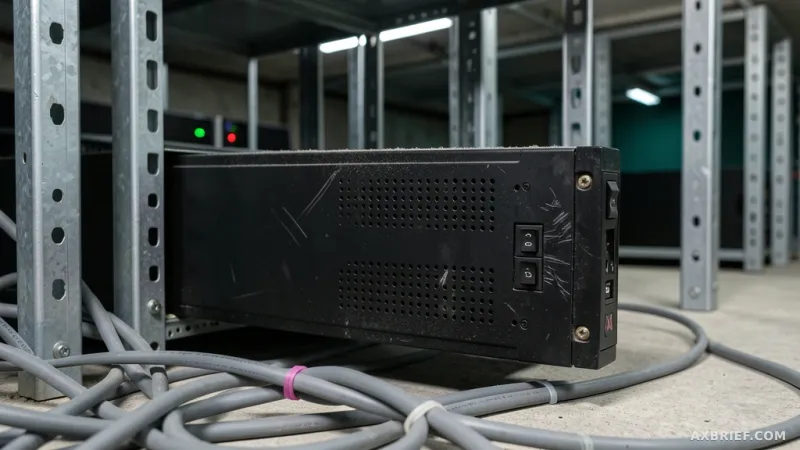
In a surprising display of hardware longevity, Google's Gemma 4 26B model has been successfully deployed on a server that predates the current LLM craze by over a decade. The hardware in question is an HP StoreVirtual storage box powered by two Ivy Bridge Xeon processors, components released roughly 13 years ago. Notably, this setup operates entirely without a GPU, relying solely on the CPU for all tensor computations.
Despite the age of the processors, the Gemma 4 26B Mixture-of-Experts (MoE) model manages to generate text at a rate of approximately 5 tokens per second. While this is far from the blistering speeds of an A100 cluster, it aligns closely with the average human reading speed, making it functionally viable for a variety of asynchronous tasks. The ability to run a 26B parameter model on legacy enterprise gear shifts the conversation from whether the hardware is capable to how the software is optimized.
The catalyst for this achievement is a specific set of modifications found in the `ikawrakow/ik_llama.cpp#2138` patch. Because this patch is currently awaiting review from the main maintainers, users looking to replicate these results must execute directly from that specific branch. This modification provides a critical lifeline for users of older enterprise hardware who lack the instruction sets required by modern AI libraries.
The AVX2 Gap and the Silent Failure
To understand why this patch is necessary, one must look at the evolution of x86 instruction sets. The high-performance kernels in `llama.cpp` are generally written with the assumption that the CPU supports AVX2 (Advanced Vector Extensions 2) and FMA3 (Fused Multiply-Add 3), both of which became standard starting with the Haswell (v3) generation in 2014. The Ivy Bridge (v2) processors used in this Xeon server lack these instructions, meaning they cannot execute the optimized paths that modern LLM frameworks rely on for matrix multiplication.
Bridging this gap required a sophisticated software fallback. By using Claude to analyze the C++ codebase, the developer was able to identify the specific performance bottlenecks and rewrite the hot paths of the kernel. The goal was to implement a fallback mechanism that detects the absence of AVX2 and redirects the computation to a compatible, albeit slower, instruction path. This process effectively turned a hardware limitation into a software configuration problem, allowing the model to run on chips that were never designed for transformer-based architectures.
However, this journey revealed a precarious technical trap involving the `GGML_USE_IQK_MULMAT` setting. When this quantization matrix multiplication optimization is disabled, a critical bug emerges within the MoE logic. The system's graph builder continues to generate `MOE_FUSED_UP_GATE` and `FUSED_UP_GATE` operators and includes them in the computation graph. Yet, the dispatcher—the component responsible for assigning these operations to the actual execution kernels—lacks the corresponding cases in its switch statement.
Because the dispatcher does not find a matching case for these MoE operators, the execution falls through to a default state. The system does not crash or throw an explicit error; instead, it simply skips the calculation for the destination tensors of all expert Feed-Forward Networks (FFN). The result is a catastrophic failure of logic where the model outputs multilingual gibberish. This silent failure highlights the fragility of optimization paths in MoE models, where a single missing switch case in the dispatcher can render a 26B parameter model useless.
By resolving these instruction set conflicts and navigating the pitfalls of the MoE dispatcher, this implementation proves that legacy servers can be repurposed as viable AI assets. These machines can now serve as low-cost backup systems during API outages or as dedicated nodes for batch processing tasks that do not require real-time latency.
This transition from e-waste to inference infrastructure suggests a future where the utility of hardware is defined by software flexibility rather than release dates.