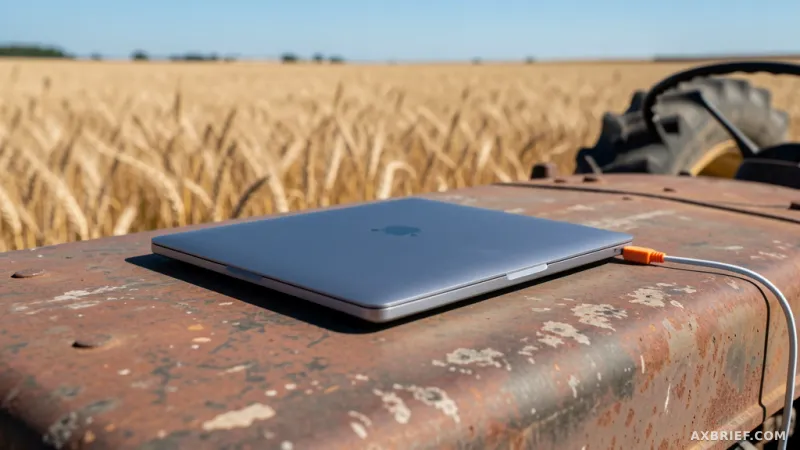
For years, the entry-level Mac user has lived in a state of artificial limitation. While Apple Silicon offers impressive unified memory architecture, the 8GB base configuration has become a notorious bottleneck for the local LLM community. Attempting to load a model with 26 billion parameters on such a machine typically results in an immediate system crash or a descent into agonizingly slow swap memory. The hardware simply cannot hold the weights, leaving the most capable open models out of reach for millions of devices.
The Swift and Metal Architecture of TurboFieldfare
TurboFieldfare emerges as a specialized solution designed specifically for the Apple Silicon arm64 environment, targeting the Gemma 4 26B-A4B instruction-tuned model. Unlike the majority of local inference tools, this is not a wrapper for MLX or llama.cpp. It is a standalone runtime written entirely in Swift and Metal, engineered to operate within a strict memory budget of approximately 2GB. This allows the 26B parameter model to execute even on base M-series chips with only 8GB of total system RAM.
To facilitate this, the engine provides three distinct interfaces. Users can interact with the model via a native Mac application, a command-line interface (CLI), or an experimental loopback server. The server operates at `http://127.0.0.1:8080/v1` and supports Chat Completions, streaming, and function tool calls, making it compatible with existing OpenAI-style pipelines. It is important to note that this is a text-only engine; it does not support image, audio, or video processing.
Deployment is handled through a proprietary `.gturbo` layout. To minimize disk waste, the installer does not create redundant checkpoints. Instead, it streams only the necessary byte ranges from specific Hugging Face revisions to repack the model directly. The final installed footprint occupies roughly 14.3GB of disk space.
Developers can deploy the engine using the following sequence:
bash
저장소 복제 및 빌드
git clone https://github.com/andrey-mikhaylov/TurboFieldfare.git
cd TurboFieldfare
swift build -c release
CLI를 통한 모델 설치
./.build/release/turbo-cli install
메시지 파일을 이용한 추론 실행
./.build/release/turbo-cli run --messages-file messages.json
The Shift from Memory Residency to Expert Streaming
The technical breakthrough of TurboFieldfare lies in its rejection of the traditional requirement that a model must reside entirely in RAM. Instead, it implements an expert streaming architecture. The runtime maintains only a 1.35GB shared core and an FP16 KV cache in the active memory. Every other weight is treated as transient data, fetched from the SSD in real-time as the model generates tokens.
This creates a sophisticated dance between the CPU and the Metal GPU. In each transformer layer, the Metal GPU handles the attention and router calculations. Once the router identifies the top 8 necessary experts, the CPU takes over to manage a 16-slot LFU (Least Frequently Used) cache plan. If the required expert is not already in the cache, the system triggers a `pread` call to load the weights into Metal-visible buffers in parallel. To hide the latency of this disk I/O, Metal simultaneously computes the shared expert branches that are already resident in memory.
Efficiency is further optimized during the prompt prefill stage. The engine processes tokens in chunks of up to 128, ensuring that once an expert weight is loaded from the SSD, it is reused across multiple rows of computation before being evicted. While the project provides 103 different measurement results covering kernels, caching, and I/O, these serve as reference points rather than fixed benchmarks, as performance fluctuates based on the specific SSD speed and the state of the system page cache.
However, this architecture introduces a new set of operational constraints. Because the system operates on the edge of available memory, users must monitor their environment using the `memory_pressure -Q` command before execution. If other memory-intensive applications are running, the engine may struggle. Furthermore, to avoid model ownership conflicts, only one instance of the app, CLI, or server can be active at a time.
Ultimately, TurboFieldfare transforms the nature of the bottleneck. The limitation is no longer the amount of RAM, but the throughput of the SSD. For developers, this means the tool is not intended for high-speed production inference, but rather as a validation environment. It allows a developer on a low-spec Mac to verify the reasoning capabilities and accuracy of a 26B model without needing to upgrade to a high-tier Studio or Max chip.
This approach signals a move toward a future where disk speed, rather than memory capacity, defines the ceiling for on-device intelligence.