The global race for AI supremacy is usually framed as a battle of chips and algorithms, but the real bottleneck has shifted to the factory floor. As hyperscalers scramble to deploy massive clusters of H100s and B200s, the industry is hitting a physical wall: the sheer complexity of assembling AI servers. In the current high-pressure environment, a single misplaced screw or a slightly misaligned component in a rack can lead to weeks of troubleshooting and costly downtime. The industry has long relied on a precarious mix of high-speed robotics and manual human intervention, but every time a human technician steps in to fix a problem, the digital record of that server's birth vanishes, creating a dangerous blind spot in the supply chain.
The Architecture of the Hybrid BRC
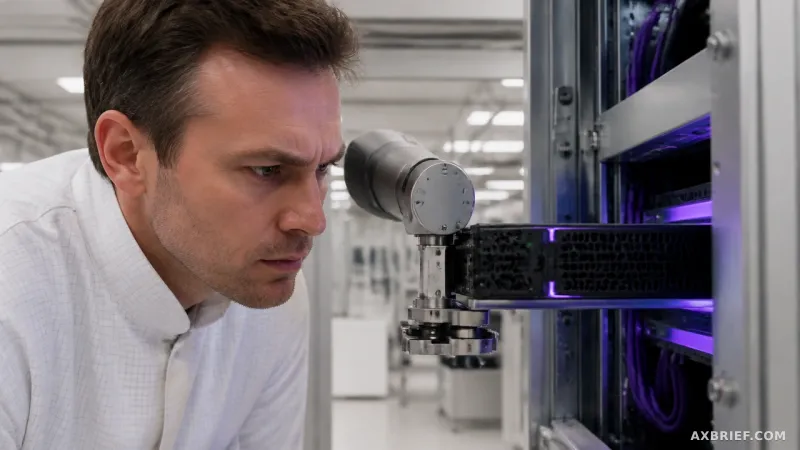
Bright Machines is addressing this structural flaw with the introduction of the Hybrid BRC, or Bright Robotic Cell. This system is an evolution of the broader Bright Factory platform, specifically engineered to bridge the gap between fully automated lines and the necessary nuance of human labor. Unlike traditional automation, which often forces a choice between a rigid robotic line or a disconnected manual workbench, the Hybrid BRC integrates human workers directly into the robotic cell without breaking the data flow. The system utilizes protected access doors and safety panels that allow a technician to enter the workspace; the moment the door opens, the robotic arms deactivate instantly to ensure safety, while the digital monitoring remains active.
This integration is powered by a comprehensive sensor array consisting of high-resolution cameras, force feedback mechanisms, and specialized tooling sensors. These tools monitor every action the human worker takes, ensuring that the assembly follows the exact prescribed sequence. Whether it is the first screw tightened in the chassis or the final application of a shipping label, every movement is tracked and logged. This creates what Bright Machines calls a Data Thread, a continuous digital ledger tied to the specific serial number of each compute node.
The scale of this deployment is already significant. Bright Machines has deployed over 130 microfactories across more than 10 countries, serving over 60 different customers. To date, these facilities have produced more than 300,000 servers. In the United States alone, several hybrid lines have already validated the model by producing over 10,000 compute nodes. Looking ahead, the company has set an aggressive target to manufacture more than 0.5GW of compute capacity within this year, signaling a massive ramp-up in AI infrastructure production.
Solving the Yield Crisis through Traceability
The true value of the Hybrid BRC becomes apparent when analyzing the disparity in first-pass yield. In the world of high-end AI server assembly, the margin for error is razor-thin. According to data released by Bright Machines, the initial first-pass yield for modern AI servers assembled manually can plummet as low as 20 percent. Even as technicians become more skilled, these manual yields typically plateau between 60 and 65 percent. This means nearly half of the units coming off a manual line require some form of rework, which is a catastrophic inefficiency when dealing with components worth tens of thousands of dollars.
In contrast, the robotic stations within the Bright Machines ecosystem consistently deliver yields of 98 percent or higher. When viewed as a complete system, the overall line yield fluctuates between 97.5 percent and 97.7 percent. Beyond quality, the speed differential is equally stark, with robotic systems performing assembly tasks 50 to 100 percent faster than human operators. However, the critical insight is not just that robots are faster or more precise, but that the Hybrid BRC eliminates the data vacuum that occurs during manual intervention.
Most manufacturers attempt to solve this by using standalone interface tools like Tulip or specialized inspection software like Instrumental. While these tools provide value, they operate as fragmented pieces of a larger puzzle. Bright Machines takes a fundamentally different approach by controlling the entire stack: the physical line, the orchestration software, the data pipeline, and the labor integration. All of this is funneled into a single orchestration layer known as Bright Insights. By unifying robot data, sensor telemetry, and human activity into one stream, the system ensures total traceability.
This level of precision directly impacts the speed of AI deployment. The time it takes to get a chip from the fab to a live data center is not just about shipping; it is about the efficiency of racking, cabling, and testing. When hardware quality fails, the resulting rework can delay deployments by months. By implementing this integrated automation, Bright Machines claims that the overall deployment window can be reduced by at least one third.
For operators managing the rollout of expensive AI clusters, the primary metric for success is no longer just whether a line is automated, but whether the traceability of every single serial number is maintained during human intervention. This continuity is the only way to effectively manage operational risk and reduce the long-term cost of infrastructure ownership.