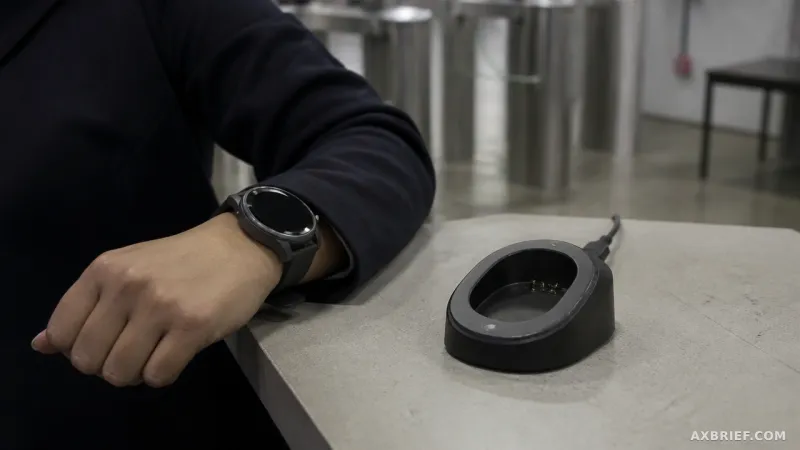
Every developer has a drawer. It is the graveyard of ambition, filled with half-finished Raspberry Pi clusters, abandoned ESP32 sensors, and the occasional open-source wearable that promised a weekend of hacking but required a month of reading obscure documentation. For years, the PineTime—a $27 open-source smartwatch—sat in one such drawer. The barrier was not the hardware, but the cognitive load of mastering the InfiniTime firmware. The desire to replicate a specific aesthetic, like the Casio-style watch face created by @levelsio for the Apple Watch, existed, but the friction of environment setup and API learning was too high. This week, however, the friction vanished, not through a new SDK, but through the strategic orchestration of open-weight AI models.
The Architecture of Rapid Prototyping
The project began with a lean technical stack designed for speed. The developer established a build environment on Ubuntu, cloning the InfiniSim repository—the simulator for PineTime—along with its necessary git submodules for the InfiniTime firmware. The objective was clear: port a high-fidelity Casio design to a low-cost, open-source device. Rather than manually parsing the C++ codebase of InfiniTime, the developer leveraged an AI-driven workflow using OpenCode and a rotation of open-weight models. While Claude was mentioned in the initial planning, the heavy lifting was performed by Kimi K3, Kimi K2.6, DeepSeek v4 Pro, and DeepSeek v4 Flash.
This was not a simple case of prompting a chatbot for a snippet of code. The developer implemented an agentic workflow, instructing the AI to orchestrate sub-agents to handle specific tasks. One agent focused on the environment configuration, another on the logic of the watch face, and a third on the iterative debugging process. By cross-referencing outputs between DeepSeek and Kimi, the developer eliminated the hallucinations that typically plague embedded systems coding. The AI didn't just write the code; it managed the deployment pipeline, guiding the user through the Ubuntu build process and the simulation phase in InfiniSim, effectively compressing weeks of learning into a few hours of execution.
The Collision of AI Efficiency and Hardware Reality
As the project moved from the simulator to the physical $27 hardware, a critical tension emerged between AI-optimized software shortcuts and the physical limitations of embedded memory. To accelerate the UI development, the AI suggested a pragmatic shortcut: instead of programmatically drawing every line and digit of the Casio interface, the developer used a 240x240 static background image. By treating the complex visual elements as a single full-screen image and only programming the dynamic elements—like the ticking clock—the development time was slashed. In the simulator, this approach looked flawless.
However, the physical PineTime hardware revealed the cost of this abstraction. Transferring the 240x240 image via Bluetooth took approximately 10 minutes, a stark reminder of the narrow bandwidth available on low-power wearables. More importantly, the screen refresh rate suffered. When swiping through the interface, the full-screen update took between 1 and 2 seconds. The bottleneck was not the AI's code, but the device's RAM. The PineTime's memory is insufficient to hold the entire image at once, forcing the system to stream data from the file system to the display. This created a performance lag that no amount of AI optimization could solve without changing the fundamental approach to asset management.
This gap highlights a growing trend in AI-assisted development: the AI is now capable of generating functional code faster than the hardware can execute it. The AI's tendency to suggest the path of least resistance—such as using a static image to avoid complex drawing logic—can lead to software that is logically correct but physically inefficient for constrained environments. The developer documented these findings and the specific prompts used in an `AGENTS.md` file, publishing the results to GitHub to serve as a roadmap for others attempting similar embedded AI projects.
The transition from a dormant project in a drawer to a working prototype in a few hours proves that the barrier to hardware customization is no longer the code, but the physical constraints of the silicon.