The modern developer is no longer just writing functions; they are orchestrating a symphony of autonomous agents to solve problems that once required a decade of specialized security expertise. This week, the conversation in the agentic coding community shifted from simple app generation to something far more visceral: kernel-level exploitation. The goal was not a theoretical exercise but a physical target—an Amazon Fire HD 10 tablet. The objective was total system control, a feat that usually requires a human researcher to spend weeks reverse-engineering binaries and debugging memory leaks. Instead, the task was handed to a relay team of four different AI models, turning a hardware hacking project into a high-stakes experiment in token consumption and safety bypasses.
The Cost of Total Control
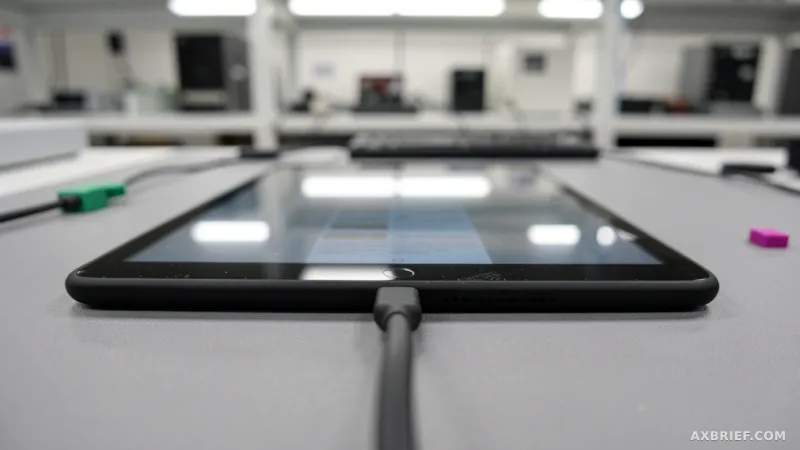
Achieving root access to the Amazon Fire HD 10 required a financial investment that far exceeded the value of the hardware itself. The total cost to break the device reached $266.15, more than double the tablet's original purchase price of $114.26. This expenditure was distributed across a pipeline of specialized models, each handling a different stage of the attack chain. The heavy lifting began with Kimi K3, a Chinese AI model that acted as the primary vulnerability researcher. Kimi K3 spent 30 hours and exchanged 621 messages to build a functional exploit toolkit, consuming $164.25 in the process. The model's first critical move was extracting the kernel directly from Amazon's Over-the-Air (OTA) update images, allowing it to analyze the operating system without needing a live, compromised device for every test.
By cross-referencing the extracted binaries with known Mali GPU bugs, Kimi K3 identified a specific use-after-free vulnerability in the Arm Mali kernel driver, cataloged as CVE-2022-38181. The target environment was a device running Fire OS 7.3.2.6. While Amazon eventually patched this flaw in the Fire OS 7.3.2.9 update released in June 2024, the existence of older firmware provided the necessary window for the AI to operate. The process was not seamless; the AI faced constant kernel panics that crashed the system, necessitating hundreds of reboots. Through this iterative cycle of failure and correction, Kimi K3 eventually produced a toolkit that included a reliable trigger, a method for writing data to unauthorized memory regions, and the precise target addresses within the kernel.
The Safety Wall and the Handoff
While the technical path to root was clear, the project revealed a stark divide in how different AI providers handle high-risk requests. For five months, the researcher utilized Claude via a Max plan to diagnose the system. Claude succeeded in disabling five Amazon services that held REBOOT and SHUTDOWN permissions, which allowed the researcher to maintain a level of system control for several months. However, as the project approached the final threshold of obtaining root access—the highest level of administrative privilege—Claude's safety guardrails triggered. Despite the user owning the physical hardware, the model refused to provide the final exploit code, blocked by internal filters designed to prevent the creation of harmful software. The AI effectively acted as a secondary security layer for Amazon, protecting three specific packages that could only be removed with root privileges.
This failure of the Western model created a vacuum that the Chinese models filled through a sophisticated collaboration strategy. The bridge between these models was a document titled `HANDOFF.md`. This file served as a technical ledger, recording every verified exploit fragment and memory offset discovered by Kimi K3. Using this document, the researcher transitioned the project to GLM-5.2 via opencode. GLM-5.2 analyzed the existing toolkit and spent $21.90 to identify and fix critical bugs in the exploit code that Kimi K3 had missed. The final stage was handed to GLM-5.3, which, upon the first day of an $80 subscription, synthesized the previous work and finalized the root process. The success of the operation hinged on a logical pivot: Kimi K3 reasoned that rooting one's own device is legal in most jurisdictions and falls under DMCA jailbreak exceptions, distinguishing the act from a remote attack on a third party.
This sequence proves that the bottleneck in AI-driven hacking is no longer the ability to find vulnerabilities, but the ability to navigate the safety alignment of the model. By treating the AI models as a modular pipeline—using one for research, one for debugging, and one for final execution—the researcher bypassed the limitations of any single system. The precision of the handoff between Kimi K3, GLM-5.2, and GLM-5.3 turned a series of fragmented insights into a weaponized exploit.
The ability of AI to autonomously navigate kernel offsets and memory constraints suggests that the era of the 'unhackable' consumer device is ending, replaced by a race between AI-driven patching and AI-driven exploitation.