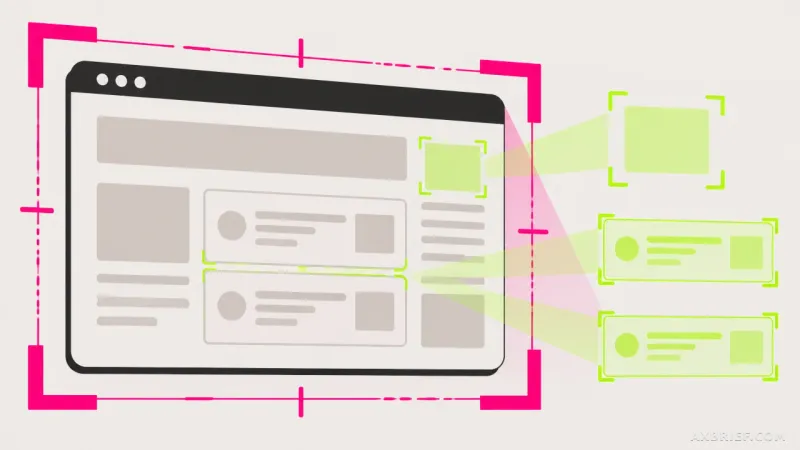
AI coding agents frequently suffer from a persistent case of amnesia. Once a session ends, the context—the project architecture, the specific stack, and the nuances of the codebase—is wiped clean. While developers have attempted to mitigate this using static files like `CLAUDE.md`, these are constrained by a 200-line physical limit and quickly become obsolete as the project evolves. The industry has been waiting for a way to bridge this gap between ephemeral sessions and long-term project understanding.
Benchmarking Long-Term Recall and Tool Integration
The introduction of agentmemory marks a shift toward automated, background context management. Unlike static files, this system captures and compresses tool usage history, injecting optimized context into new sessions. It is designed to be compatible with any agent supporting the Model Context Protocol (MCP) or REST, including Claude Code, Cursor, Codex CLI, and Gemini CLI. In the LongMemEval-S benchmark, which measures long-term memory retrieval, agentmemory achieved an R@5 score of 95.2%. This significantly outperforms existing solutions like mem0, which recorded 68.5%, and Letta, which reached 83.2%.
The system provides 51 built-in MCP tools, including `memory_recall`, `memory_save`, `memory_smart_search`, and `memory_patterns`. Beyond individual agent performance, it introduces multi-agent coordination features such as `memory_lease` for exclusive access control, `memory_signal_send/read` for inter-agent communication, and `memory_mesh_sync` for state synchronization across distributed environments. Data integrity is maintained through `memory_audit` for tracking, `memory_governance_delete` for lifecycle management, and `memory_snapshot_create` for Git-style version control of memory states. Operating costs are kept low, with an estimated annual token consumption of 170K, costing roughly $10, or $0 when using local embeddings. The project is released under the Apache-2.0 license.
Hierarchical Memory and Triple-Stream Retrieval
The architecture mimics human sleep consolidation by organizing data into four tiers: Working, Episodic, Semantic, and Procedural memory. Working memory handles immediate tool usage, which is then summarized into Episodic memory, while Semantic and Procedural layers extract recurring patterns and optimal workflows. To search this data, the system employs a triple-stream approach combining BM25 (keyword), Vector (semantic), and Graph (relational) searches. These are unified using the Reciprocal Rank Fusion (RRF) algorithm, which prevents bias toward any single search method and ensures high-precision context extraction.
This hierarchical compression is highly efficient. When processing 240 observations, the system consumes only 1,900 tokens, a 92% reduction compared to the 22K tokens required by traditional methods. Infrastructure complexity is further reduced by the iii engine, which eliminates the need for external dependencies like Postgres, Redis, or Express. Developers can extend functionality using the following command:
iii worker addThis allows for the modular addition of pubsub, cron, queue, sandbox, and SQL adapter capabilities without heavy external overhead.
CJK Optimization and Real-World Implementation
For developers working in CJK (Chinese, Japanese, Korean) languages, tokenization inefficiency is a major hurdle. Agentmemory addresses this by supporting specialized segmentation libraries. Developers can optimize token usage with the following commands:
npm install @node-rs/jieba tiny-segmenterFor embedding, the system supports local models like `all-MiniLM-L6-v2` for offline/free use, or it can auto-detect providers like Gemini, OpenAI, Voyage, Cohere, and OpenRouter. Using local embeddings has been shown to improve recall by 8pp compared to standard BM25. To ensure transparency, developers can monitor the agent's internal reasoning via a live observation stream on port 3113, which includes a knowledge graph visualization. For debugging, the Session Replay feature allows developers to review the agent's thought process at speeds ranging from 0.5x to 4x. Migration is equally streamlined; users can import existing transcripts from Claude Code using `import-jsonl` to maintain continuity without vendor lock-in. By reducing the friction of infrastructure management, this architecture allows developers to focus on code implementation rather than manual context maintenance.