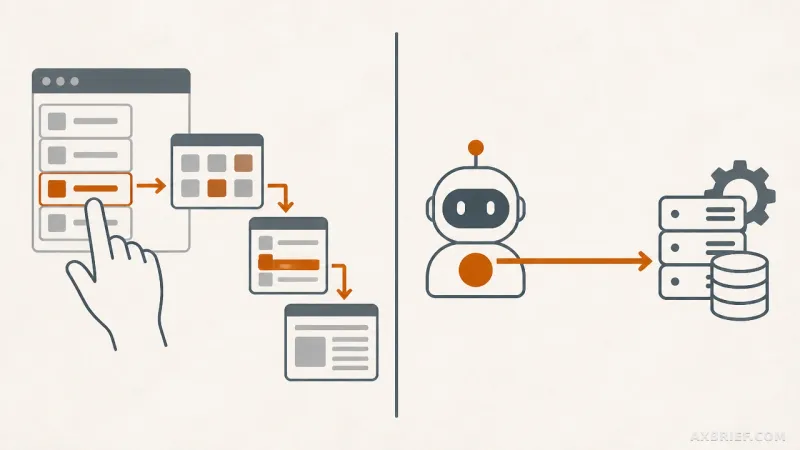
Modern engineering teams are currently trapped in a fragmented knowledge loop. Project managers document requirements in Notion, developers track bugs in Jira, and AI coding assistants struggle to find the actual source of truth across these siloed platforms. The result is a constant cycle of copy-pasting context into LLM prompts, hoping the agent understands the nuance of a decision made three weeks ago in a different app. This friction exists because knowledge bases were designed for human eyes, not for the programmatic read-write needs of autonomous agents.
The Architecture of Shared Intelligence
Dnotitia is addressing this gap with the release of AKB, an Agent Knowledge Base designed as a team infrastructure where humans and AI agents share a single source of truth. At the center of this system is the vault, a collection of markdown files compatible with Google's Open Knowledge Format (OKF). OKF simplifies knowledge structuring by adding YAML metadata to the top of markdown files, creating an open standard that allows multiple disparate tools to read and write data without proprietary lock-in.
Access to the AKB is bifurcated by user type. Humans interact with the knowledge base through a dedicated web UI, while AI agents connect via the Model Context Protocol (MCP). This ensures that the AI is not just searching a database but is integrated into the environment. To maintain a rigorous audit trail, every change made to the data is managed as a Git repository. This means every edit, whether performed by a human or an agent, is recorded as a commit with a corresponding diff, providing total transparency over how the knowledge base evolves.
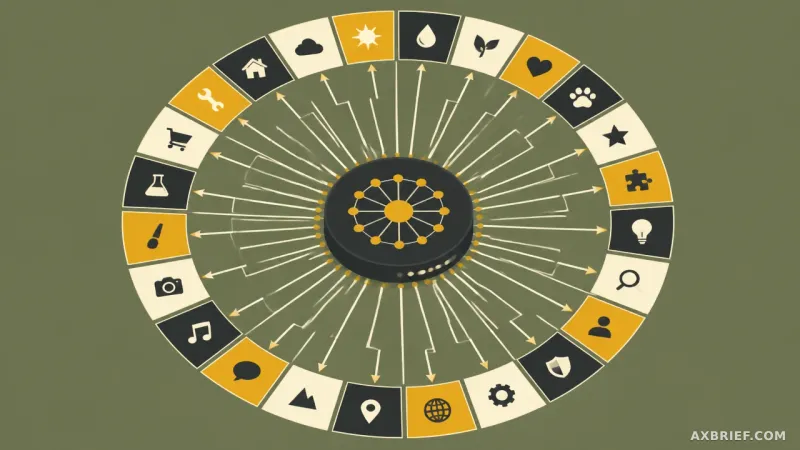
The system extends beyond simple text documents. AKB supports queryable tables, file storage, and knowledge graphs that define complex relationships between different pieces of information. A primary example of this in practice is reef, an issue tracker built on top of AKB. In reef, a single issue exists simultaneously as a markdown document within the vault and as a row in a queryable table. This allows a PM to generate issues via a specialized agent, while a developer using Claude Code or Codex can pull the exact context of that issue through MCP to begin implementation.
Solving the AI Privilege Escalation Problem
The critical tension in AI integration is usually security. Most organizations grant AI agents a broad API key with wide-ranging permissions, creating a massive vulnerability if the agent is manipulated via prompt injection. AKB solves this by decoupling the storage layer from the permission control layer, ensuring that agents never possess independent authority.
In the AKB model, an agent inherits the exact permissions of the user who issued its token. This is enforced through a dual-layer security mechanism. The first layer operates at the application level, where standard requests for reading documents or searching files are filtered based on the user's identity. However, the real technical shift happens at the database layer. For structured data requiring SQL queries, AKB utilizes PostgreSQL Access Control Lists (ACL).
When an agent executes an aggregation or analysis query, the request is run directly using the specific PostgreSQL role of the human user. If the agent attempts to access a vault for which the user lacks permission, the request is rejected by the PostgreSQL database engine itself, not the application. This architecture effectively eliminates the risk of agents bypassing API vulnerabilities to access restricted data, as the security boundary for the AI is identical to the security boundary for the human.
Deploying the Structured Knowledge Store
For teams looking to move away from fragmented wikis, AKB provides a streamlined deployment path via Docker compose. The setup process is designed for rapid iteration:
git clone https://github.com/dnotitia/akb && cd akb
cp config/app.yaml.example config/app.yaml
cp config/secret.yaml.example config/secret.yaml
docker compose up -d
One significant operational advantage is the system's flexibility regarding search. While many AI infrastructures require expensive embedding models and vector databases from day one, AKB supports BM25-based keyword search. This allows teams to validate their knowledge structure and basic functionality without incurring API costs or configuring complex embedding pipelines immediately.
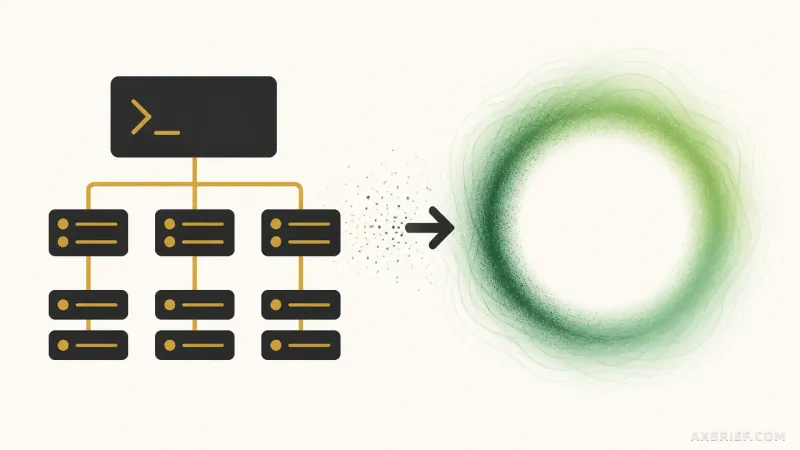
This shift represents a fundamental change in how teams view documentation. Instead of a static wiki like Confluence or Notion, AKB treats knowledge as a structured data store that agents can actively maintain. Because AI edits are captured as Git commits, teams can implement a workflow where AI-generated documentation is reviewed and approved by humans before being finalized. This transforms the AI from a simple chatbot into a collaborator that bridges the technical language gap between product management and engineering by maintaining a shared, versioned context.
By treating knowledge as code and permissions as inherited identities, AKB moves the industry closer to a world where the boundary between human documentation and AI context completely disappears.