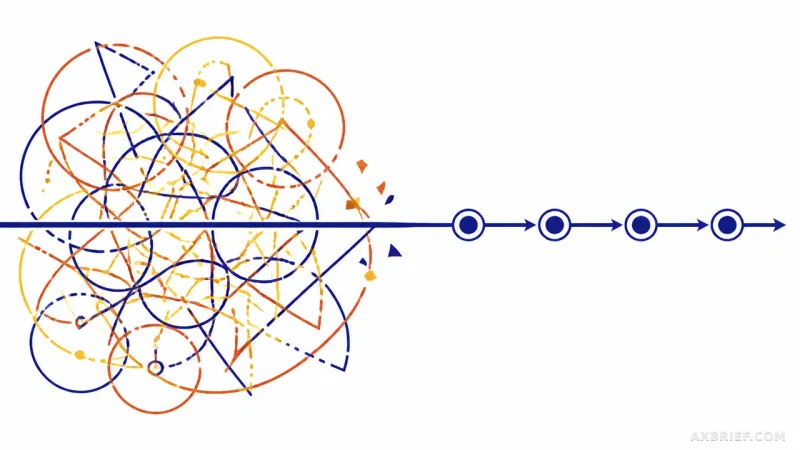
The modern developer workflow has become a repetitive cycle of prompting an LLM, copying a block of code, running the build, and then feeding the resulting stack trace back into the chat window to ask why it failed. This manual loop between the IDE and the AI is the primary friction point in AI-assisted engineering. Developers are no longer struggling with the logic itself, but with the orchestration of the feedback loop required to verify that AI-generated code actually functions in a live environment.
The AI Agent Workflow and the Self-Healing Loop
Angular v22 fundamentally alters this dynamic by extending AI agent workflows directly into the development server and the build process. The core of this shift is the introduction of the Angular Model Context Protocol (MCP), which allows AI agents to move beyond simple text generation and into the realm of execution and verification. By utilizing the `devserver.wait_for_build` function, an agent can now trigger a build of the application and actively monitor the output. If the build fails or a runtime error occurs, the agent reviews the logs, identifies the culprit, and applies a fix autonomously. This creates a self-healing loop where the AI is responsible for the stability of the code it produces.
To ensure these agents operate with the most current framework knowledge, Angular Agent Skills provide models with the latest development guidelines, reducing the hallucinations common in older training sets. This ecosystem is further expanded through WebMCP (Web Model Context Protocol) and deep integrations with Google AI Studio and Gemini Canvas. These tools lower the barrier to entry, allowing users without deep coding backgrounds to generate and edit Angular projects through a managed AI workflow. Looking ahead, the framework is introducing the `@boundary` API, scheduled for a developer preview in the third quarter of 2026, which will allow developers to capture errors within templates and define specific fallback content to maintain application resilience.
On the infrastructure side, Angular v22 marks a significant departure from legacy tooling. Support for the Webpack family of builders, including `@angular-devkit/build-angular` and `@ngtools/webpack`, is now deprecated. The framework is pivoting entirely toward the application builder with native support for TSGo (TypeScript Go), aiming for faster build times and a more streamlined compilation pipeline.
Declarative APIs as the Foundation for AI Precision
While the agentic tools handle the execution, the internal architecture of Angular v22 has been redesigned to be more declarative, which inherently makes the code more predictable for AI agents to generate. Signal Forms and Angular Aria have both been promoted to production-ready status. Signal Forms merge the robustness of Reactive Forms with the fine-grained reactivity of signals, creating a strongly typed, template-based API that eliminates much of the boilerplate associated with form state management. Simultaneously, Angular Aria introduces accessibility primitives that provide 12 common UI patterns, ensuring that accessibility standards are met by default rather than as an afterthought.
Asynchronous data handling has also moved toward a more declarative model with the production release of the `resource` and `httpResource` APIs. By treating asynchronous resources as signals, the framework can automatically handle UI updates based on state changes, significantly reducing the complexity of manual subscription management and improving overall code readability.
This shift toward a zoneless architecture is the final piece of the performance puzzle. Angular v22 now sets zoneless as the default configuration, removing the dependency on the framework's internal state change detection library. To complement this, `OnPush` is now the default strategy for change detection. To clarify the behavior of the change detection cycle, the previous `ChangeDetectionStrategy.Default` has been renamed to `ChangeDetectionStrategy.Eager`.
Routing and dependency injection have also been streamlined to reduce boilerplate. The Router is now integrated with the browser's native Navigation API, improving how scroll behaviors and page transitions are handled. In the dependency injection system, the new `@Service` decorator replaces the more verbose `@Injectable({ providedIn: 'root' })` pattern. Furthermore, the introduction of `injectAsync` enables asynchronous dependency injection, allowing for more aggressive code splitting and on-demand loading of services, which directly improves the initial load time of the application.
As the cost of initial performance optimization drops due to the precision of AI-generated `OnPush` code, the focus of development shifts from manual tuning to the orchestration of autonomous build-and-fix loops.