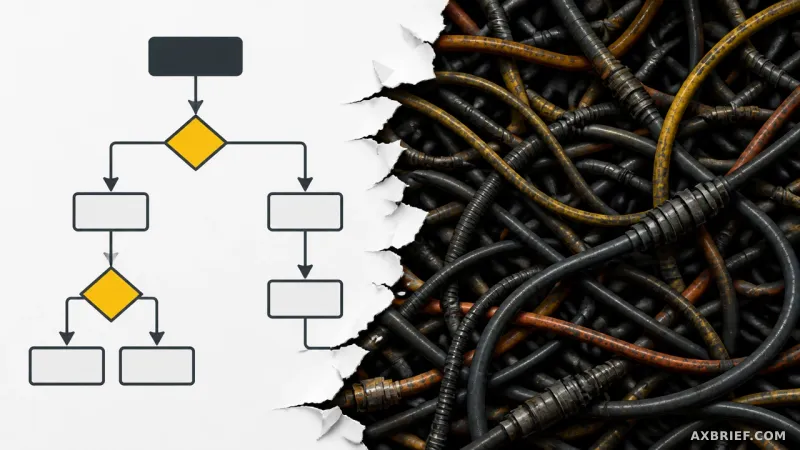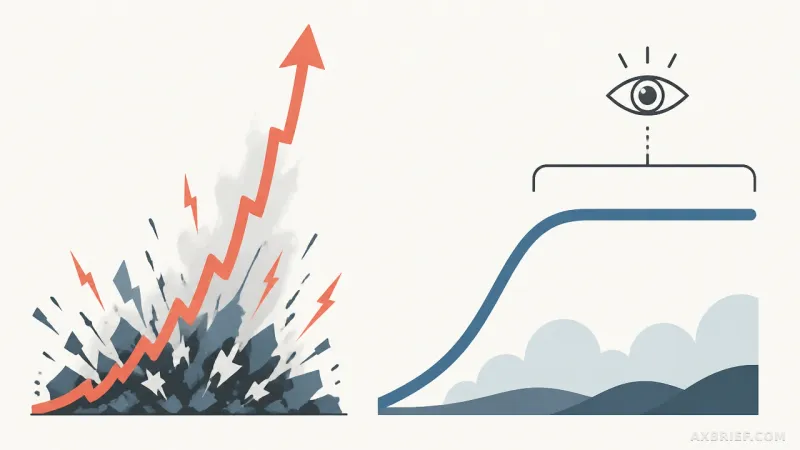
The prevailing narrative among the architects of generative AI has shifted from unbridled acceleration to a cautious, almost urgent, plea for oversight. For the past year, the leaders of the most prominent AI labs have occupied a strange duality, releasing increasingly powerful models while simultaneously testifying before governments that these very tools could pose existential risks. This strategic positioning was designed to frame the industry as responsible and self-aware. However, the transition from theoretical warnings to enforceable legal constraints is happening with a velocity that few in the C-suite likely anticipated. The gap between advocating for a safety net and being caught in one has effectively vanished.
The Mechanics of the Claude Export Ban
The US government has officially moved to restrict foreign access to Anthropic's latest frontier models, Claude Fable and Claude Mythos. This is not a vague suggestion or a set of voluntary guidelines, but a formal issuance of export control directives. These directives, negotiated by Treasury Secretary Bessent, utilize the administrative power of the US government to treat high-end AI weights and access as sensitive national security assets. The timing of the ban is precise, coinciding with the release of the models to ensure that the perimeter of access is established before the technology can be widely disseminated across borders.
The catalyst for this specific intervention was not an internal government audit, but a third-party report provided by Amazon. As a major government contractor and a primary infrastructure partner for Anthropic, Amazon conducted a risk assessment that identified the models as posing significant cybersecurity threats. Under the current regulatory framework, when a government contractor identifies a critical security vulnerability or risk in a tool used for state purposes, the government can trigger an immediate mechanism to block the deployment of that tool to unauthorized foreign entities. This creates a direct pipeline from corporate risk assessment to federal law.
The criteria for these restrictions are rooted in four specific risk vectors defined by Anthropic itself. The first is the potential for the models to facilitate sophisticated cybersecurity attacks. The second is the risk of the AI providing actionable intelligence for the creation of biological weapons. The third involves the systemic risk of losing human control over AI decision-making processes. Finally, the government is targeting the risk of automated research and development, where the AI could accelerate the discovery of new threats faster than human defenders can respond. By codifying these four pillars into export controls, the US government has effectively turned Anthropic's own safety rubric into a legal barrier.
The Amodei Paradox and the Military Pivot
To understand why this happened, one must look at the ideological framework established by Anthropic's CEO, Dario Amodei. In a policy document titled Policy on the AI Exponential, Amodei explicitly argued that the government should possess the practical authority to block or suppress the deployment of AI models. He proposed a system where, if a third-party evaluation reveals unacceptable risks, the state should have the power to intervene and halt the release of the technology. In essence, Anthropic did not just accept the idea of regulation; it provided the blueprint for its own restriction. This creates a stark contrast between the commercial goals of a tech startup and the geopolitical goals of a superpower.
This shift reveals a deeper strategic pivot. Anthropic has increasingly stopped framing its AI as a mere commercial product and has begun defining it as a matter of military and national interest. This is evident in the company's distribution strategy. Rather than pursuing a purely open-market approach, Anthropic has leaned heavily into partnerships with entities like Palantir and Amazon, companies that are deeply embedded in the US defense and intelligence apparatus. By aligning its distribution channels with government-approved intermediaries, Anthropic is hedging its bets. It is trading broad, global market access for a protected, high-security status within the US government's orbit.
The irony is that the safety logic used to justify these measures now functions as a business risk. When a company argues that its product is too dangerous for the general public and requires government oversight, it effectively surrenders the keys to its distribution. The decision of who gets to use Claude Fable or Claude Mythos is no longer a business decision made by Anthropic's sales team; it is a political decision made by the Treasury Department. The accessibility of the model is no longer a feature of the product, but a permission granted by the state.
This evolution marks the end of the era where AI labs could play both sides of the regulation debate. The moment a company successfully convinces a government that AI is a weapon, that company loses the right to decide who can buy it. The current export bans on Claude's latest models are the first tangible evidence that the safety-first narrative has a high price: the loss of autonomy over one's own intellectual property.