Developers building autonomous AI agents currently face a recurring nightmare: the black box execution loop. You trigger a complex task, the agent begins calling tools and modifying files, and then it fails. By the time you check the logs, the critical state that led to the error has often been pruned from the model's context window to save tokens, leaving you to guess why a specific shell command was executed or where a permission error originated. The industry has lacked a standardized, local-first environment that treats agent execution as a permanent record rather than a transient chat session.
The Architecture of Local-First Agent Orchestration
Apache Maka enters this gap as a project within the Apache Incubator, designed specifically to record and manage the lifecycle of AI agent executions. Unlike cloud-based agent platforms that lock logs into proprietary databases, Maka operates as a local-first workspace. It allows users to connect their preferred AI models—whether through cloud APIs, local LLMs, or compatible gateways—and execute tasks directly on their desktop or via a terminal. The system meticulously logs every step of the process, including tool calls, the resulting outputs, permission approvals granted by the user, and the final termination state of the task.
To ensure consistency across different developer workflows, Maka employs a unified execution engine. This single core powers four distinct interfaces: a full desktop application, a Text User Interface (TUI), a Command Line Interface (CLI), and a dedicated evaluation tool. This means a task initiated in the CLI will behave identically when analyzed in the desktop environment, ensuring that the execution trace remains a reliable source of truth regardless of the frontend. For those looking to test the latest iterations, the project provides Desktop Nightly installations, with builds available for macOS, Windows x64, and Linux. It is important to note that the Windows and Linux builds are currently unsigned previews, and as an incubator project, the CLI and data formats are subject to change before a final official release.
Security is handled through a combination of OS-level protections and sandboxing. Because agents often require the ability to manipulate files or run shell commands, Maka implements strict permission checks and OS sandboxing to prevent runaway processes from compromising the host system. Authentication tokens and API keys are stored in local plaintext files, but they are protected by the operating system's account and file access permissions, ensuring that these secrets are never returned to screen-scraping processes or exposed in the UI.
Decoupling Context from History
The most significant technical shift in Apache Maka is how it handles the tension between LLM context windows and audit trails. In standard agentic frameworks, the history of a conversation is typically passed back to the model in every new request. As the task grows in complexity, the history exceeds the token limit, forcing the developer to truncate or summarize previous tool outputs. In most systems, once that data is pruned from the prompt, it is effectively gone from the active session's memory.
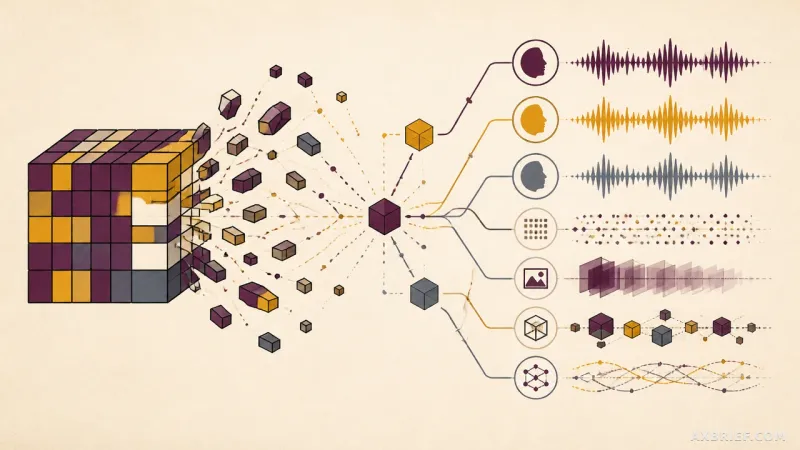
Maka introduces a structural separation between the model's context and the execution record. While the system may trim old tool outputs to fit the model's current request window, the original, full-fidelity execution history remains preserved in the local workspace. This creates a permanent ledger of the agent's actions that exists independently of the model's volatile memory. The developer can see exactly what the agent did three hundred steps ago, even if the model itself has forgotten those details to make room for new instructions.
This distinction also changes how task resumption works. In many agent frameworks, resuming a crashed task is a seamless but invisible process. In Maka, the ability to continue an interrupted task is disabled by default. When a user chooses to activate it, the system explicitly re-calls the model to reconstruct the state, making the token consumption transparent. This prevents the hidden cost spikes often associated with autonomous loops and forces a conscious decision about whether a task is worth the additional compute.
By moving the source of truth from the API stream to a local file system, Maka transforms the agent from a chatbot that happens to use tools into a verifiable software process. The shift from ephemeral cloud logs to a local workspace means that the execution trace becomes a debuggable asset, similar to how a developer uses a debugger to step through traditional code.
This move toward local-first transparency suggests a future where AI agents are not just autonomous, but fully auditable and reproducible on the developer's own hardware.