The modern developer's workspace is often a graveyard of forgotten tabs. Most engineers spend a significant portion of their cognitive load simply navigating between twenty open files, three terminal windows, and a browser window, trying to reconstruct the mental map of a feature's logic. This fragmented experience creates a constant tension between the depth of the code and the limitations of the screen real estate, where the act of switching contexts often breaks the flow of deep work.
The Architecture of a Spatial Workspace
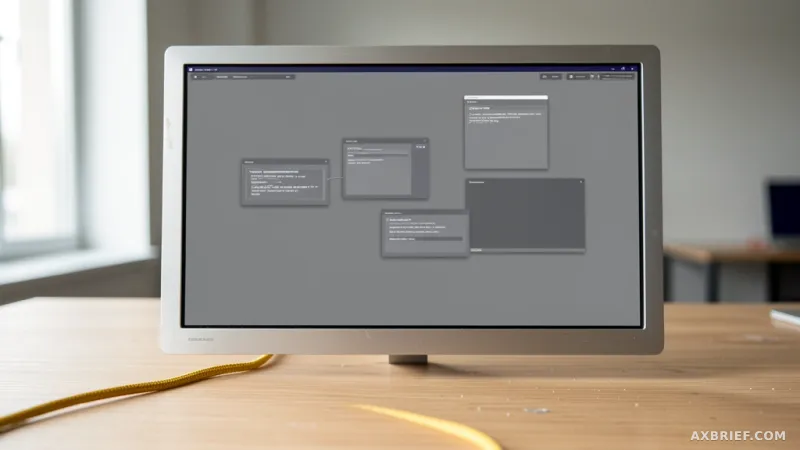
Cate enters the market as a desktop integrated development environment (IDE) designed to dismantle the tab-based paradigm entirely. Instead of a rigid grid of windows, Cate provides a freeform, infinite canvas that allows developers to arrange their editor, terminal, browser, and documentation in a spatial layout. This approach leverages infinite zoom and pan functionality, effectively removing the physical constraints of the monitor and allowing the codebase to be visualized as a sprawling map rather than a stack of files.
To ensure professional-grade performance, Cate integrates industry-standard tools. It utilizes the Monaco editor, the same engine powering Visual Studio Code, to provide robust syntax highlighting, multi-cursor support, diff views, and markdown previews. For system operations, it incorporates xterm.js, providing a native-feeling terminal experience directly on the canvas. The environment also includes dedicated document panels capable of rendering PDF, DOCX, and image files, ensuring that technical specifications remain visible alongside the implementation.
Operational efficiency is handled through a no-config philosophy. Developers avoid the tedious process of editing JSON configuration files, instead utilizing a `Cmd+K` command palette to trigger actions and a drag-and-drop docking system to organize their space. Panels can exist as floating elements, be docked into split-screen views, or be detached into independent OS windows. To prevent the loss of this spatial organization, Cate includes a layout restoration feature that remembers the exact position of every panel when a folder is reopened.
Version control is woven into this spatial fabric. The IDE features a Git file tree with real-time monitoring and a source control sidebar for managing staging and branches. It specifically supports worktrees, allowing developers to handle multiple branches simultaneously within the same repository. By integrating inline diffs that show line-by-line changes directly within the editor, Cate eliminates the need to jump between the terminal and the code to verify changes.
The Convergence of AI Agents and Security Isolation
While the spatial UI solves the problem of navigation, the integration of the AI agent Pi transforms the canvas into an active collaborator. Pi is not a simple chat sidebar but an in-app coding agent with its own dedicated chat threads and model-specific memory. This architecture allows developers to maintain separate contexts for different tasks; for instance, one area of the canvas can be dedicated to refactoring a database schema with one set of AI memories, while another area focuses on UI polish with a completely different context.
Cate does not lock users into a single ecosystem. It supports a wide array of external models including those from Anthropic, OpenAI Codex, OpenRouter, and Groq, which can be connected via OAuth or API keys. This flexibility ensures that the developer can swap the underlying intelligence of Pi based on the specific requirements of the task at hand.
However, granting an AI agent access to a local filesystem introduces significant security risks. Cate addresses this through a rigorous context isolation strategy. All Inter-Process Communication (IPC) is routed through a specialized preload bridge that isolates the AI's execution environment. Filesystem access is strictly limited to the workspace root, ensuring that the AI agent cannot traverse the directory tree to access sensitive system files outside the designated project folder.
Further safeguards are implemented within the browser and terminal panels. Cate explicitly disables node integration within browser panels to prevent the execution of unauthorized system commands. Additionally, the terminal is configured to block the creation of processes outside of approved directories. This creates a secure sandbox where the AI can assist with coding and execution without possessing the permissions required to compromise the host system.
By shifting the focus from tab management to spatial orchestration, Cate changes the fundamental nature of the IDE. The combination of the Monaco-based editor and the IPC isolation bridge ensures that the move toward a more open, fluid UI does not come at the cost of stability or security.
Developer productivity is no longer defined by the ability to manage a hundred open tabs, but by the ability to map out a complex logic flow on a single, infinite canvas.