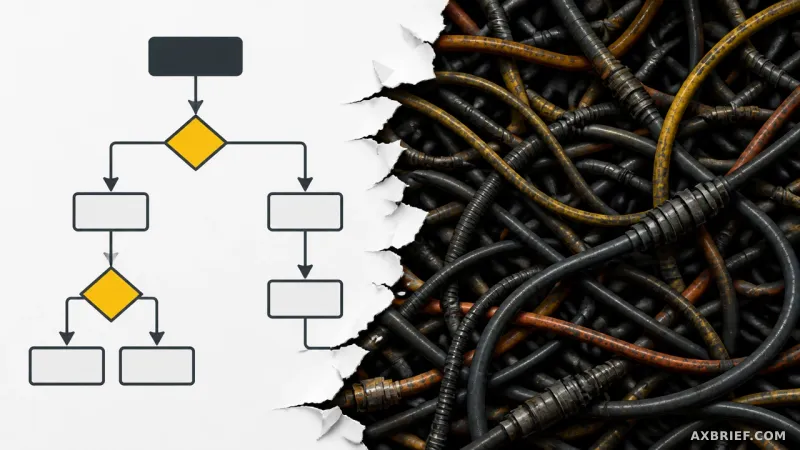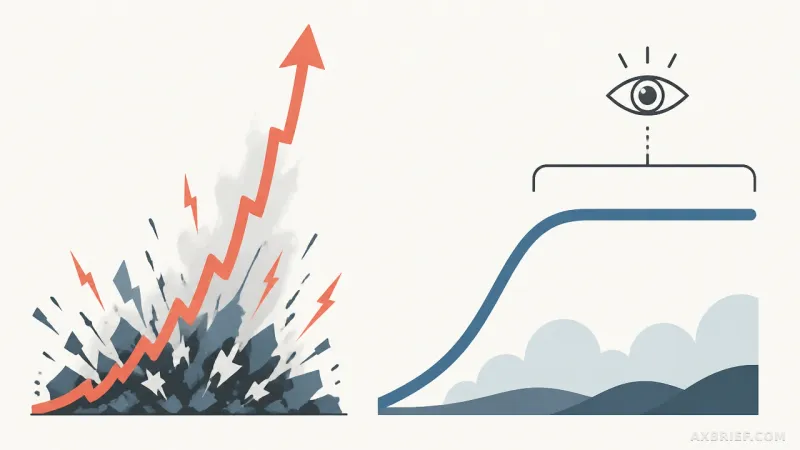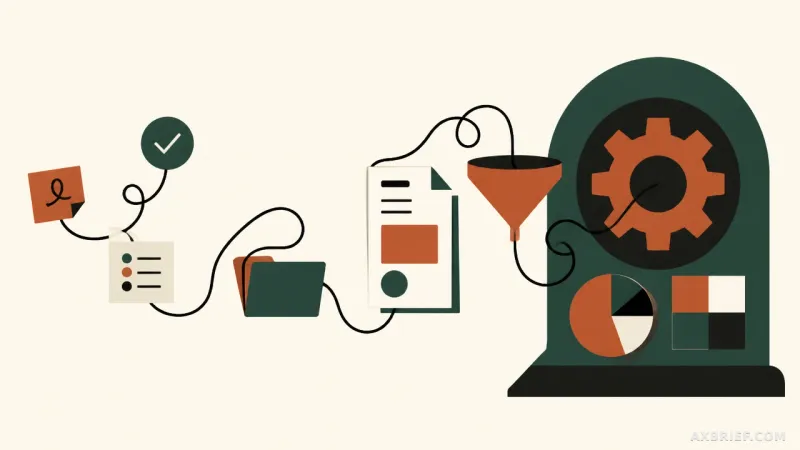
The modern developer's workflow has long been a battle of context switching. For years, the industry has operated in a state of friction, jumping between the IDE, the browser, and the terminal, trying to bridge the gap between an AI's suggestion and a working deployment. This tension created a phenomenon known as model overhang, where the underlying reasoning capabilities of large language models far exceeded the capabilities of the interfaces used to access them. Developers had the power of a super-intelligent architect but were forced to interact with it through a glorified chat box. This week, that friction is disappearing as the terminal itself becomes the agent.
The Velocity of Terminal-Based Engineering
Anthropic has fundamentally shifted the interface of AI engineering with the release of Claude Code. By stripping away the traditional UI and operating directly within the terminal, Claude Code removes the abstraction layer between the model and the machine. The scale of its market penetration is unprecedented. Within just eight months of its introduction, Claude Code is responsible for generating approximately 4% of all code uploaded to GitHub. This rapid adoption has translated into staggering financial velocity, making it the fastest enterprise product to reach an annual recurring revenue (ARR) run rate of $2.5 billion.
The technical foundation of this growth rests on a specialized model hierarchy. Opus 4.7 serves as the primary engine, introducing a level of autonomy that moves beyond simple request-response cycles. Opus 4.7 is capable of active, self-directed behavior; for example, it can autonomously schedule its own reminders to check user feedback 12 hours after a feature release and then initiate the necessary bug fixes based on that feedback without a new human prompt. Alongside it is Claude Mythos, a model with limited public availability that has demonstrated significant leaps in cybersecurity and complex coding performance, providing a high-security ceiling for enterprise applications.
Internal adoption at Anthropic provides a blueprint for how this tool integrates into professional workflows. On the first day of release, 20% of the company's own engineering team adopted the tool. Within five days, that number climbed to 50%, with the majority of the team utilizing it as a daily driver. This ecosystem is further expanded through the Model Context Protocol (MCP), specialized skills, and experimental projects from the Anthropic labs team, creating a cohesive environment where the AI possesses deep, real-time context of the local system and its dependencies.
The Shift to Parallelism and the Transformation Paradox
The true disruption of Claude Code is not the interface, but the transition from sequential to parallel agentic execution. In the traditional AI-assisted workflow, a developer prompts a model, reviews a snippet, and manually implements it—a linear process. Claude Code flips this pipeline by allowing developers to run multiple agents in parallel. An engineer can now operate five separate terminal tabs with five distinct agents simultaneously, enabling them to process 20 to 30 pull requests (PRs) in a single day. This shifts the human role from a writer of code to a final reviewer of completed results.
This capability is underpinned by a massive expansion in execution windows. While previous models struggled to maintain a coherent reasoning path for more than 30 seconds, Claude Code supports long-running agents. It is now common for hundreds or thousands of agents to run uninterrupted for 5, 10, or even 20 hours every night. This enables the completion of vertical tasks—complex, multi-step modifications to massive codebases, such as full-scale refactoring or dependency migrations, that would be impossible in a standard chat session.
However, this power introduces a new organizational risk known as token maxing. As seen with Amazon's internal tool Mesh Claw, when organizations use token consumption as a primary metric for manager evaluations, employees begin running agents pointlessly to inflate their usage numbers. Meta experienced this firsthand, resulting in the waste of hundreds of billions of tokens and millions of dollars in unnecessary costs. The tension here is clear: when productivity is measured by activity rather than value, the agent becomes a tool for metric manipulation rather than engineering progress.
This systemic tension is echoed in a survey of 20,000 Microsoft users, which revealed a transformation paradox. While 65% of respondents fear falling behind due to slow AI adoption and 66% report spending more time on high-value tasks, only 13% are actually rewarded by their organizations for experimenting with AI. There is a profound gap between individual initiative and corporate incentive structures. Interestingly, the data shows that when managers personally demonstrate the specific ways to use these agents, usage increases by 17% and trust in the agents jumps by 30%, suggesting that the bottleneck is no longer the technology, but leadership.
As the ability to generate 100% of a codebase via AI increases, the traditional technical moat of switching costs is evaporating. If Claude Code can automate the migration from Vendor A to Vendor B, the lock-in effect that once protected platform providers vanishes. The role of the engineer is consequently evolving into that of a Builder—a strategist focused on judgment, planning, and user understanding rather than syntax.
We are entering an era where a team of one to three people, wielding an army of autonomous agents, can execute a business scale that previously required an entire engineering department.