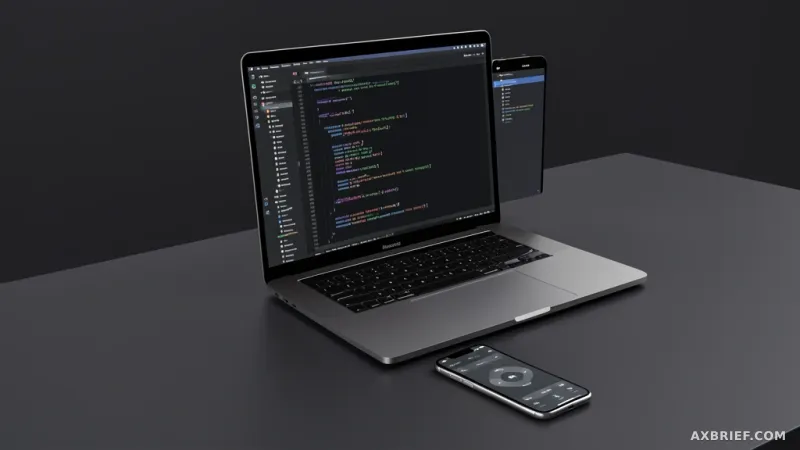
The modern developer's workflow is increasingly defined by a struggle against the desk. For years, the terminal has been a physical anchor, requiring a seated position and a mechanical keyboard to execute the complex logic that powers the web. However, the rise of autonomous coding agents is shifting this paradigm. The idea of triggering a complex refactor or deploying a hotfix while lounging on a sofa is no longer a futuristic fantasy but a tangible setup. This week, the community has been experimenting with bridging the gap between the mobility of iOS and the raw power of Mac-based AI agents, attempting to turn the iPhone into a remote command center for the next generation of software engineering.
The Architecture of Mobile Agent Orchestration
At the center of this experiment is Claude Code, Anthropic's terminal-based coding agent. Unlike a standard LLM interface that lives in a browser tab, Claude Code operates directly within the shell, possessing the authority to read files, write code, and execute commands on the local file system. To move this experience to an iPhone, the setup requires a remote control protocol that links the iOS device to the Mac's terminal environment. In this configuration, the Mac serves as the heavy-lifting compute engine, while the iPhone acts as a thin client, providing only the display and the input interface. The developer sends a command from the phone, which travels across the network to the Mac's shell, where Claude Code interprets the request, modifies the codebase, and streams the result back to the mobile screen.
Despite the elegance of the concept, the first day of implementation reveals three specific technical bottlenecks. The first occurs during the initial authentication phase, where the camera-based QR code recognition frequently fails to pass the authentication token, causing the connection to drop immediately. The second is a rendering anomaly where the connection is technically established, but the code tab remains entirely blank. In this state, the user has control, but the visual feedback loop is broken, leaving the developer staring at a void while the agent potentially works in the background. The third hurdle is the session persistence loop, where the connection expires prematurely, forcing the user to repeat the entire QR authentication process every few minutes.
Decoding the Handshake and Streaming Failures
To understand why these errors occur, one must look at the difference between a network handshake and a data stream. The QR code failure is often a physical and optical issue rather than a software bug. QR codes rely on three large squares known as finder patterns to help the camera determine the position and angle of the code. When screen glare or high brightness washes out these patterns, the iOS camera fails to convert the visual dots into binary data, preventing the server address from being extracted. Lowering the Mac's screen brightness to a mid-level setting often resolves this by increasing the contrast of the finder patterns, allowing the software to accurately capture the authentication token.
The empty code tab phenomenon represents a failure in the streaming phase. A successful connection requires two steps: the handshake, where the devices agree on communication protocols, and the stream, where actual data packets are moved. When a user sees a blank screen despite a successful connection, the handshake has finished, but the data packets are stalled in the network buffer. This is typically a synchronization error between the Mac's terminal output and the mobile client's memory. A forced refresh of the session or a status check on the Mac's terminal usually flushes these stalled packets, causing the missing logs and code to flood into the mobile interface all at once.
The most disruptive issue, the session reconnection loop, is a byproduct of iOS's aggressive power management and network switching. When an iPhone transitions from Wi-Fi to LTE or enters a low-power sleep state, the socket connection to the Mac is severed. Because the system is designed for high security, the session token—the digital key used for authentication—is often invalidated the moment the connection drops. To bypass this, developers must disable automatic screen lock during active sessions and ensure the device remains on a stable, fixed network. The goal is to maintain a persistent TCP connection that prevents the authentication server from demanding a new key for every minor signal fluctuation.
For those encountering these issues in professional environments, the most reliable fix is the creation of a dedicated local network. Public Wi-Fi or strict corporate firewalls often block the specific data packets required for terminal streaming. Using a mobile hotspot to link the Mac and iPhone into a single, isolated network removes these external interference points and significantly reduces the frequency of session timeouts. Ultimately, the mobile interface is merely a mirror reflecting the state of the Mac's terminal; if the primary process on the Mac crashes or hangs, no amount of refreshing on the iPhone will restore the connection.
This shift toward mobile agent control suggests a future where the terminal is no longer a place, but a persistent state that follows the developer across devices.