For years, investors in the Korean market have grappled with the Korea Discount, a persistent phenomenon where domestic companies are valued significantly lower than their global peers despite similar fundamentals. This valuation gap has long been a source of frustration for shareholders who watched as technical leadership failed to translate into stock price parity. However, the tide shifted this week as Wall Street pivoted its gaze toward the physical infrastructure of the artificial intelligence revolution, transforming a regional valuation struggle into a global capital windfall.
The Mechanics of a Record-Breaking Capital Raise
SK Hynix has officially entered the US market with a debut that redefined the scale of foreign listings. The company successfully raised $26.5 billion, a figure that signals an aggressive bet by American investors on the future of high-performance memory. This massive capital injection was achieved through the sale of 177.9 million American Depositary Receipts (ADRs), priced at $149 per share. By utilizing ADRs, the company allowed US investors to trade its shares with the same ease as domestic stocks, removing the friction typically associated with investing in foreign semiconductor firms.
This capital is not intended for corporate reserves but is earmarked for a three-pronged expansion of production capacity within South Korea. First, the company is funneling significant investment into the construction of new fabrication plants (fabs) currently underway in Korea to address the global memory shortage triggered by the AI chip boom. Second, SK Hynix is establishing advanced packaging facilities on home soil to maximize chip performance and secure its internal supply chain. Finally, the company is acquiring Extreme Ultraviolet (EUV) scanners, the critical lithography equipment required to etch the microscopic circuits of next-generation chips. By securing these tools, the company aims to translate its technical lead in AI memory into an insurmountable physical production advantage.
The Geopolitical Tension of Technical Dominance
While the financial figures are staggering, the true significance of this IPO lies in the records it broke and the strategic divide it exposes. At $26.5 billion, this is the largest IPO for a non-US company in the history of the American market, finally eclipsing the $25 billion record set by Alibaba in 2014. For a decade, Alibaba's debut stood as the ceiling for foreign entities entering the US, but the AI-driven demand for hardware has pushed that ceiling higher. This shift reflects a broader transition in market appetite from e-commerce platforms to the foundational hardware that enables generative AI.
This capital surge also highlights a stark divergence in manufacturing philosophy between the US and South Korea. Micron is currently pursuing a US-centric strategy, pledging $250 billion to build advanced production facilities within the United States and create over 90,000 jobs. In contrast, Korean chipmakers, including Samsung and SK Hynix, have committed over $550 billion to enhance their manufacturing footprint within South Korea. While the US government offers aggressive incentives to lure production onshore, the Korean firms are doubling down on their domestic ecosystems to maintain a centralized competitive edge.
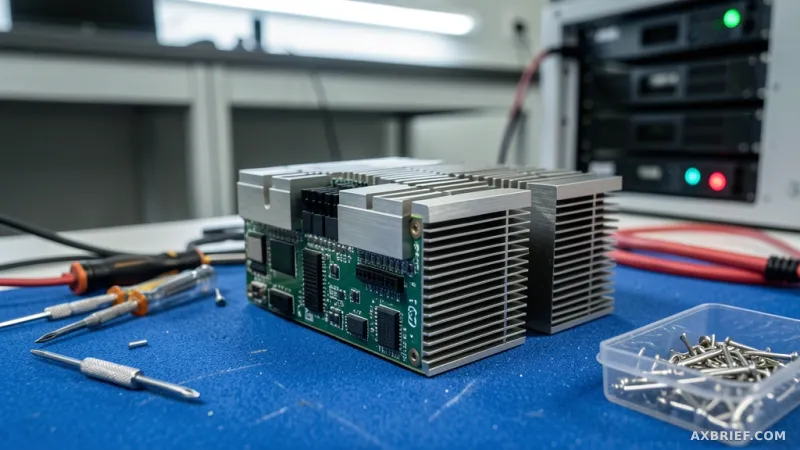
The engine driving this valuation is High Bandwidth Memory (HBM). In high-end gaming or professional video editing, users often encounter bottlenecks where the processor is fast, but the data path is too narrow, leading to stuttering and lag. HBM solves this by creating thousands of microscopic data paths, allowing massive volumes of information to move simultaneously. This architecture is indispensable for AI GPUs to function at peak capacity. Because Nvidia relies heavily on SK Hynix as a primary supplier, the company has effectively bypassed the Korea Discount by becoming a critical node in the global AI supply chain.
However, this dominance has attracted the attention of the US government. Howard Lutnick, the US Secretary of Commerce, has explicitly urged Samsung and SK Hynix to construct new factories on American soil. Lutnick has made it clear that the US government is uncomfortable with a situation where such critical technology remains a monopoly of a single foreign nation. The US strategy is simple: to ensure national security and technological sovereignty, the physical means of production must exist within its own borders. As SK Hynix grows more dominant in the HBM market, it finds itself caught between its desire to centralize production in Korea and the political pressure of its largest customer's government.
The $26.5 billion valuation proves that absolute technical superiority can override national discounts and market biases. The ability to control the HBM supply chain has become the primary metric of corporate value in the AI era, rendering traditional valuation models obsolete.