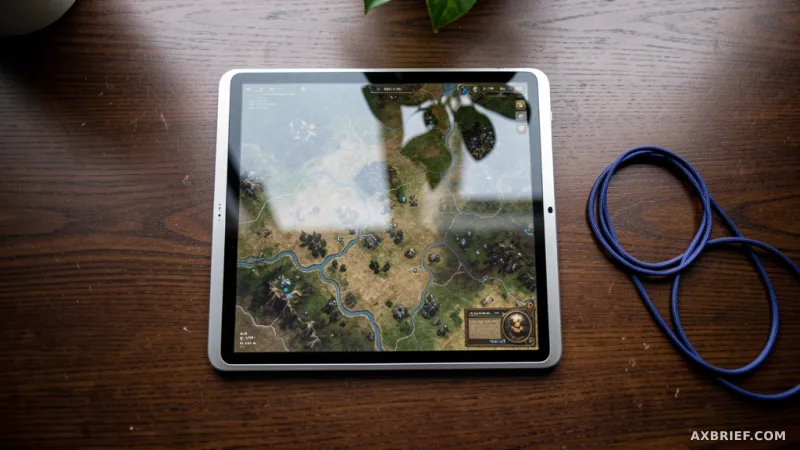
For years, the standard operating procedure for building a niche software tool or a simple indie game involved a predictable, grueling cycle. A product manager drafted a specification, a designer mocked up the interface, and a small team of developers spent several weeks wrestling with syntax, debugging state management, and refining the user experience. Even for a relatively simple visualization tool, the friction between the initial idea and the first working prototype was measured in man-hours and sprint cycles.
The Technical Capabilities of Claude Fable 5
Anthropic has disrupted this cycle with the release of Claude Fable 5, the first public iteration of the highly anticipated Mythos model. This release marks a significant shift in how generative AI handles software engineering, moving away from providing snippets of code toward delivering fully realized, functional applications. AI researcher Ethan Mollick has already demonstrated the model's capacity to bypass traditional development timelines by using Claude Code, Anthropic's specialized coding tool, to generate a variety of interactive projects.
Among the successful implementations are classic games like Snake and Strata, as well as more complex visual tools. One standout example is the creation of an isochronic map, a sophisticated visualization tool that maps the time it takes to travel from a central point to various surrounding areas. The level of precision and detail in these outputs suggests that the model is not merely guessing patterns but is capable of executing complex spatial and mathematical logic.
What separates Claude Fable 5 from its predecessors is its endurance and capacity for deep context. The model can ingest multi-page technical specification documents and maintain a continuous work state for up to 12 hours. This ability to perform long-form, autonomous execution allows it to handle the iterative process of building, testing, and refining a project without the user needing to manually prompt every single step of the way.
From Software Engineering to Vibe Coding
The arrival of Claude Fable 5 introduces a fundamental tension in the professional development world: the emergence of the Vibe Coder. A Vibe Coder is a developer who operates primarily through intuitive, high-level prompting—focusing on the feel, intent, and overall direction of a project rather than the manual implementation of the codebase. When a model can translate a single prompt into a working application, the traditional barrier to entry for software creation effectively vanishes.
This shift is best illustrated by the creation of Duino, a game based on the Duino Elegies by the German poet Rainer Maria Rilke. Rather than focusing on complex game mechanics or scoring systems, the project prioritizes atmosphere. The result is an animated experience featuring a solitary figure in a nocturnal landscape, where verses of Rilke's poetry appear as the user navigates the environment. In a traditional studio setting, translating a poetic mood into a functional piece of software would require a coordinated effort between a creative director and a technical lead. With Claude Fable 5, that entire pipeline is collapsed into a single interaction.
The implication is a reversal of the developer's primary value proposition. For decades, the most valuable skill was the ability to implement a design—the technical proficiency to turn a blueprint into a product. Now, as the floor for implementation capability rises, the value shifts toward the ability to design the intent. The bottleneck is no longer the code, but the clarity of the vision and the ability to verify the output.
As the performance curve of these models steepens, the necessity for team-based development on small-to-medium projects is being called into question. The ability to read a complex spec and work autonomously for half a day means that a single individual can now mirror the productivity of a small engineering team. The era of the specialized implementer is giving way to the era of the architect-operator.