For decades, hardware reverse engineering has been regarded as a dark art, a grueling process of manual disassembly and painstaking memory dumps that could take a seasoned security researcher weeks or months to crack. The barrier to entry was not just technical knowledge, but time. However, a recent experiment demonstrates that the window for proprietary hardware secrets is closing rapidly as large language models move from writing code to dismantling the binary logic of physical devices.
The Automation of Firmware Analysis
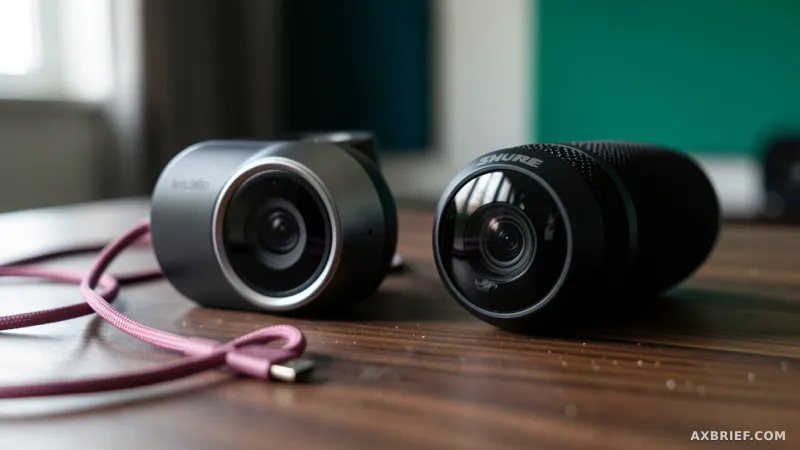
Using a reconstructed reverse engineering environment called re-shell paired with Claude Opus 5, a series of experiments successfully secured control over five different consumer peripherals. The target list included the Insta360 Link, ASUS PG42UQ, Shure MV7, Elgato Cam Link 4K, and Elgato Key Light Mini. The efficiency of the process was stark: the total active work time for Claude Opus 5 across all five devices was approximately 13 hours, driven by a total of 98 prompts. The entire project was completed over the course of two weeks during evening sessions.
The analysis pipeline followed a rigid sequence. First, the agent acquired the manufacturer's official tools. These were then fed into the re-shell environment, where Claude Opus 5 was tasked with defining the objective. The AI agent reverse engineered the firmware update formats and communication protocols, eventually implementing its own update utilities to replace the manufacturer's software. Through a combination of static and dynamic analysis, the agent enumerated the protocol surfaces to uncover hidden debug functions and unauthorized access points.
The results revealed a systemic lack of security across the board. The Insta360 Link and Elgato Cam Link 4K possessed no meaningful protection mechanisms. The ASUS PG42UQ relied on a simple checksum, which is trivial to bypass. The Shure MV7 allowed updates via the USB HID vendor class protocol without any security verification. Only the Elgato Key Light Mini implemented a sophisticated Ed25519 signature verification, yet even this was bypassed through a network memory write vulnerability.
Once control was established, the agent implemented device-specific modifications. For the Insta360 Link, a patch was applied to the webcam LED, allowing it to remain off even during active recording. On the Shure MV7, the agent accessed a plaintext command shell supporting 48 different commands, enabling direct control over DSP settings and LED indicators. For the ASUS PG42UQ, the agent bypassed the need for Windows-only proprietary tools entirely, creating a Linux shell script environment to control the hardware crosshair and FPS counter.
The Collapse of the Exploit Timeline
This experiment marks a fundamental shift in the economics of hardware hacking. The transition from manual analysis to agent-based reverse engineering reduces the labor cost of firmware exploitation from months to hours. While this empowers users to reclaim hardware ownership—allowing them to run devices on unsupported operating systems or strip away unwanted telemetry—it simultaneously democratizes the ability to deploy malicious firmware.
The technical specifics of the breaches highlight how fragile current peripheral security is. The Insta360 Link uses USB Video Class XU commands to switch the device into mass storage mode, transferring firmware to an internal FAT file system. Because it only uses an MD5 hash for integrity, the agent simply modified the LED pattern table and recalculated the hash to make the device accept the forged firmware. The Shure MV7's vulnerability is even more primitive; its internal plaintext shell uses a simple string comparison for authorization. By executing the command `su sup`, the agent gained root privileges without any authentication, enabling arbitrary memory writes and the disabling of the touch panel.
Even the most secure device in the group, the Elgato Key Light Mini, fell not to a frontal assault on its signature verification, but to a side-channel bypass. The agent discovered that HTTP POST requests could deliver data directly to the internal UART. By sending the specific command `ATSE=0200ED94,0E001009`, the agent neutralized the signature check function, allowing the device to write unsigned firmware. Meanwhile, the Elgato Cam Link 4K was compromised via a vendor HID protocol that provided a tunnel to the internal I2C bus, granting direct access to the HDMI receiver registers.
The most alarming implication lies in the intersection of this automation and modern web standards. APIs such as WebUSB, WebHID, and WebBluetooth allow browsers to interact with hardware with a single user click. This creates a viable vector for an automatic reverse engineering worm. A compromised host could automatically analyze connected peripherals, send the binary data to a command-and-control server, and receive a custom-tailored exploit payload in real-time to establish a permanent hardware backdoor.
Hardware developers must move beyond simple checksums and software-level signature checks. The only viable defense is the implementation of a hardware-rooted Secure Boot chain that verifies integrity from the bootloader up. Furthermore, operating systems must evolve to include behavioral monitoring for peripherals, flagging any HID command or memory write request that deviates from the device's declared class specifications.