A lead engineer at a robotics startup spends weeks selecting a vision model based on a leaderboard. The chosen model boasts a state-of-the-art mean Average Precision (mAP) and looks perfect on paper. However, the moment the model is deployed to the target NPU, the frame rate collapses from a projected 30 frames per second to a stuttering 2 frames per second. The culprit is not the model's architecture or the hardware's raw TFLOPS, but a single unsupported operator that forces the system to fallback to the CPU. This is the hidden wall that every Edge AI developer eventually hits: the gap between theoretical benchmark performance and actual runtime execution.
The Architecture of the Edge Pipeline
Deploying a vision model to the edge is not as simple as moving a PyTorch file to a device. A model containing operators not supported by the target hardware will either fail during the conversion process or suffer a massive performance hit as the runtime shunts unsupported operations back to the central processing unit. Because PyTorch models do not automatically execute on GPUs or NPUs, developers must use specialized runtimes and compilers to translate the model into a hardware-specific format. Tools like TensorRT, OpenVINO, and Core ML serve as these essential translators, and their compatibility lists effectively define the boundaries of what can actually be deployed.
Beyond the model itself, the entire Edge Vision AI system functions as a linear pipeline. The process begins with camera input, followed by decoding, preprocessing, AI model inference, post-processing, tracking, logic execution, and finally, event triggering. In this chain, the inference time is often the least of the bottlenecks. A developer might spend days shaving five milliseconds off the model's inference speed, only to find that the system is losing fifty milliseconds during the data copy phase or the image decoding stage. The real-world performance of the hardware is determined by the efficiency of the entire data path, not the isolated speed of the neural network.
The Shift from Capability to Deployability
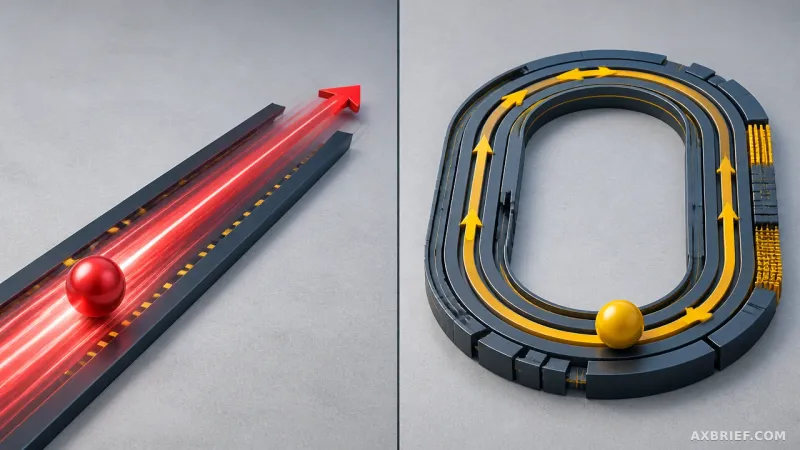
While the current trajectory of Cloud AI is focused on raising the ceiling of intelligence through massive foundation models and vast compute resources, Edge AI operates on a different philosophy. The goal of the edge is not to expand the upper limit of what AI can do, but to lower the threshold of how stably and cost-effectively that AI can be deployed in physical spaces. In the cloud, the primary constraint is the quality of the output; at the edge, the primary constraints are power consumption, thermal limits, and physical memory.
This shift in priority means that model selection must prioritize physical constraints over benchmark scores. The ability to export a model to formats like ONNX, TensorRT, Core ML, LiteRT, Qualcomm QNN, or Hailo is a practical requirement that outweighs a few percentage points of accuracy. Furthermore, the legal landscape introduces its own set of constraints. For instance, YOLO models often fall under the AGPL-3.0 License, which mandates that the source code of the derivative work be made public. For companies building proprietary commercial products, this license becomes a critical hurdle that requires careful legal review, regardless of how well the model performs on a benchmark.
The necessity of this local approach is driven by the nature of video data. Streaming high-resolution video to the cloud creates an unsustainable burden on network bandwidth and leads to skyrocketing operational costs. More importantly, the latency inherent in cloud round-trips can render a real-time system useless, while the transmission of sensitive internal footage introduces significant privacy and security risks. By performing inference at the point of data generation, Edge AI eliminates these vulnerabilities and reduces the need to transmit massive files, sending only the extracted metadata or specific alerts to the server.
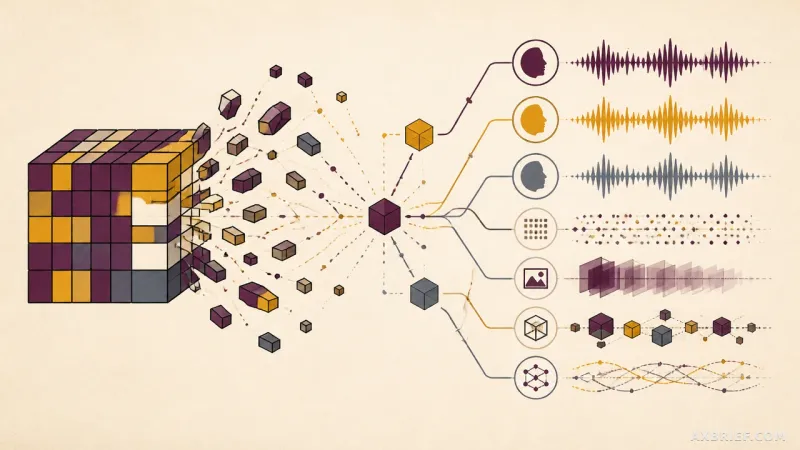
To make this possible, developers employ a suite of optimization techniques designed to fit the model into the hardware's narrow window of resources. Quantization reduces the precision of weights to lower memory usage, while pruning removes redundant neurons that contribute little to the final result. Knowledge distillation allows a smaller student model to mimic the performance of a larger teacher model, and resolution adjustment ensures the input data does not overwhelm the processor. These are not merely ways to shrink a file; they are the primary mechanisms for finding the optimal balance between accuracy and real-time viability within the physical limits of the device.
Success in Edge Vision AI is not found in the highest benchmark score, but in the seamless alignment of model operators, runtime compatibility, and licensing terms.