Every researcher knows the ritual of the modern academic deep dive. It begins with a dense PDF open in one window, a translation tab in another, and a chatbot window waiting to explain a particularly opaque paragraph. This fragmented workflow creates a cognitive tax, forcing the mind to jump between contexts and interfaces dozens of times per hour. The process of verifying a translation against the original text often feels like a game of digital ping-pong, where the actual act of synthesis is interrupted by the mechanical struggle of navigating software.
The Architecture of an Engine-Agnostic Reader
EasyPaper emerges as an open-source solution designed to collapse this fragmented pipeline into a single, unified web application. At its core, the tool is built to be engine-agnostic, allowing users to choose the intelligence powering their analysis based on their specific hardware and budget constraints. The software integrates three distinct tiers of LLM connectivity: local, API, and CLI. For those prioritizing privacy and zero cost, EasyPaper supports Ollama, enabling the execution of models directly on a personal machine. The platform even provides a one-click installation process for Ollama within the settings menu to lower the barrier to entry for non-technical users.
For researchers requiring the highest reasoning capabilities, the tool connects to industry-leading cloud APIs including Gemini, Claude, and OpenAI. Beyond standard API calls, EasyPaper implements a sophisticated detection system for CLI-based engines. It automatically identifies and activates tools like Google Antigravity, Anthropic Claude Code, and OpenAI Codex if they are present on the user's system. This flexibility ensures that the user is never locked into a single provider and can pivot between a fast, cheap local model for initial skimming and a high-parameter cloud model for complex theoretical analysis.
Accessibility is handled through a transparent open-source model. All source code is hosted on GitHub, and the project provides dedicated installation scripts for macOS, Linux, and Windows. By reducing the setup process to a few terminal commands, the developers have ensured that the tool can be deployed across diverse operating environments without the need for complex manual configuration.
From Passive Viewing to Active Synthesis
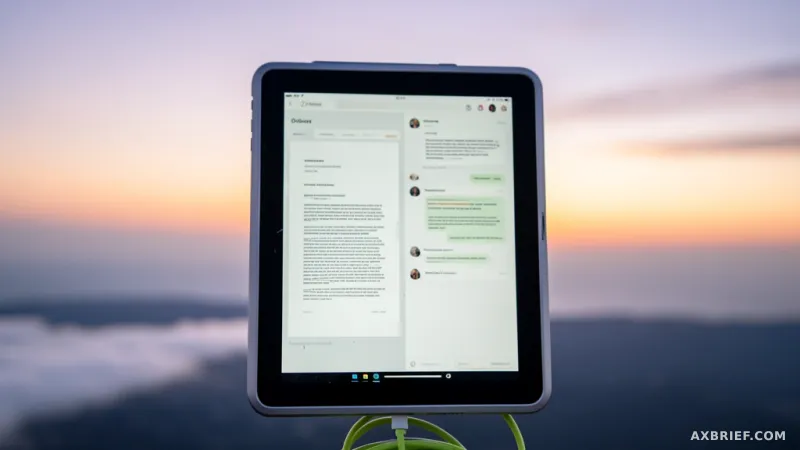
While the engine support provides the power, the interface provides the insight. The central innovation of EasyPaper is its dual-panel viewer, which places the original PDF and the AI-generated translation side-by-side. This is not a simple split-screen; it is a synchronized environment. When a user hovers over a sentence in the original text, the viewer automatically scrolls the translation panel to the corresponding section. Clicking a specific sentence triggers a simultaneous highlight in both panels, creating a 1:1 precision match that eliminates the guesswork involved in cross-referencing translated academic jargon.
The efficiency gains extend to the very moment a file is uploaded. EasyPaper implements a background processing pipeline that begins translation the instant a PDF is dragged and dropped into the interface. While the translation is running, the AI analyzes the abstract and the body of the paper to determine its academic identity. The system then automatically assigns category tags such as VLM (Vision Language Model), VLA (Vision-Language-Action Model), GAN (Generative Adversarial Network), or CNN (Convolutional Neural Network). This automation replaces the manual pre-processing phase where researchers typically spend time reading and labeling papers before they can even begin the actual analysis.
To support the actual writing process, the tool incorporates a floating memo system that lives directly on top of the document. These notes support full Markdown formatting for hierarchical organization and, crucially, integrate LaTeX rendering. This allows researchers to record complex mathematical formulas and symbols with the same precision found in the original paper. By integrating the note-taking process into the reading interface, EasyPaper removes the need to switch to external editors or LaTeX environments during the initial synthesis phase.
This transition from a fragmented toolset to a unified environment changes the nature of academic reading. The user no longer manages windows; they manage ideas. By removing the physical and cognitive friction of the translation-chatbot loop, the software shifts the researcher's focus from the mechanics of reading to the act of understanding.