
Modern software development has evolved into a constant balancing act between reasoning capabilities and API overhead. Developers frequently jump between different AI assistants, attempting to find the sweet spot where a model is smart enough to handle a complex refactor but efficient enough not to drain a project budget. For a long time, this optimization happened outside the IDE, requiring manual context switching and fragmented workflows. The introduction of a centralized model picker in GitHub Copilot began to solve this, but the options remained largely confined to a handful of proprietary, closed-source giants.
The Arrival of Kimi K2.7 Code
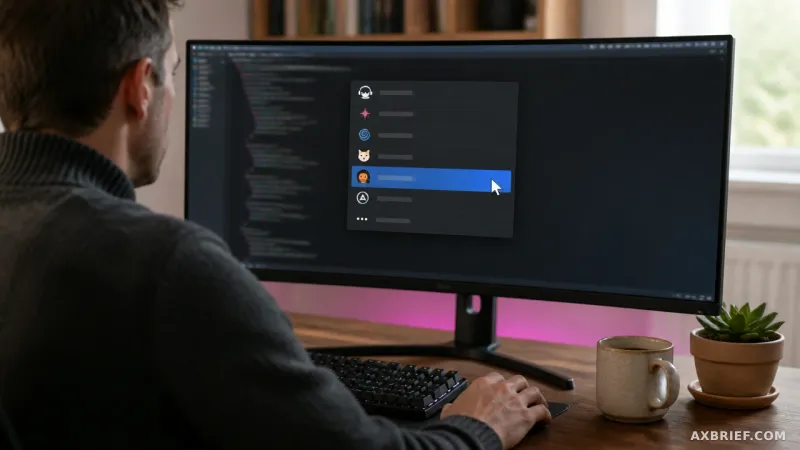
GitHub Copilot has officially expanded its Model Picker to include Kimi K2.7 Code, marking a significant shift in the platform's ecosystem. This is the first open-weight model to be generally available within the Copilot interface, allowing users to select it directly from the dropdown menu. Unlike closed-source models, open-weight models provide public access to the model's weights, offering a level of transparency and flexibility that has previously been absent from the Copilot experience.
The rollout is currently proceeding in stages via the Visual Studio Code model picker. The feature is immediately available to users on the Copilot Pro, Pro+, and Max plans. For those operating within corporate environments, the rollout to Copilot Business and Copilot Enterprise plans is scheduled to complete over the coming weeks. However, the integration for enterprise users includes a governance layer; the model is disabled by default. Organization administrators must manually navigate to the Copilot settings menu and activate the Kimi K2.7 Code policy before their team members can access the model in their respective editors.
To ensure enterprise-grade stability and scalability, GitHub hosts Kimi K2.7 Code on Microsoft Azure infrastructure. This removes the burden of self-hosting from the developer while maintaining the benefits of an open-weight architecture. The financial structure is equally transparent, utilizing a usage-based billing system. Costs are calculated based on provider list pricing, meaning developers are charged only for the actual tokens consumed rather than a flat, opaque fee. This allows teams to compare the per-token cost of Kimi K2.7 Code directly against the pricing of closed-source alternatives.
Breaking the Closed-Model Monopoly
Integrating an open-weight model into a proprietary tool like GitHub Copilot is more than a simple feature update; it is a reversal of the traditional AI vendor lock-in. Until now, developers were forced to choose from a curated list of closed-source models, where the internal logic and weight distributions were trade secrets. By introducing Kimi K2.7 Code, GitHub is acknowledging that the most efficient workflow is not always the one powered by the largest, most expensive model, but the one that matches the specific complexity of the task at hand.
This creates a new dynamic of cost-performance routing. A developer might use a high-reasoning closed model for architectural design but switch to Kimi K2.7 Code for routine boilerplate or unit test generation. Because the model is hosted on Azure with usage-based billing, the economic incentive to switch models is now quantified in real-time. The tension between performance and price is no longer a theoretical debate but a toggle in the IDE. This shift empowers developers to treat AI models as interchangeable components of a pipeline rather than monolithic services.
Furthermore, the administrative control provided to Copilot Business and Enterprise users transforms the model picker into a strategic tool for CTOs. By toggling specific open-weight models on or off, organizations can experiment with different AI architectures to verify efficiency gains without committing to a full-scale infrastructure migration. The ability to validate the performance of an open-weight model against a closed-source one within the same environment eliminates the friction of benchmarking across different platforms.
The convergence of open-weight accessibility and Azure's managed infrastructure means that the barrier to entry for cost-optimized AI coding has effectively vanished.



