The AI industry has reached a tipping point where the primary bottleneck is no longer just the elegance of a model's architecture, but the raw physical availability of the silicon required to train it. For years, the dominant strategy for hyperscalers was vertical integration: build the largest data centers possible and own every rack of servers. However, as the scale of frontier models grows exponentially, the time required to secure land, permit power grids, and construct these facilities has become a strategic liability. The race for intelligence is now a race against the clock, and the cost of waiting for concrete to dry is becoming too high to bear.
The $11 Billion Annual Compute Lease
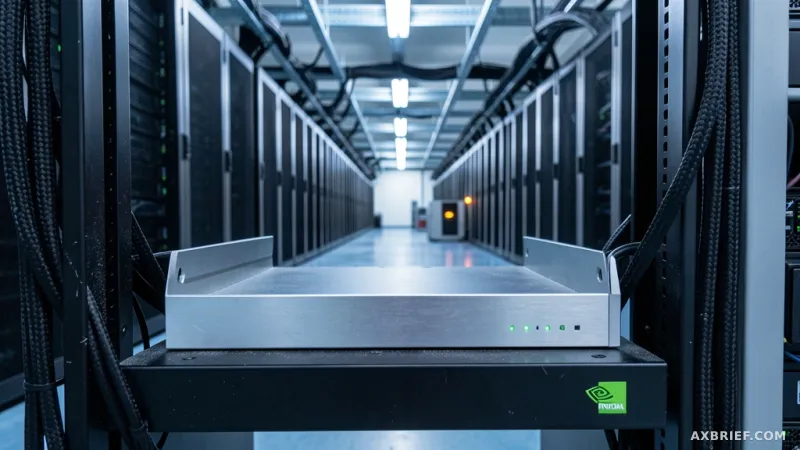
Google has fundamentally shifted its infrastructure strategy by agreeing to pay SpaceX $920 million per month for computing resources. This massive financial commitment spans from October 2026 through June 2029. Under the terms of the agreement, Google gains immediate access to a colossal pool of hardware, including approximately 110,000 NVIDIA GPUs, alongside the necessary CPUs, memory, and interconnect components required to sustain large-scale AI training. By opting for a rental model over direct construction, Google is effectively bypassing the physical constraints and time-to-market delays associated with expanding its own data center footprint.
To mitigate the risk of hardware obsolescence, the contract includes a critical safety valve. Both parties maintain the option to terminate the agreement after December 31, 2026, provided a 90-day notice is given. This structure mirrors a similar arrangement Google has with Anthropic, reflecting a broader industry trend toward flexible infrastructure. In an era where a new generation of GPUs or a paradigm shift in model architecture can render current hardware inefficient within months, the ability to exit a lease prevents Google from being locked into sunk costs and allows for a rapid transition to the next frontier of compute.
From Research Lab to Infrastructure Platform
This arrangement reveals a deeper transformation in how AI power is distributed, centering on the Colossus data center located near Memphis, Tennessee. Originally constructed by xAI for its own aggressive development goals, Colossus has been integrated into SpaceX's asset portfolio and is now functioning as a commercial hub for external leasing. The scale of this pivot is evident in other deals; Anthropic is currently leasing the same facility through 2029, paying a staggering $1.25 billion per month. The emergence of Colossus suggests that the most successful AI players are no longer just those who write the best code, but those who control the physical environment where that code is executed.
The relationship between Google and SpaceX extends beyond a simple vendor-client contract into a complex web of equity and strategic alignment. As an early investor in SpaceX, Google is positioned to benefit from the company's soaring valuation. Market analysts suggest that if SpaceX proceeds with an initial public offering, Google's stake could exceed $100 billion. This creates a symbiotic loop where Google secures the compute necessary to maintain its AI leadership while simultaneously watching its investment assets appreciate in value. SpaceX, meanwhile, has successfully transitioned from a launch provider to a comprehensive AI infrastructure platform, leveraging xAI's technical foundation to dominate the supply side of the AI economy.
SpaceX is now leveraging this infrastructure dominance to fuel its broader financial ambitions. The company is pursuing a Nasdaq listing with plans to raise approximately $75 billion in capital. According to official filings with the Securities and Exchange Commission, SpaceX's corporate valuation has reached roughly $1.75 trillion. By converting research-oriented data centers into commercial revenue streams, SpaceX has turned a cost center into a profit engine, providing the financial liquidity needed to fund its interplanetary goals while controlling the operational environment of the world's leading AI labs.
Google's decision to pay a premium for rented silicon is a calculated trade-off that replaces the risk of ownership with the advantage of agility. The physical time required to build a cluster of 110,000 GPUs is a fixed cost that cannot be optimized, whereas a monthly subscription allows for immediate deployment. In the current landscape, the efficiency of AI development is no longer measured by the size of a company's balance sheet or its real estate holdings, but by the speed at which it can move compute from a warehouse into a training run.