The modern professional workspace has become a silent colony of a few Silicon Valley giants. From the way a lawyer in Amsterdam drafts a brief to how a researcher in Utrecht analyzes a dataset, the cognitive infrastructure of the West is increasingly routed through a handful of proprietary servers in the United States. This reliance is not merely a matter of convenience; it is a structural vulnerability. When a nation's intellectual output and administrative logic are processed by models whose weights are secret and whose training data is opaque, digital sovereignty becomes a theoretical concept rather than a practical reality. This week, the Netherlands decided to move from theory to execution.
The Architecture of National Autonomy
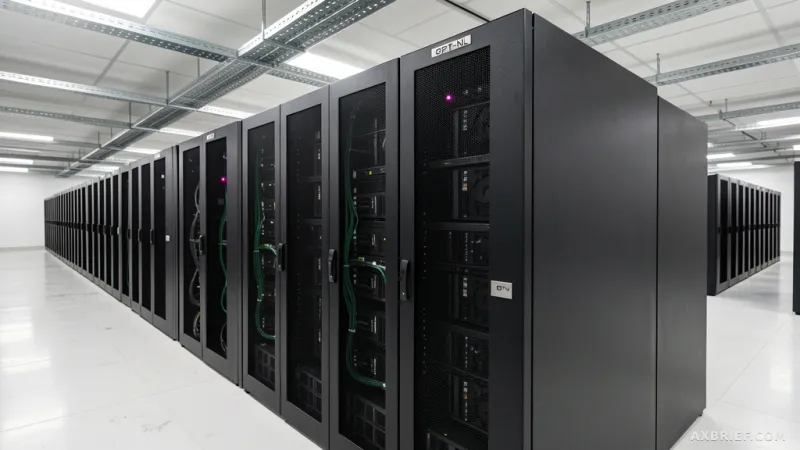
To break this cycle of dependency, a coalition of the Netherlands' most critical scientific and technical institutions has launched GPT-NL. The project is a joint venture between TNO (Netherlands Organisation for Applied Scientific Research), SURF (the Dutch education and research network), and the NFI (Netherlands Forensic Institute). This is not a mere academic exercise but a state-backed strategic initiative. The Netherlands Enterprise Agency (RVO), acting on behalf of the Ministry of Economic Affairs and Climate Policy, has allocated 13.5 million euros to fund the development of the model and its surrounding ecosystem.
This investment is designed to create a linguistic and cognitive toolset that is natively aligned with Dutch and European legal frameworks, social values, and policy objectives. By funding the project through public channels, the Dutch government is attempting to ensure that the resulting AI is a public good rather than a corporate asset. The goal is to establish a sustainable AI ecosystem that allows the public sector and private enterprises to run responsible AI applications without exporting sensitive data or relying on the whims of non-European providers. The project seeks to build a technical foundation where the rules of engagement are written in The Hague and Brussels, not San Francisco.
The Strategic Pivot to Scratch Training
Most organizations attempting to build sovereign AI take the path of least resistance: they download a pre-trained model like Llama or Mistral and fine-tune it on local data. While efficient, this approach inherits the original model's baggage. It carries the biases of the original training set, the legal ambiguities of the data used by the parent company, and the potential for hidden privacy leaks. The developers of GPT-NL have made a high-stakes decision to reject this shortcut. They are opting for scratch training, meaning the model will be built from the ground up using a curated dataset without relying on any existing pre-trained weights.
This decision transforms GPT-NL from a modified version of someone else's AI into a clean-room implementation. By controlling the data pipeline from the first token, the project eliminates the legal uncertainty surrounding copyright and data provenance that currently plagues the AI industry. To maintain this transparency, the project will release its source code as open source, documenting every choice made during data collection and the methods used to mitigate bias. However, in a calculated move to prevent misuse and maintain governance, the model weights will be distributed under a controlled license. This allows the administrators to track who is using the model and push critical security updates directly to users, ensuring the system remains compliant with evolving European regulations.
Beyond the code, GPT-NL is introducing a fundamental shift in the AI economy through the creation of a Content Board. For years, the AI industry has operated on a model of unilateral extraction, where the creative work of millions is ingested without consent or compensation. The Content Board integrates data rights holders directly into the development process. These stakeholders will not only have a voice in the model's future direction but will also receive a portion of the revenue generated by the model's operation. This replaces the predatory scraping model with a collaborative partnership, ensuring a legal and ethical supply chain of high-quality data.
Finally, the project addresses the environmental cost of the AI arms race. While the industry trend has been to scale models to astronomical sizes regardless of the energy cost, GPT-NL is prioritizing scientific optimization. By using empirical research to determine the optimal model size and refining the training process to minimize electricity and water consumption, the project aims to prove that sovereign AI can be sustainable. The focus is on efficiency over raw scale, treating energy consumption as a primary engineering constraint rather than an afterthought.
This shift toward sovereign infrastructure suggests that the era of the universal, one-size-fits-all LLM is ending, giving way to a world of specialized, nationally-governed intelligence.