Data center operators face a frustrating architectural mismatch: the lifespan of a server is typically three to five years, yet the memory modules inside them often remain viable for seven to ten. For a hyperscale giant like Meta, this discrepancy creates a mountain of functional DDR4 DIMMs that become e-waste simply because the latest generation of processors demands DDR5. This problem is compounded by the rigid design of modern server fleets, where roughly 40 percent of Meta's existing infrastructure lacks the physical capacity for memory expansion, leaving engineers to struggle with Out of Memory errors in an environment where the hardware is technically incapable of growing.
The Architecture of the Vistara Bridge
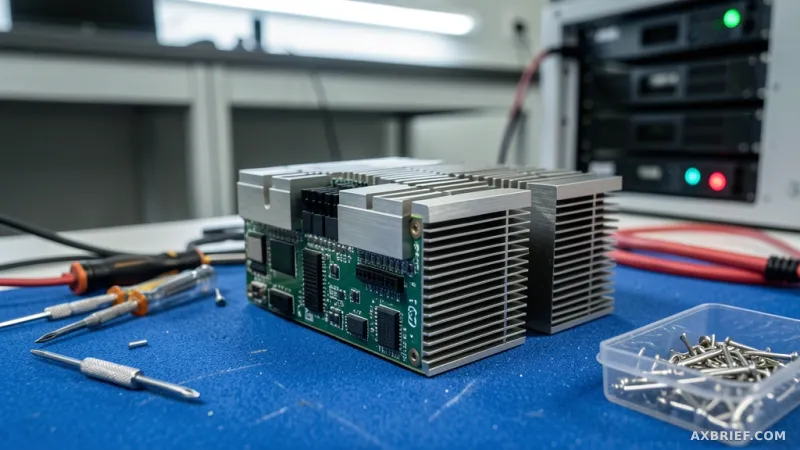
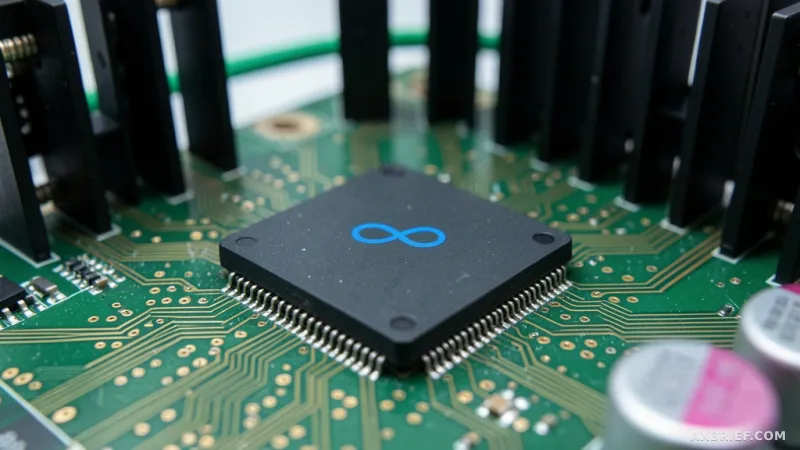
To bridge this generational gap, Meta developed Vistara, a custom Application-Specific Integrated Circuit (ASIC) designed to act as a CXL (Compute Express Link) bridge. The Vistara chip allows legacy DDR4 memory to be integrated into modern DDR5 server environments by translating memory requests across a high-speed interface. Technically, the ASIC utilizes a PCIe Gen5 x16 interface, ensuring compatibility with both CXL 1.1 and 2.0 standards. Each Vistara chip manages two independent 72-bit DDR4 memory channels, supporting speeds up to 3,200 MT/s. When paired with 64GB DIMMs, a single ASIC can provide up to 256GB of additional memory capacity. To manage the internal logic and orchestration of these memory requests, Meta embedded two custom RISC-V processors directly into the ASIC.
This hardware is deployed within a specialized server configuration Meta calls the MemServer. These machines are powered by AMD Turin processors, boasting 158 cores and 316 threads. In a typical MemServer setup, the system utilizes 768GB of primary DDR5 memory for high-performance tasks, while the Vistara CXL card adds another 256GB of DDR4 capacity. Because high-density memory and CXL controllers generate significant heat, Meta designed the Vistara cards to sit in rear-access slots within the chassis, utilizing high-capacity fans and a directional airflow system for direct cooling.
Solving the Latency and Efficiency Paradox
Integrating older, slower memory into a cutting-edge system usually introduces a performance penalty that outweighs the capacity gains. Meta solved this by treating the Vistara-connected memory not as a direct extension of the main RAM, but as a separate CPU-less NUMA (Non-Uniform Memory Access) node. By exposing the DDR4 pool as a distinct logical entity to the operating system, Meta can implement a hierarchical memory access strategy. The system is programmed to exhaust the local, high-speed DDR5 DRAM first, only spilling over into the CXL-based DDR4 pool when additional capacity is strictly necessary. This prevents the slower DDR4 latency from bottlenecking the primary compute cycles of the AMD Turin processor.
On the software side, Meta avoided the trap of creating a proprietary, siloed driver stack. Instead, they utilized the standard Linux CXL driver code, with contributions already upstreamed or in the process of being merged into the main kernel. This ensures that the memory expansion is managed by the standard kernel environment, making the infrastructure easier to maintain at scale.
The operational impact of this approach is most visible in big data workloads. Tools like Spark and Hive, which process terabyte- and petabyte-scale datasets, frequently crash due to OOM events when handling massive per-job memory requirements. By providing this CXL-extended buffer, Meta observed a 33% reduction in job failures, restarts, and resource fragmentation overhead. Even more significant gains appeared in disaggregated ML inference workloads. For recommendation systems that rely on massive embedding tables, the increased memory efficiency allowed Meta to reduce the total number of required servers by up to 25%. This reduction translates directly into lower capital expenditure for hardware and a significant decrease in power consumption and data center floor space.
This strategy transforms legacy hardware from a liability into a strategic asset for workloads where absolute capacity outweighs raw latency. By decoupling memory lifecycles from processor lifecycles, Meta has created a blueprint for sustainable hyperscale growth.