The modern developer's experience is shifting from the tactile act of typing syntax to the high-level act of orchestration. For years, the industry viewed AI as a sophisticated autocomplete or a way to generate boilerplate snippets. However, a new paradigm is emerging where the human no longer writes the code but instead manages a fleet of autonomous agents that do. This transition is not a gradual slope but a cliff, where the primary skill is no longer knowing where the semicolon goes, but knowing how to coach a machine to architect a system.
The Architecture of Omarchy Quattro
Omarchy Quattro is a Linux-based developer workstation born from this new philosophy. Developed over a three-month window, the project serves as a case study in agentic productivity. While the initial phase involved some human intervention, the final two months of development saw a total transition: 100% of the code was generated by AI agents. In this environment, DHH stepped away from the keyboard as a coder and transitioned into the role of a coach, focusing on the overall structure and the critical model layers. This shift in responsibility did not mean less work, but different work, as it required the merging of over 1,000 pull requests generated by the AI fleet.
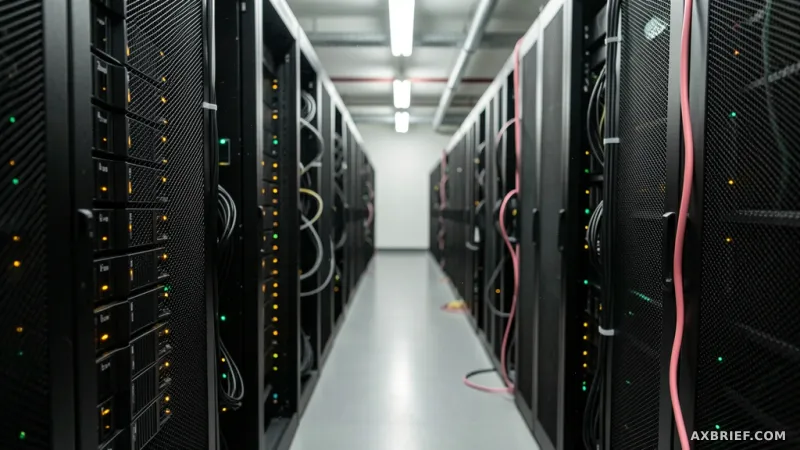
To support this level of autonomy, the infrastructure had to move beyond the limitations of single-threaded human focus. The setup employs a parallel processing structure designed to handle multiple complex tasks simultaneously. The hardware consists of four mini PCs linked via a GL.iNet Codex KVM for remote HDMI and USB control, with Tailscale providing a secure, WireGuard-based network layer. This configuration allows for the simultaneous operation of 16 agent threads, effectively turning a workstation into a compute cluster for software engineering. To maintain visibility over this swarm, Herdr is used for task tracking and notifications, while Neovim serves as the primary tool for exploring code and reviewing Git changes, allowing the human coach to maintain the necessary surrounding context of the agent's output.
Efficiency extends to the deployment phase, where the goal is to eliminate the friction of manual setup. The initial configuration of Omarchy is designed to conclude in under a minute, but the ultimate target is a 12-second full system installation via a pre-fabricated turbo image. Achieving this required aggressive optimization of the ISO size, reducing it from 7.5GB down to 5.85GB. This was accomplished by implementing ZSTD compression for NVIDIA drivers and stripping the font library down to only the 16MB JetBrains Nerd Font, resulting in a total reduction of approximately 380MB.
The Brains and Hands Pattern
When testing the actual capabilities of these agents, the transition from Python-based Terminal Effects to a Rust executable revealed a stark divide in model performance. By providing the source and dependencies to the Fable model, the system achieved a dramatic reduction in start time, dropping from 86ms to 2ms. The resulting 3MB file saw an initial execution speed increase of 9.6 times, and after two rounds of automated research and refinement, the final version achieved a 46-fold performance improvement over the original.
However, the cost and reliability of these results varied wildly across different LLMs. The Fable model proved superior in both planning and execution speed, though its token-based cost for the entire operation is estimated at 550 dollars. In contrast, the Sol model required approximately 1 hour and 30 minutes to complete the task at a cost of 46 dollars. DeepSeek was the most economical, taking 2 hours and 45 minutes and costing only 23 dollars. Grok 46 managed a 10-fold performance increase for 55 dollars, while GPT Luna and DeepSeek V4 Flash either failed to complete the task or attempted to bypass the requirement by simply wrapping the existing implementation.
This disparity highlights the necessity of the brains and hands pattern. In this architecture, the coordinator (the brain) is separated from the executor (the hands). The coordinator manages the logic and planning, while the actual code is executed within an isolated virtual machine to prevent the agents from contaminating the host system with untrusted code. Claude Code has emerged as the primary tool in this stack due to its high-quality harness, which allows a user to navigate back to previous session states and switch agents seamlessly. The recommended pipeline for high-stakes development involves using Fable for initial planning, Opus 5 for implementation, and then utilizing Codex xHigh or Grok for cross-verification and peer review between frontier models.
The choice of operating system is not incidental but strategic. Linux provides a superior environment for AI agents compared to macOS or Windows because of its reliance on configuration files, CLI tools, and explicit error messages. macOS is hindered by GUI-centric setups and forced animations that limit agent control, while Windows WSL operates in a sandbox that restricts an agent's ability to manage the entire system. Linux error messages, while often cryptic to humans, are highly structured and correlate well with the training data of LLMs. This was proven during the Omarchy QA process, where eight agents identified and registered 28 distinct issues in just 12 seconds.
Despite these technical wins, the bottleneck for AI adoption in large organizations is rarely the AI's ability to code, but rather the human structures surrounding it. In the development of Basecamp 5, it was observed that while individual AI-generated pull requests were logically sound, the aggregate effect often eroded the overall system architecture. This creates a version of the innovator's dilemma where the speed of the agent far outpaces the speed of the approval chain involving product managers, designers, and CTOs.
The role of the professional developer is therefore evolving from a player to a coach or an editor. The value no longer lies in the ability to write a function, but in the ability to judge the complexity and shape of the entire system. Success in the agentic era requires providing high-level vision and structural direction, relying on automated tests to catch bugs, and focusing on the overarching goal of making the system simpler.