The local LLM community has long operated under a frustrating compromise. Developers wanting high-level reasoning capabilities typically had to choose between the latency and cost of closed-source APIs or the hardware-heavy demands of local reasoning models. For those running models on consumer-grade GPUs, the trade-off was often a choice between a model that responded instantly but lacked depth, or a thinking model that spent an eternity generating internal tokens before arriving at a conclusion. This tension has created a ceiling for what is possible on a personal workstation, leaving the 700-point threshold on the ARC-C benchmark as a fortress largely guarded by corporate server farms.
The Architecture of a Local Reasoning Powerhouse
The release of the Qwen3.8-27B-TURBO-Fable-Cold-Fusion-735-882-Heretic-Uncensored-NEO-CODER-MAX-MTP-GGUF model fundamentally shifts this dynamic. In an 8-bit quantization state, the model recorded a score of 735 on the ARC-C benchmark, which measures complex reasoning and problem-solving. This represents a massive leap of 144 points over the base Qwen 3.8 27B model. Even when pushed to 4-bit quantization to further reduce memory overhead, the model maintained a score of 719, proving that high-tier intelligence can survive aggressive compression.
These results are not isolated. In a series of seven core benchmarks, this Turbo variant consistently outperformed not only the base Qwen 3.8 27B but also larger or more recent iterations including the Qwen 3.6-35B-A3B, Qwen 3.6 27B, and Qwen 3.5 27B. Beyond the ARC-C results, the model achieved an ARC-E score of 880 in its 8-bit configuration, placing its reasoning capabilities in the same league as the most advanced closed-source models currently available.
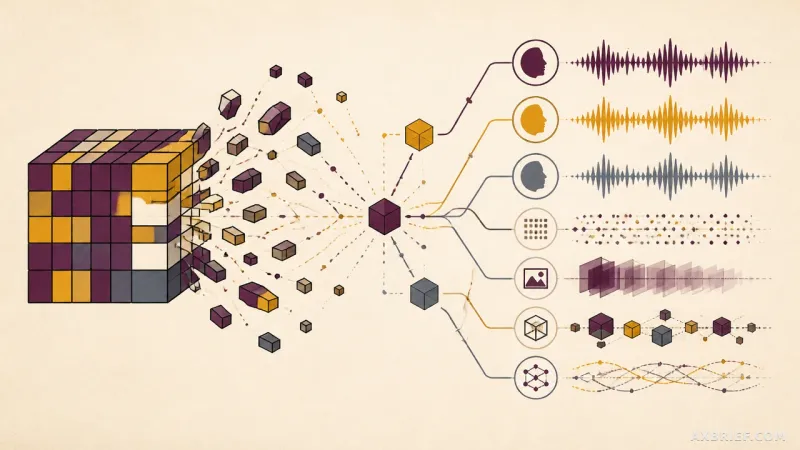
Achieving this on consumer hardware was made possible through the Unsloth library, which optimizes training speed and reduces memory consumption for individual developers. The model's intelligence was forged using a combination of COLD FUSION and FABLE FUSION 711 methodologies. This involved a rigorous multi-stage fine-tuning process followed by multi-stage merging, where different model strengths were layered and blended. To ensure maximum utility for developers, the NEO-CODER MAX configuration was applied to sharpen coding proficiency, while an uncensored tuning removed the moralizing refusals that often hinder technical productivity in standard models. The final output is delivered in the GGUF format, allowing for efficient execution across both CPU and GPU resources.
Solving the Thinking Token Tax
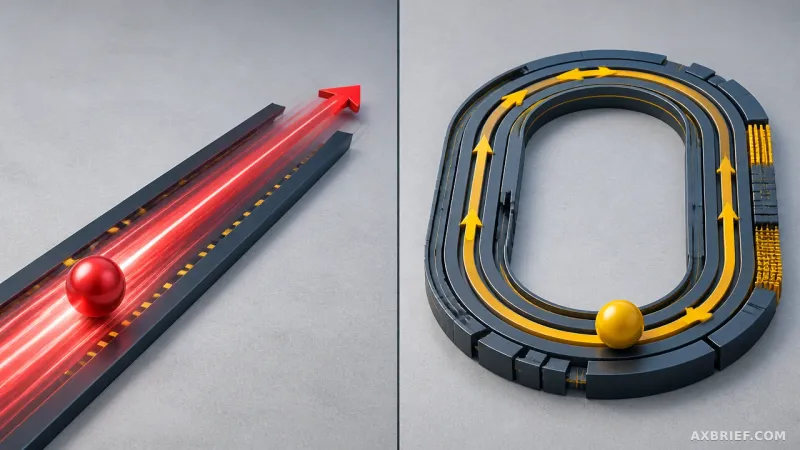
The most significant breakthrough, however, is not the raw score, but the efficiency of the reasoning process. Traditional reasoning models, including the base Qwen 3.8 27B, often suffer from a thinking token tax. They generate thousands of internal tokens—a hidden monologue of trial and error—before producing the final answer. While this process increases accuracy, it creates a bottleneck in response time and wastes precious compute cycles on redundant logic.
This Turbo version solves this by reducing the number of thinking tokens by 50 to 90 percent compared to the original Qwen 3.8 27B. By tuning the model to eliminate unnecessary deliberation and focus on direct, high-quality output, the developers have effectively increased the intelligence-per-token ratio. The model no longer spends excessive time struggling with formatting or looping through redundant thoughts; it arrives at the correct conclusion with a fraction of the internal compute.
This shift transforms the local workstation from a mere testing ground into a production-ready environment. When a model can hit 735 on ARC-C while using one-tenth of the internal reasoning tokens, the need for expensive cloud API subscriptions diminishes. The ability to control the entire reasoning pipeline locally means developers can optimize for speed and precision without worrying about per-token costs or the unpredictability of a remote provider's updates. The tension between high-level reasoning and hardware constraints has been resolved not by adding more VRAM, but by refining how the model thinks.
This transition toward highly efficient, local reasoning models marks the end of the era where top-tier AI was a rented service.