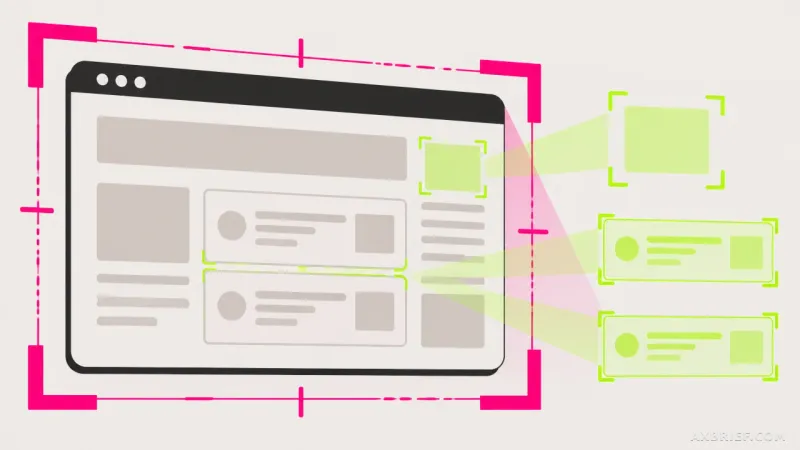
The modern developer is currently obsessed with a singular, existential question: is a SaaS company anything more than a well-designed schema sitting on top of a Postgres database with a few polished APIs? For two decades, the answer was a resounding yes, but not because of the data. The value lived in the interface. Software giants built empires on the back of dashboards, navigation menus, and the invisible glue of muscle memory. Users didn't just buy a tool; they internalized a workflow. But as AI agents begin to interact with software via APIs rather than browsers, the visual layer that once acted as a fortress is evaporating. The screen is no longer the primary point of entry, and the habits that kept users locked into a specific ecosystem are becoming irrelevant.
The Death of the Dashboard
Salesforce recently signaled a fundamental pivot in its strategy by announcing a full-scale opening of its APIs and the launch of headless products. In the software world, headless architecture refers to the decoupling of the frontend presentation layer from the backend logic and data. By stripping away the UI, Salesforce is effectively admitting that the future of the System of Record is not a place where humans click buttons, but a place where AI agents read and write data directly. This is a strategic shift from a human-centric interaction model to an agent-native one. Instead of a sales manager logging into a dashboard to update a pipeline, an AI agent will now trigger API calls to modify records, trigger workflows, and synchronize data across a corporate ecosystem without ever rendering a single pixel of a user interface.
This move has sparked a fierce debate within the engineering community. Skeptics argue that Salesforce is simply rebranding existing API capabilities as a new product launch, a classic move in the corporate marketing playbook. However, the broader implication is far more disruptive. If the UI is removed, the core value proposition of the software is laid bare. The industry is forced to confront whether these platforms offer something fundamentally superior to a custom-built database and a set of REST endpoints. For years, the moat was the convenience of the interface. Now, with the rise of Agentforce from Salesforce and Joule from SAP, the industry is racing to redefine the System of Record. These platforms are no longer positioning themselves as assistants to human users, but as the authoritative infrastructure that allows agents to complete execution loops autonomously.
From Muscle Memory to Operational Logic
To understand why this shift is happening, one must look at the 80/20 rule of enterprise software. Roughly 80% of any System of Record is generic; it is the basic ability to store, retrieve, and organize data. In the age of LLMs, this 80% is trivial to replicate. Any competent team can spin up a database and a basic API to handle standard records. The real battleground is the remaining 20%—the edge cases, the complex compliance requirements, and the idiosyncratic operational logic of a global enterprise. This is the difference between a mass-produced suit and a bespoke garment. The generic fit is easy, but the precision of the tailoring is what defines the luxury product.
Historically, SaaS companies protected this 20% by wrapping it in a UI that users grew accustomed to. This created a psychological lock-in. But when an agent replaces the human, muscle memory vanishes. The moat shifts from the visual experience to the operational logic encoded within the system. This is where the cost of switching becomes starkly different depending on the type of software. An Applicant Tracking System, for instance, is often a write-only environment where data is rarely revisited after a hire is made, making it relatively easy to replace. An Enterprise Resource Planning system is entirely different. Because the ledger serves as the legal basis for audits and regulatory compliance, replacing an ERP is often described as performing open-heart surgery on a patient while they are running a marathon. The risk is not about losing a familiar button; it is about breaking the legal and financial integrity of the organization.
This realization is driving the current focus on Standard Operating Procedures, or SOPs, as the new form of intellectual property. The true moat is not a wiki page or a PDF manual, but the logic embedded in the workflow—such as the specific conditions under which a VP must approve a deal exceeding 100,000 dollars or the regional privacy rules for data handling. These are the organizational memories that cannot be easily exported. For an AI agent to operate safely and effectively, it requires these explicit permission structures and process definitions. The defense mechanism of the software is moving from the visual experience of the human to the executability of the agent.
The Architecture of AI-Native Defense
For a System of Record to survive in an agent-centric world, it must evolve beyond the simple database schema. Traditional SaaS models were designed for human eyes, focusing on objects like Leads or Opportunities that make sense on a report. An AI-native system requires a completely different ontology. To enable autonomous reasoning, the data model must be reorganized around tasks, intents, threads, policies, and outcomes. A system that lacks this native design is merely a storage bin for an agent; a system that embraces it becomes an extension of the agent's own cognitive process, recording and optimizing the reasoning paths taken to reach a goal.
Beyond the data model, the next line of defense is the ownership of the action layer. A system that only observes or records data is a commodity and will eventually be replaced. The only way to build an irreplaceable moat is to create a closed loop where the system not only records a transaction but also executes the resulting action and captures the feedback to improve future decisions. In an ERP context, this means moving beyond recording an expense to owning the entire chain: from the initial approval trigger to the payroll execution, invoice settlement, and final notification. When the execution and the result capture happen within a single system, the agent leaves a unique data footprint that becomes more valuable and precise over time, creating a virtuous cycle of dependency.
Finally, the ultimate form of this defense is found in vertical software that bridges the gap between the digital and physical worlds. Systems that control real-world execution—such as logistics, field operations, or payment settlements—possess a level of stickiness that pure-play SaaS cannot match. When a platform controls the last mile of a physical delivery or the actual movement of goods, it is no longer just a software tool; it is critical infrastructure. When this physical control is paired with a sophisticated trust architecture—defining which agent can act on whose behalf and how to roll back a failed physical execution—the system becomes the guarantor of trust in the market. This transition from a visual interface to a trust-based execution layer is the final stage of the SaaS evolution, turning the System of Record into the operating system of the enterprise.