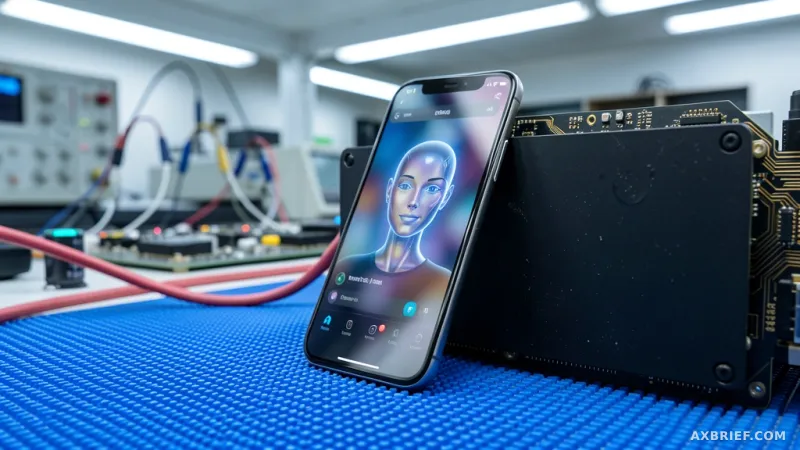
The local LLM experience has long been defined by the sterile aesthetic of the chat bubble. Whether running a model through Ollama or a custom Gradio interface, the interaction remains a textual exchange, a digital version of SMS that separates the intelligence of the model from any sense of presence. Developers and enthusiasts have attempted to bridge this gap with complex 3D avatars or real-time rendering, but these additions often compete with the model itself for the most precious resource in a local setup: VRAM.
The Architecture of Visual Presence
Show GN enters the ecosystem as an open-source frontend designed specifically to transform the local agent experience into a video-call format. Rather than a single scrolling text feed, the interface splits the user experience into two distinct windows: a visual avatar and a complementary chat log. This setup allows the agent to maintain a visual persona while preserving the utility of a text-based record.
Under the hood, the system relies on a local WebSocket connection to communicate with the LLM agent. This choice of protocol ensures real-time, bidirectional data flow, allowing the frontend to remain compatible with existing agent workflows, including the use of standard slash command menus. The voice pipeline is built on a stack of specialized tools: Edge TTS for speech synthesis, Silero VAD for voice activity detection, and faster-whisper for speech-to-text transcription. This combination enables a fluid, hands-free conversation loop that mimics a natural human call.
To get users started, the project is released under the MIT license as an open-core project. It includes a free starter avatar created using HunyuanVideo 1.5, a high-fidelity video generation model. Currently, the software is provided as a Windows build, though it omits real-time lip-syncing in its current iteration.
Solving the GPU Resource Conflict
The primary tension in local AI deployment is the fight for GPU cycles. Traditional avatar systems often employ runtime rendering or real-time animation engines that consume significant GPU memory, effectively throttling the LLM's inference speed or forcing the user to use a smaller, less capable model. Show GN resolves this conflict by abandoning runtime rendering entirely.
Instead of generating frames on the fly, Show GN utilizes a library of approximately 30 pre-rendered video clips. The system monitors the LLM's output for specific emotion tags; when the model expresses a particular sentiment, the frontend triggers the corresponding pre-rendered clip. This architectural pivot ensures that the GPU is not wasted on visual synthesis, allowing nearly 100% of the available hardware resources to be dedicated to the model's reasoning and token generation.
This philosophy extends to how the agent handles non-conversational data. In most voice-enabled AI systems, the model attempts to read out code snippets or system logs, resulting in a disjointed and frustrating auditory experience. Show GN implements a logic gate that identifies code and logs, rendering them as visual cards in the chat window rather than passing them to the TTS engine. By separating the auditory persona from the technical output, the interface maintains the illusion of a human-like conversation without sacrificing the precision of a developer tool.
This shift from a generative visual approach to a triggered-clip approach transforms the avatar from a resource-heavy luxury into a lightweight UI layer. It proves that perceived presence does not require real-time synthesis, but rather a clever orchestration of pre-existing assets and metadata.
The transition from text-based prompts to embodied agents marks the beginning of a more intuitive era for local AI interaction.