Modern software engineering is currently trapped in a frustrating paradox. Developers have access to incredibly powerful AI agents like Claude Code, Codex, and Gemini, yet these tools often operate in a vacuum. An agent might produce syntactically perfect code that is operationally disastrous because it lacks the organizational context—who owns the service, which legacy dependency is untouchable, or why a specific architectural decision was made three years ago. This gap between technical correctness and operational reality often turns AI-generated PRs into a cleanup chore for human engineers.
The Infrastructure of Agentic Orchestration
Spotify has addressed this friction with Xirp, a macOS-exclusive environment designed to act as a management layer for multiple AI agents. Rather than attempting to build a new LLM, Xirp functions as a control room that allows developers to run and manage various agents across different projects and sessions simultaneously. It leverages existing CLI tools, authentication methods, and model configurations, ensuring that the developer does not have to constantly switch settings or environments when moving between different AI providers.
Currently, Xirp is available as a local application for macOS, with specific builds for both Apple Silicon and Intel-based Macs. It does not support server-side deployment or SSH-based remote sessions, focusing instead on the local developer experience. While it can operate as a standalone tool, it is designed to integrate deeply with Portal, Spotify's internal developer portal. For those looking to test the capabilities of organizational context, a free trial of Portal is provided to demonstrate how the environment behaves when linked to a broader corporate knowledge base.
To solve the problem of agent collision, Xirp employs a sophisticated handling of the local file system. When multiple agents are tasked with modifying code in the same repository, Xirp creates separate Git worktrees for each task. This ensures that every agent operates in its own isolated directory, preventing the chaotic overlap that occurs when multiple processes attempt to edit the same files simultaneously. These sessions are maintained through a persistent terminal, meaning developers can close the app and return to find their parallel workflows exactly where they left them, with no loss of state or context.
Moving Beyond the Prompt Window
The true architectural shift in Xirp is its rejection of the brute-force approach to context. The prevailing trend in AI implementation is to stuff as many documents as possible into the initial prompt, hoping the model finds the needle in the haystack. Xirp instead utilizes the Model Context Protocol (MCP), a standard that allows AI models to access external data sources on demand. By treating organizational knowledge as a retrieval problem rather than a prompt-filling problem, Xirp ensures that agents fetch only the specific information required for the task at hand.
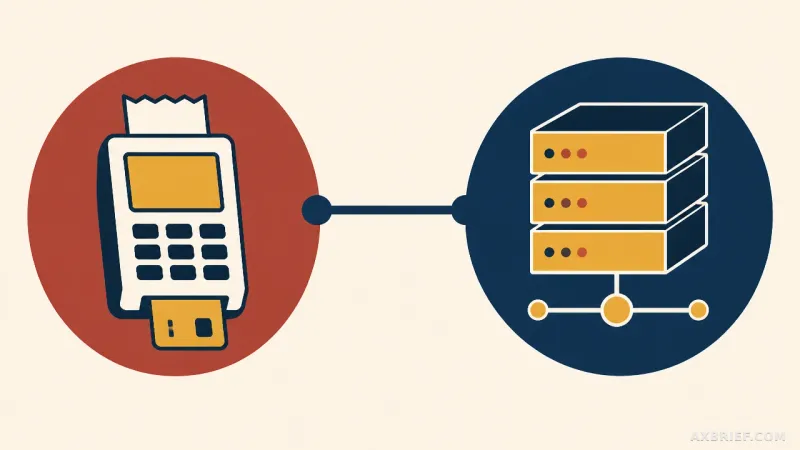
When integrated with Portal, Xirp uses MCP to pull real-time data from the Software Catalog and Workspace. This includes critical operational metadata such as service ownership, dependency maps, and documented technical decisions. If a developer starts a task within a specific Catalog entity or Workspace, the system automatically locates the relevant repository, prepares the local project, and gathers the necessary organizational context. This transforms the agent from a general-purpose coder into an informed contributor that understands the internal politics and technical constraints of the organization.
This ecosystem is further reinforced by a feedback loop of living documentation. Once a coding session is complete, Xirp allows the developer to manually upload the session transcript. These transcripts serve as a historical record of how a problem was solved and why certain paths were taken. This data is then fed back into the context for future sessions, allowing subsequent agents or human teammates to inherit the exact reasoning of previous work. This eliminates the need for repetitive communication and prevents the common AI failure of solving the same problem twice using different, conflicting methods.
By prioritizing operational context over raw data volume, Xirp establishes a new standard for how enterprises should deploy agentic workflows. The goal is no longer to provide the AI with all the information, but to provide it with the right tools to find the right information at the right time.
The industry is moving away from standalone chatbots and toward integrated agentic environments that treat organizational knowledge as a queryable API.