Imagine standing on a graduation stage today. The air is thick with a specific kind of dread that didn't exist a decade ago. It is not the usual anxiety of entering the workforce, but a systemic fear fueled by headlines about AGI and the erasure of entry-level white-collar roles. For the current generation of graduates, a degree is no longer a guaranteed ticket to a career; it is a starting line in a race against an opponent that does not sleep, does not eat, and processes data at a scale humans cannot comprehend. This tension has turned commencement speeches into a battlefield of perspectives, where the promise of technological progress often clashes with the reality of economic displacement.
The GVSU Address and the Definition of Actual Intelligence
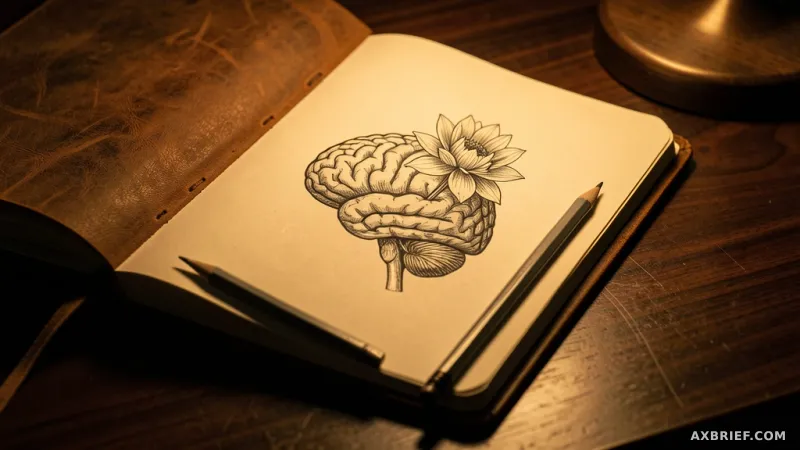
Steve Wozniak, the co-founder of Apple and a legendary figure in the history of personal computing, recently stepped onto the stage at Grand Valley State University to address this exact anxiety. While many tech leaders spend their time extolling the inevitable rise of artificial intelligence, Wozniak took a different path. He looked at the graduates and told them that they possess something the machines do not: AI, which he redefined in that moment as Actual Intelligence.
This play on words was more than a clever rhetorical device to win over a crowd. It served as a fundamental critique of how we perceive the current state of machine learning. Wozniak framed AI not as a sentient entity or a true peer to human cognition, but as a massive, sophisticated attempt to replicate the human brain through brute force. According to Wozniak, what we call intelligence in software is actually the result of repeating specific routines trillions of times. He described the process as building a complex mechanical device that appears to be intelligent because it has been programmed with an astronomical number of predetermined sequences.
This perspective stands in stark contrast to the reception other tech luminaries have received recently. When former Google CEO Eric Schmidt and real estate executive Gloria Colfield delivered speeches on the future of AI at other graduations, they were met with boos from the audience. The hostility is a direct reflection of the current labor market. As companies accelerate the adoption of automation to replace human intervention in routine tasks, the fear of redundancy has become a visceral experience for job seekers. In this climate, AI is not viewed as a helpful assistant but as a competitor designed to optimize the human out of the equation.
The Mirror Effect and the Trap of the Beaten Path
To understand why Wozniak distinguishes between artificial and actual intelligence, one must look at the mechanism of the routine. AI does not understand a concept; it identifies a pattern. When a human learns about an apple, they integrate a multisensory experience involving color, taste, texture, and memory. When an AI processes the word apple, it is not recalling a fruit; it is calculating the statistical probability that the word red or fruit will follow based on trillions of instances found in its training data.
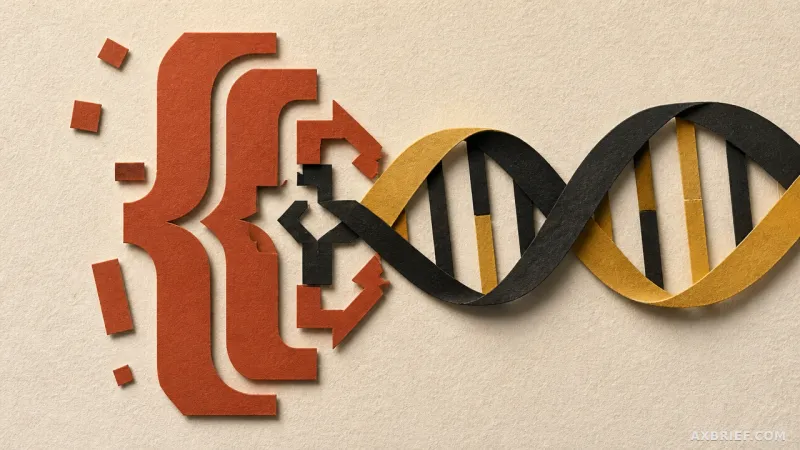
This is what can be described as mirror intelligence. The AI is a highly polished mirror reflecting the sum of human data back at us. It is an optimization engine that finds the most efficient path through existing information. If the goal is to find the most likely answer based on what has already been written or done, the machine will win every time because it can traverse trillions of routines in a fraction of a second. However, this is precisely where the danger lies for the modern professional.
If a worker's value is based on their ability to follow a manual, execute a standard operating procedure, or produce work that aligns with the most probable successful outcome, they are essentially operating as a human version of a routine. By following the beaten path—the same path millions of others have walked—the professional is providing the exact kind of predictable data that AI is designed to optimize. In this scenario, the human is not competing with the AI; they are inadvertently mimicking the AI's own architecture, making themselves an easy target for replacement.
This is where Wozniak's call to Think different evolves from a vintage marketing slogan into a survival strategy. Actual intelligence is the ability to take a single experience and apply it to a completely unrelated situation through a leap of intuition. It is the capacity to look at a set of established routines and decide that the routine itself is the problem. While AI can optimize a path, it cannot decide to forge a new one. The machine is trapped within the boundaries of its training data, whereas human intelligence is defined by its ability to step outside those boundaries.
In the professional world, this means the premium is shifting away from technical proficiency and toward cognitive flexibility. The ability to use a specific tool or follow a complex workflow is now a commodity. The real value now lies in the ability to twist the direction of a question, to challenge the premises of a project, and to find the gaps that the statistical models have overlooked. The competitive advantage is no longer about how fast you can find the right answer, but about whether you can identify when the question being asked is the wrong one.
The value of a professional is no longer measured by their ability to execute a manual, but by their courage to deviate from one.