The modern game development studio has become a place of profound paradox. On paper, the industry is a juggernaut of profitability, reporting record-breaking revenues and expanding market reach. Yet, inside the office, the atmosphere is one of quiet desperation. For the past several years, the narrative has been a relentless cycle of brutal layoffs and sudden studio closures. Developers who spent a decade mastering their craft now find themselves in a precarious position, watching as the gap between corporate earnings and job security widens into a chasm. This tension is not the result of a market crash, but rather a fundamental shift in how the people at the top perceive the act of creation itself.
The Delusion of the One-Button Game
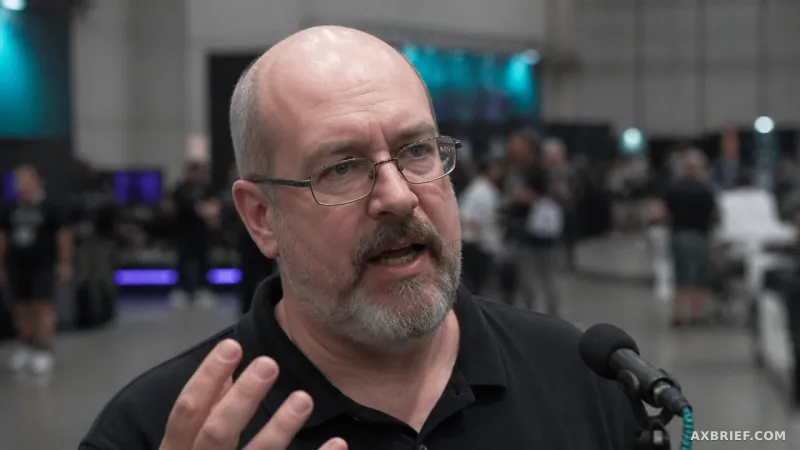
At Gamescom 2026, Tarn Adams, the creator of the legendary simulation Dwarf Fortress, provided a scathing diagnosis of this systemic instability. In a candid discussion with PC Gamer, Adams argued that the industry is currently teetering on a dangerous edge, driven by a specific, seductive hallucination held by executive leadership. He describes this as the one-button fantasy: the belief that a CEO can simply press a single AI-powered button and have a complete, high-quality game emerge on the other side. This is not merely a misunderstanding of technology, but a strategic delusion that views human talent as an unnecessary friction in the production pipeline.
This fantasy has tangible, destructive consequences. Adams points out that this mindset has fueled a period of reckless spending, with billions of dollars poured into hardware and AI infrastructure under the assumption that human labor can be scaled down to near zero. The result is a corporate culture where the goal is no longer to empower developers with better tools, but to replace them with an automated process that does not yet exist. The pressure has trickled down to the lowest levels of the hierarchy. Adams notes that developers are increasingly being interrogated by their superiors, asked specifically whether they used AI in their latest code commits. Those who do not utilize AI, or whose output does not mirror the perceived efficiency of an AI-augmented workflow, are being flagged as redundant.
To Adams, this is not a new phenomenon, but a digital evolution of an old corporate ignorance. He recalled a personal anecdote about his father, who worked in computing; despite his father's technical expertise, he was eventually let go because the management of the time simply did not understand the essence of his role. The current purge of game developers is, in Adams' view, a mirror image of that same ignorance. Management is once again firing the people who actually understand how the machine works because they have been convinced by a marketing slide that the machine can now run itself.
The Gap Between Mimicry and Quality
The core of the problem lies in a dangerous cognitive slip: the confusion of mimicry with mastery. Generative AI is exceptionally good at producing results that look like a finished product. It can generate a piece of concept art that looks professional or a snippet of code that appears functional. For a CEO who does not understand the intricacies of game architecture, this mimicry is indistinguishable from quality. Adams argues that executives have fallen into a state of self-deception, believing that because AI can replicate the surface-level appearance of a high-quality asset, it can therefore replicate the complex, systemic labor required to build a cohesive game world.
This is where the industry's current trajectory becomes unsustainable. Game development is not a series of isolated assets; it is a web of interdependent systems. A character's movement, the physics of a collapsing wall, and the economic simulation of a town must all work in harmony. AI can mimic a single element of that web, but it cannot yet grasp the contextual judgment required to weave them together. By replacing skilled veterans with AI-generated approximations, studios are effectively hollowing out their own foundations. They are trading long-term structural integrity for short-term cost reduction, creating a fragile product that looks polished on the surface but lacks the depth and stability of human-led design.
This erosion of value has even begun to corrupt the language of the craft. Adams highlights a frustrating shift in how the term AI is used. For decades, AI in gaming referred to the logic and behavioral patterns that governed non-player characters—the systems that made a dwarf in his game feel alive and autonomous. Now, that term has been hijacked by the generative AI hype cycle. The word AI no longer describes a functional system of behavior; it describes a tool for content generation. In a quiet act of professional resistance, Adams has stopped using the term dwarf AI in his own work, opting instead for dwarf behavior. By stripping away the label, he is attempting to decouple the actual science of game logic from the marketing fantasy of the one-button creator.
Adams warns that this bubble will eventually pop. There will come a moment of reckoning when the industry realizes that a collection of mimicked assets does not constitute a game. When the products begin to fail and the lack of human expertise makes them impossible to maintain or evolve, the industry will face a painful period of adjustment. The cost of this realization will be the loss of a generation of talent that was discarded in favor of a button that never actually worked.
The crisis described by Tarn Adams serves as a warning for any organization integrating generative AI into a professional pipeline. The danger is not the tool itself, but the belief that the tool replaces the need for contextual judgment and specialized expertise. When efficiency metrics—like the number of AI-assisted commits—become the primary measure of a developer's value, the organization stops valuing the very thing that makes a product successful: the ability to make complex, nuanced decisions that a machine cannot simulate. The future of the industry depends on whether leadership can move past the fantasy of the button and return to the reality of the craft.