The high-stakes world of literary acquisitions usually revolves around the brilliance of a plot or the uniqueness of a voice. This week, however, the conversation shifted from the quality of the prose to the origin of the pixels. A debut author, who had successfully navigated a fierce bidding war among major publishing houses, saw a $2.4 million advance vanish in an instant. The reason was not a plot hole or a lack of marketability, but a suspicion that the manuscript was generated by artificial intelligence. When the author failed to provide a sufficiently transparent audit trail of the writing process, the deal collapsed, taking with it lucrative film and television options and international distribution contracts. This is no longer a theoretical debate about the future of art; it is a financial reality where the inability to prove one's humanity is now a liability.
The Collapse of the Low-Barrier Publishing Era
The loss of this $2.4 million contract highlights a critical inflection point in the industry. For the past two decades, the publishing landscape underwent a radical democratization. The launch of the Kindle in 2009 acted as the catalyst, followed by the rise of platforms like Kindle Direct Publishing (KDP) and CreateSpace. By 2014, self-publishing had gained legitimate cultural and commercial standing. For a decade, the market operated under a specific structural advantage: writing remained difficult, but publishing became easy. The barrier to entry was the sheer discipline and skill required to complete a manuscript. If a writer possessed the patience to finish a book, the distribution infrastructure was already there to meet them.
That window has now slammed shut. The arrival of sophisticated generative AI has lowered the cost and difficulty of the actual writing process to near zero. When AI can produce prose that is polished enough to deceive professional editors and trigger multi-million dollar bidding wars, the act of completing a manuscript is no longer a proxy for talent or effort. The industry is now grappling with a crisis of verification. The same tools that allow a novice to simulate a professional voice have stripped the professional of their inherent trust. We have entered an era where the finished product is no longer sufficient evidence of the creator's capability.
The Great Divide Between Result and Identity
As the industry stabilizes, a sharp divergence is emerging in how readers and publishers value content. Large publishing houses are likely to adopt a pragmatic, profit-driven approach. Rather than banning AI, they will likely integrate AI-driven editing tools into their internal workflows, treating the machine as a sophisticated ghostwriter. In this scenario, the market will split into two distinct consumer psychographics. The majority of readers will likely remain result-oriented, prioritizing the entertainment value and emotional impact of a story over its origin. For these readers, if a book is gripping, the method of its production is irrelevant.
However, a smaller, more dedicated segment of the market will pivot toward identity-driven consumption. Much like chess enthusiasts who study the specific stylistic quirks of different engines or audiophiles who prefer the crackle of a vinyl record, some readers will seek out the unmistakable fingerprints of human struggle. In this niche, the author's life, their specific traumas, and their lived experiences become the primary product. Even errors, inconsistencies, and stylistic flaws may be rebranded as signs of authenticity—human artifacts in a sea of synthetic perfection. We may soon see a culture where books are collected like vintage wines, with a premium placed on pre-AI editions or works with a certified human lineage.
This shift creates a paradoxical tension for the modern writer. There is now a tangible risk in sounding too polished. Stylistic choices that were once hallmarks of sophisticated writing—such as the frequent use of em dashes, complex rhythmic structures, or expansive sentence lengths—are now being flagged as bot-like. Authors find themselves in the absurd position of self-censoring their own natural voice to avoid triggering the subconscious AI-detectors of an editor. The irony is profound: humans are now editing themselves to look less like the machines that were designed to mimic humans.
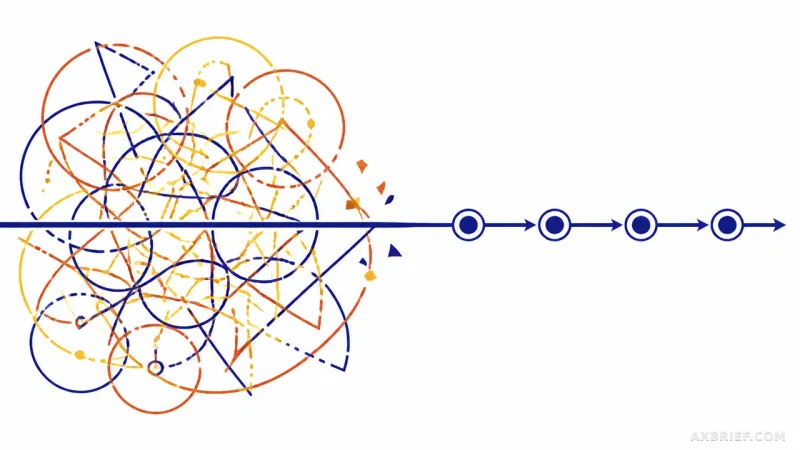
To combat this, the industry is moving toward a proof-of-process model. The focus is shifting from the final PDF to the history of the document. We are seeing the emergence of tools that record every keystroke, deletion, and revision with a precise timestamp, creating a forensic map of the creative process. Some authors are taking this to the extreme by live-streaming their writing sessions on platforms like YouTube, turning the act of composition into a performance art to ensure an immutable record of work. There are even early attempts to use blockchain technology to timestamp drafts and verify the evolution of a manuscript from a rough outline to a finished novel.
Ultimately, the survival of the human author depends on a return to the essence of creation. This is why new tools like the Neo word processor are gaining traction, as they prioritize the management of the conceptual and drafting history over simple text output. The goal is to build a recording system that proves identity through the evidence of thought. In a world where the output is cheap, the only thing that retains value is the documented journey of the mind. The future of writing is not about competing with AI in terms of speed or polish, but about reclaiming the joy of thinking in words and proving that a human was actually there to do the thinking.