The developer community is currently caught in a strange paradox. On one side, the marketing narrative suggests that AI can now build entire applications from a single prompt. On the other, seasoned engineers are finding a widening gap between generating a snippet of code and shipping a production-ready product. This week, the conversation has shifted from which LLM is the most capable to a more pragmatic question: what does a professional AI development stack actually look like in practice?
The Blueprint for an AI-Augmented Workflow
This tension comes to a head in a recent initiative by a developer with two decades of industry experience. Tasked with designing a developer boot-up workshop, this veteran is crafting a curriculum aimed at two distinct groups: beginners who want to enter the field and experienced pros looking to maintain their competitive edge. The goal is to move beyond the superficial use of AI and establish a rigorous tooling chain that translates AI capabilities into employable skills and shippable software.
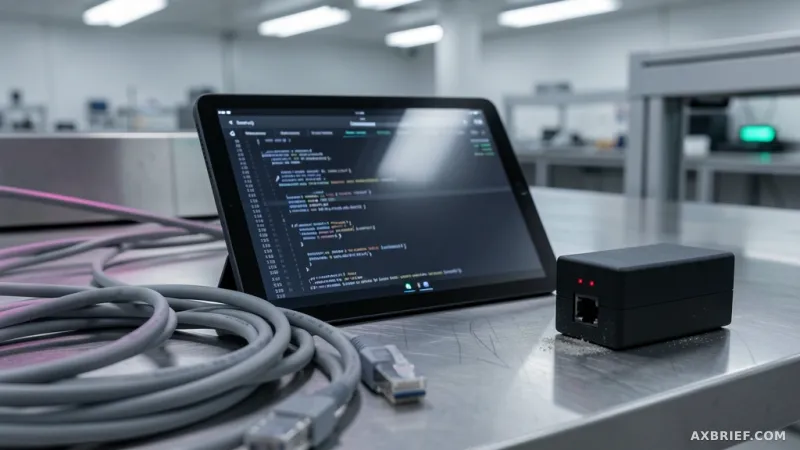
For this veteran, the starting point is a commitment to open-source stability and privacy. The environment is built on Linux Mint Debian Edition (LMDE), providing a Debian-based foundation that avoids the volatility of some modern distributions. The primary editor is VSCodium, the telemetry-free, open-source binary of Visual Studio Code, ensuring that the development process remains private and lean. The core language remains Python, supplemented by HTML and CSS for the frontend, with Amazon AWS serving as the cloud infrastructure.
To move from simple API calls to actual product builds, the workshop focuses on a series of concrete use cases. The curriculum begins with the creation of static websites, utilizing Pelican to build blogs and custom themes. From there, the stack evolves into dynamic functionality using FastAPI, a high-performance Python framework. The practical applications include building form-based calculators that process user input and tools capable of converting specific data sets into PDF files. This progression is designed to show how AI agents can be harnessed to rapidly build the minimum viable unit of a functioning product.
The Tension Between AI Speed and Engineering Rigor
There is a prevailing myth that the speed of AI-generated code renders traditional software engineering disciplines obsolete. The logic suggests that if an AI can write a function in seconds, the need for meticulous planning and testing vanishes. However, the reality is exactly the opposite. When the volume of code increases exponentially due to AI, the risk of accumulating technical debt and introducing subtle bugs increases at the same rate.
This is where the veteran's approach diverges from the typical AI-hype cycle. Rather than abandoning the fundamentals, the proposed stack doubles down on them. The workflow integrates Test-Driven Development (TDD), Agile methodologies, and Extreme Programming (XP) principles. Specifically, the approach mirrors the philosophy of Pivotal Labs, emphasizing customer-centric development and the practice of pairing. In this model, the AI does not replace the engineer; instead, the AI becomes a pairing partner that must be held to the same rigorous standards as a human collaborator.
The shift here is from prompt engineering to architectural orchestration. The challenge is no longer about knowing how to ask an LLM for a piece of code, but about knowing how to verify that code through automated tests and how to integrate it into a maintainable system. By using well-documented, stable tools like FastAPI and VSCodium, the developer ensures that the speed provided by AI is balanced by the stability of the underlying infrastructure. The insight is clear: the more the AI handles the implementation, the more the human must handle the governance and quality assurance.
As the industry moves past the novelty of chatbots, the focus is shifting toward the design capacity required to turn AI-generated fragments into cohesive products.