The current AI arms race has created a brutal barrier to entry for developers and enterprises alike. To deploy a modern large language model locally, the standard prescription is a massive capital expenditure on H100 or A100 GPU clusters, often accompanied by agonizing lead times for hardware delivery. This GPU-centric paradigm suggests that without the latest silicon, the most capable models remain out of reach. However, a recent implementation proves that the gap between cutting-edge performance and legacy hardware is not a matter of raw power, but of software precision.
Engineering Gemma 4 on Legacy Silicon
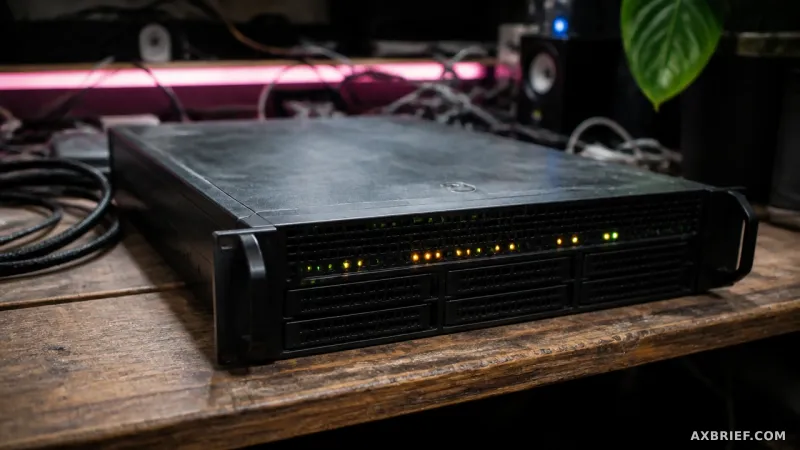
It is now possible to execute the Gemma 4 26B-A4B model on a 2016-era Intel Xeon E5-2620 v4 server, achieving output speeds comparable to human reading. This setup operates in a completely GPU-less environment, relying solely on 128GB of DDR3 memory and a highly optimized inference engine known as ik_llama.cpp. The success of this deployment demonstrates that eight-year-old hardware can still be viable for modern LLMs if the inference pipeline is tuned to the specific constraints of the architecture.
To overcome the severe bandwidth limitations of DDR3 memory, the implementation utilizes a specific combination of ik_llama.cpp flags designed to maximize throughput. The primary driver for speed is the implementation of Multi-Token Prediction (MTP) speculative decoding, enabled via the `--spec-type mtp` flag. This allows the model to predict multiple tokens in a single forward pass, reducing the number of times the system must access the slow main memory.
Further optimizations target the Mixture of Experts (MoE) routing mechanism. By applying the `--cpu-moe` and `--merge-up-gate-experts` flags, the engine optimizes the computational path, ensuring that the CPU handles the routing of tokens to experts more efficiently. To stabilize performance and prevent the operating system from swapping memory to disk, the `--mlock` flag is used to lock the model in RAM, while `--run-time-repack` is employed to reorganize weights for better access patterns. These software-level adjustments, combined with custom Flash Attention kernels, transform a dormant server into a functional AI node.
The Memory Wall and the MoE Advantage
To understand why these optimizations work, one must recognize that the primary bottleneck in LLM inference is not the number of TFLOPS the processor can handle, but the memory bandwidth. This is the memory wall: the CPU spends the vast majority of its time idling, waiting for model weights to travel from the RAM to the cache. This bottleneck exists regardless of whether you are using a 2016 Xeon or a 2024 H100; the efficiency of the data pipeline determines the actual tokens-per-second output.
This is where the architecture of Gemma 4 26B-A4B provides a critical advantage. The model utilizes a Mixture of Experts (MoE) structure consisting of 128 total experts, but it only activates 8 experts per token. While the total parameter count is approximately 25.2B, the active parameters involved in any single computation are limited to about 3.8B. This allows the model to retain the broad knowledge base of a large model while only requiring the compute and immediate memory bandwidth of a much smaller one.
When running on a CPU, the `--cpu-moe` setting is vital because it aligns the data calling patterns with the physical hierarchy of the CPU cache. Without this, the system suffers from cache thrashing, where data is constantly evicted and re-loaded, crashing performance. By synchronizing the software's request pattern with the hardware's cache layers, ik_llama.cpp effectively masks the slowness of the DDR3 bus.
However, the memory challenge shifts as the context window expands. In a high-context environment of 262K tokens, the memory requirements scale dramatically. Total memory usage in this scenario reaches 82,355MiB. Interestingly, the model weights themselves only occupy about 25GB, while the KV (Key-Value) cache—the space used to remember previous tokens in a conversation—consumes approximately 56GB. This reveals a critical insight for local AI deployment: for long-context tasks, the amount of available RAM for the KV cache is more important than the raw speed of the processor.
This shift from hardware-dependency to software-optimization changes the calculus for local AI. Tools like Ollama provide ease of use but often act as black boxes, hiding the tuning knobs necessary for legacy hardware. By moving toward engines that allow for calibrated quantization and precise memory management, the cost of entry for AI drops significantly.
The ability to run Gemma 4 26B-A4B on a 2016 Xeon server proves that the perceived necessity of expensive GPU clusters is often a result of inefficient software defaults rather than absolute hardware limitations.