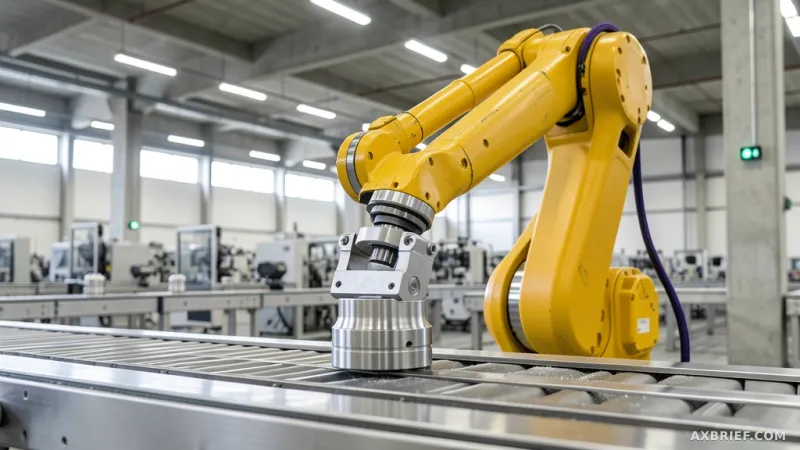
The paradox of modern artificial intelligence is most visible in the clumsy movement of a robotic arm. A state-of-the-art large language model can generate a flawless, multi-step Python script to move a cup across a table, yet the physical robot often tips the cup over or misses the grip entirely. This failure happens because there is a fundamental disconnect between linguistic fluency and physical execution. While AI has mastered the art of predicting the next word in a sentence, it remains remarkably ignorant of the basic laws of gravity, friction, and spatial awareness. This gap between the digital mind and the physical world is exactly where AMI Labs is placing its massive bet.
The $3.5 Billion Bet on Pre-Product Vision
AMI Labs entered the spotlight not with a product demo, but with a staggering financial footprint. In March, the startup secured $1.03 billion in funding, a figure that signals immense confidence from investors in a company that has yet to release a commercial product. The funding round established a pre-money valuation of $3.5 billion, a valuation driven largely by the pedigree of its leadership. The lab was co-founded by Yann LeCun, a Turing Award winner and a pivotal figure in the evolution of deep learning during his tenure at Meta.
Despite the hype surrounding the funding, the internal culture at AMI Labs is surprisingly grounded. CEO Alexandre LeBrun has made it a point to purge the company's vocabulary of industry buzzwords. Internally, the terms AGI (Artificial General Intelligence) and superintelligence are strictly avoided. LeBrun argues that these terms are functionally useless for engineers because they lack a concrete, technical definition. By rejecting the pursuit of a vague, god-like intelligence, LeBrun is steering the company away from the marketing-driven expectations of the Silicon Valley AI bubble and toward a specific, solvable engineering problem: the prediction of physical reality.
From Token Prediction to State Prediction
To understand why AMI Labs is eschewing the AGI narrative, one must understand the technical distinction between a Large Language Model (LLM) and a World Model. An LLM is essentially a sophisticated statistical engine that predicts the next token in a sequence based on vast amounts of text data. It understands that the word water often follows the word drinking, but it does not understand what water actually is, how it flows, or what happens when a container tilts.
A World Model operates on a different logic. Instead of predicting the next word, it predicts the next state of the physical environment. If an AI is tasked with tilting a cup, a World Model allows the system to simulate the physical consequence—the spilling of liquid—before the action is even taken. This is not a replacement for LLMs, but a necessary companion. While the LLM handles the high-level planning and linguistic interface, the World Model provides the physical intuition required to execute those plans without causing a disaster. This capability is the prerequisite for AI to move beyond the chat box and into high-stakes industries like autonomous manufacturing, precision healthcare, and home robotics.
However, the primary obstacle to building a World Model is the data bottleneck. Unlike text, which is abundant on the internet, high-fidelity physical interaction data cannot be scraped from a website. It cannot be synthesized entirely in a sterile laboratory because the real world is chaotic and filled with edge cases that simulations fail to capture. This realization has shifted the strategic focus of AMI Labs toward the physical world's most dense hardware hubs.
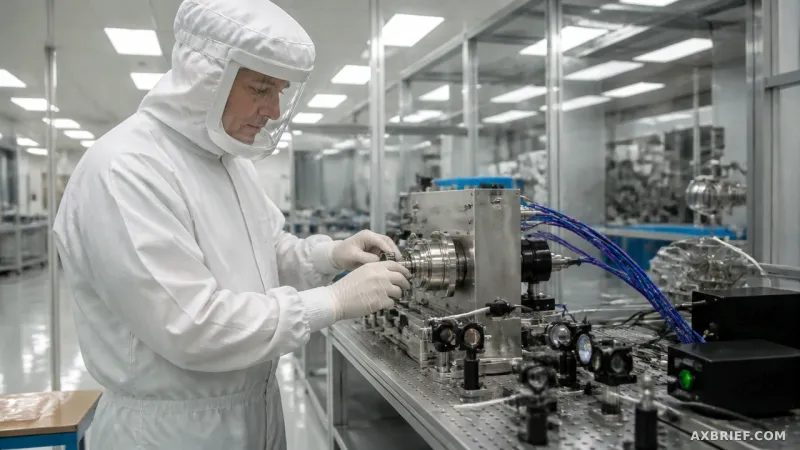
This is why the company is aggressively seeking partners in Asia, particularly in South Korea. Korea represents a unique intersection of advanced semiconductor fabrication, world-leading robotics infrastructure, and a manufacturing sector that is deeply integrated. LeBrun views the region not just as a market, but as a living laboratory. He points to Korea's history of rapid technology adoption—citing the country's swift embrace of the internet twenty-five years ago—as evidence that the region is the ideal environment to validate and scale World Models. By integrating their AI into actual factories and robot-dense environments, AMI Labs intends to feed its models the raw, messy, real-world data that is currently missing from the AI training pipeline.
The success of AI in the next decade will not be measured by how convincingly a bot can write a poem, but by how accurately it can predict the trajectory of a falling object or the tension of a mechanical joint. The shift from linguistic intelligence to physical intelligence marks the transition from AI as a consultant to AI as an agent.