The current era of generative AI is shifting away from the simple prompt-and-response cycle toward something far more autonomous: the agentic loop. Developers are no longer satisfied with a model that provides a plausible answer in one shot; they need systems that can reason, execute a tool, evaluate the result, and iterate until a complex goal is achieved. This shift requires a fundamental change in how models handle compute, moving from fixed-cost inference to a dynamic process where the AI can essentially decide how hard it needs to think about a specific problem.
The Architecture of Variable Compute Effort
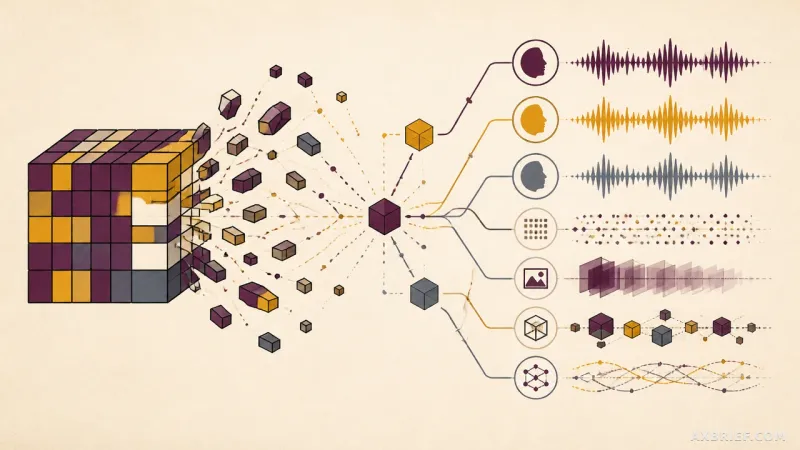
Google has addressed this need with the release of Gemini 3.8 Flash and its specialized sibling, Gemini 3.8 Flash Cyber. While they serve different audiences, both models share a common core of intelligence. The defining technical characteristic of the 3.8 series is the introduction of variable compute effort. In traditional LLMs, every token is generated with the same amount of underlying computation. Gemini 3.8 Flash breaks this mold by allowing for additional reasoning steps and iterative tool calls when faced with multi-stage problems.
This capability is most evident in the HLE-Verified benchmark, which evaluates multi-step reasoning across STEM and humanities. In these rigorous tests, Gemini 3.8 Flash achieved a score of 54.9%. However, this performance comes with a calculated trade-off. Increasing the reasoning level maximizes accuracy and depth, but it introduces a token overhead, as the model consumes more resources to reach the correct conclusion.
Access to these models is strictly tiered based on the potential for misuse. Gemini 3.8 Flash is widely available through Google AI Studio, the Gemini API within Android Studio, the Gemini app, and Enterprise accounts. In contrast, Gemini 3.8 Flash Cyber is a restricted release. Because it possesses capabilities that could be weaponized for cyberattacks, it is only available to verified government agencies, critical infrastructure operators, and software maintainers through the Fairwind Program.
The Synergy Between Security and General Intelligence
The most compelling aspect of this release is not the existence of two models, but the symbiotic relationship between them. Google discovered that the rigorous training required for high-level cybersecurity—identifying obscure vulnerabilities and drafting precise patches—directly translates into better general-purpose coding and reasoning. By pushing the model to excel in the high-stakes environment of cyber defense, Google effectively raised the intelligence ceiling for the general 3.8 Flash model.
When looking at the specialized performance of Flash Cyber, the numbers suggest a shift in the efficiency frontier. In internal vulnerability assessments covering 20 different programming languages, Flash Cyber maintained a success rate of over 70%. In the CyberGym evaluation, which focuses heavily on C/C++ codebases, it demonstrated performance on par with the largest frontier models. Even on the external CWE-Bench, Flash Cyber recorded a pass@1 score of 47.2%, nearly matching the 47.8% score of leading frontier models while operating at a significantly lower cost.
Real-world deployment data further validates this efficiency. The Chrome Security team found that Flash Cyber generated 2.6 times more accurate vulnerability patches than larger commercial models. In penetration testing conducted by Wiz, Flash Cyber showed a recall rate 7.5 to 9.7 percentage points higher than other frontier models, while the operational cost was 2.3 to 5.2 times lower. Perhaps most strikingly, the Google Cloud Vulnerability Research team reported that foundational vulnerability investigations that previously took months to complete were finished in under two hours using Flash Cyber.
This leap in capability is supported by the Frontier Safety Framework, which implements safeguards against the misuse of the model in areas like chemical, biological, radiological, and nuclear (CBRN) risks. While Gemini 3.8 Flash uses Gray Swan measurements to harden itself against prompt injection, Flash Cyber allows for certain security mitigations to be relaxed to empower defenders, relying instead on the closed-loop access control of the Fairwind Program to prevent leakage.
Beyond security, the agentic capabilities of the 3.8 architecture are being applied to creative and scientific visualization. Using Google Antigravity, developers have built complex 3D wizard games with autonomous storytelling and environment generation from simple prompts. Others have integrated United States Geological Survey (USGS) data to create tools that provide real-time topographic maps and scientific commentary. One notable implementation, Hardware Anatomy, utilizes Three.js to create interactive 3D visualizations that automatically disassemble hardware devices to their actual scale.
For developers deciding which model to integrate, the choice comes down to the tension between latency and precision. Those who require deep, multi-step reasoning and can tolerate the token overhead of higher compute levels should migrate to Gemini 3.8 Flash. However, for applications where low latency and minimal token consumption are the primary drivers, Gemini 3.7 Flash remains the more pragmatic choice.
This trajectory suggests a future where AI models are no longer static tools, but dynamic engines that scale their intelligence based on the complexity of the task at hand.