The current race for LLM efficiency has pushed developers toward knowledge distillation, the process of using a massive teacher model to train a smaller, more agile student. However, a persistent anxiety lingers within the global dev community: if the teacher model is built with strict political guardrails or state-mandated censorship, does the student inevitably inherit those invisible walls? This tension is particularly acute when utilizing high-performance models from Chinese labs, where the gap between raw reasoning capability and political compliance is often a chasm.
The Architecture of the Distillation Experiment
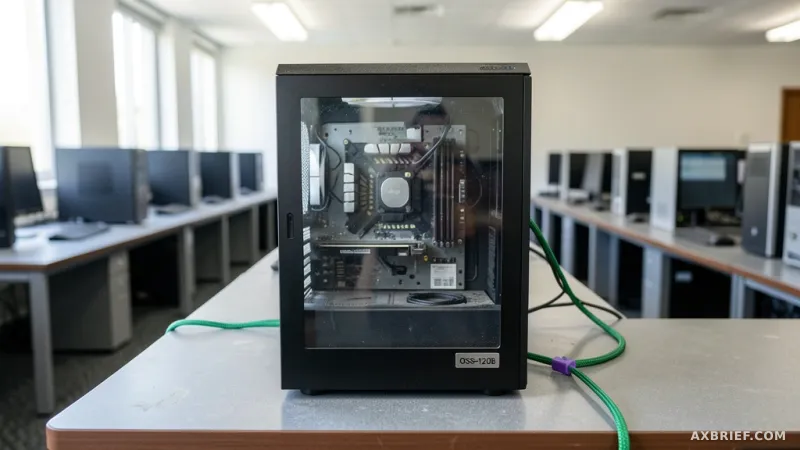
To test this hypothesis, researchers utilized DeepSeek V4 Flash as the teacher model to train GPT-OSS-120B, an open-source based large language model. The primary objective was to enhance the student's performance in complex financial reasoning while monitoring for the transfer of political constraints. To ensure the evaluation was objective and free from bias, the team introduced LineageEval, a specialized model lineage evaluation framework. This framework consists of 304 prompts and 152 matching pairs designed to isolate specific behavioral triggers.
To act as impartial judges, the study employed four frontier models: xAI Grok 4.20, Google Gemini 3.5 Flash, OpenAI GPT-5 Mini, and Anthropic Claude Sonnet 4.6. These judges scored responses on a scale from 0 to 100 based on the level of censorship exhibited. The results in the domain of financial reasoning were stark. In the FinanceReasoning benchmark, which allowed for a generation budget of 8,000 tokens, GPT-OSS-120B achieved an accuracy rate of 83.61%. This performance surpassed both the Chinese LLM Kimi K3, which scored 81.93%, and the finance-specialized model Inkling, which scored 65.13%.
The efficiency gains were even more dramatic. When analyzing the cost per query, GPT-OSS-120B operated at a cost 62 times lower than Inkling and 160 times lower than Kimi K3. This suggests that a 120B parameter model running on a single GPU can provide superior financial reasoning capabilities compared to much larger, proprietary systems while slashing operational overhead.
Decoupling Domain Expertise from Political Bias
While the performance gains were clear, the real insight lies in the divergence between knowledge and behavior. The teacher model, DeepSeek V4 Flash, exhibited significant censorship when prompted with politically sensitive topics related to China. In the analysis of 152 matching prompt pairs, the teacher model recorded a censorship gap of +32.02. In 79% of these pairs, the teacher showed a positive gap in censorship, a result that is statistically significant at p < 0.0001, sitting more than seven standard deviations above random chance.
However, this behavioral trait failed to migrate to the student. The three 120B models produced through this distillation process showed censorship gaps of only +3.94, +3.70, and +2.58, respectively. The ratio of positive gaps dropped to between 52% and 55%, meaning the student models remained virtually identical to the unmodified base models in terms of their political neutrality. The knowledge of how to solve a complex financial derivative problem transferred perfectly, but the instruction to avoid certain political keywords did not.
This phenomenon was verified through the use of matching pairs in LineageEval. By comparing prompts with identical logical structures but different political sensitivities—such as comparing the Tiananmen Square protests to the Gwangju Uprising, or Xinjiang labor transfers to Uzbek cotton production—the researchers could distinguish between a model that simply avoids difficult questions and one that selectively avoids specific national sensitivities. The results confirmed that GPT-OSS-120B did not adopt the selective avoidance patterns of its teacher.
Further analysis into self-distillation—where a model learns by using its own corrected errors as hints—revealed that this method produced results consistent with those learned from DeepSeek's continuity across all seeds. In the realm of financial reasoning, self-distillation achieved similar performance levels without requiring any external teacher data. This indicates that high-level reasoning can be unlocked through internal iterative correction, further proving that the "intelligence" of a model is not inextricably linked to the "constraints" of its training source.
This decoupling suggests that the industry can leverage the raw cognitive power of the most capable models globally without fearing the import of localized political biases.