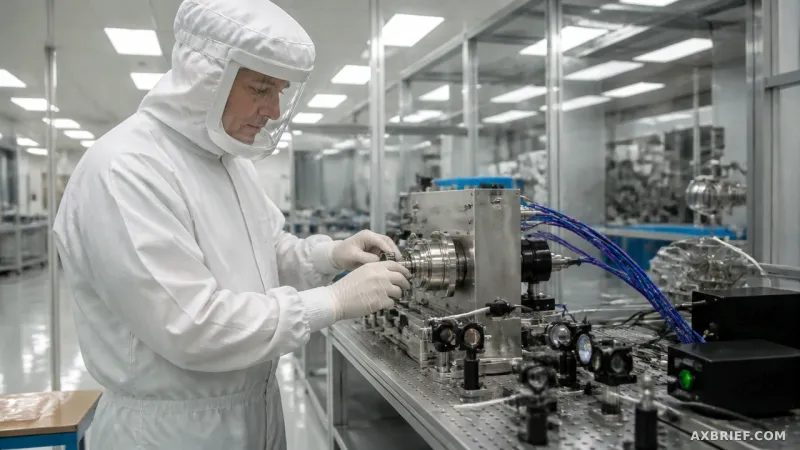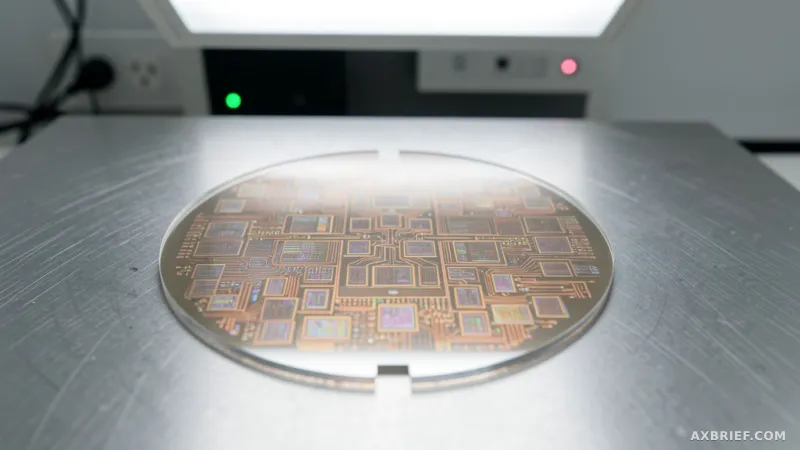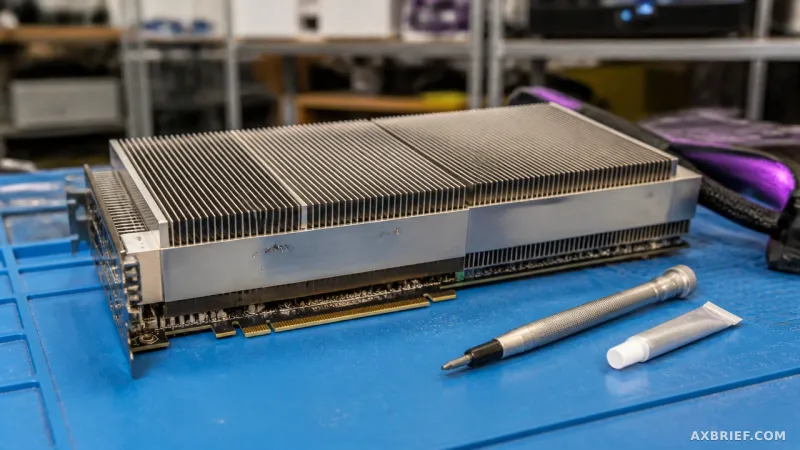
The current state of high-performance AI infrastructure is defined by a brutal paradox: the hardware that powers the revolution is often the biggest bottleneck to its adoption. For months, the developer community has lived through a persistent H100 shortage, where skyrocketing rental costs and supply chain volatility have turned GPU procurement into a strategic gamble. Teams are no longer just fighting over model weights or prompt engineering; they are fighting for the physical silicon required to keep their inference pipelines alive. In this climate, the industry has been searching for a viable alternative that does not force a compromise between memory capacity and budget.
The Hardware Gap and the Agentic Loop
The AMD MI300X enters this fray not just as a competitor, but as a capacity play. While the NVIDIA H100 provides 80GB of high-bandwidth memory, the MI300X equips each card with 192GB of HBM3. This more than double increase in memory capacity is critical for the current shift toward larger, more complex models. From a financial perspective, the MI300X list price sits at roughly half that of the H100, a trend reflected in on-demand rental services like Hotaisle, where equivalent capacity is significantly more affordable. This creates a hardware environment where the primary constraint is no longer the cost of memory, but the efficiency of the software utilizing it.
This capacity is particularly vital for the rise of AI agents. Modern agentic workflows operate on a loop: a user request triggers an LLM, which then decides whether to call a tool, executes that tool, and repeats the process until the task is complete. This is the architecture pioneered by early LangChain executors, moving beyond simple text generation into a cycle of tool utilization. To make these loops stable, developers are increasingly relying on Deep Agents, which provide a sandbox execution environment. By isolating file system access and allowing the agent to read, write, and execute code within a secure harness, the scope of what an agent can actually accomplish expands without risking the host system.
However, running these complex loops introduces significant latency, particularly due to Python's execution overhead. To combat this, the industry is adopting HIP graphs—the AMD equivalent of CUDA graphs. By recording the operation stream during a warmup phase and replaying it during execution, developers can eliminate the overhead of the decode loop. For a model like DeepSeek-V4, which may require hundreds of small kernel executions per token, HIP graphs are not an optimization; they are a requirement for production-grade performance.
The Dialect Divide and the Software Wall
Despite the raw hardware advantages, the transition to AMD has not been seamless. As of early May 2026, a critical technical failure emerged when attempting to run DeepSeek-V4-Flash on MI300X accelerators using the vLLM inference engine. The hardware was capable, but the software support was fragmented, leaving a gap where the model simply would not function correctly in a standard vLLM environment. The root of the problem lay in a subtle but devastating discrepancy in how data types are handled.
While the industry has largely moved toward the OCP (Open Compute Project) standard for FP8 (8-bit floating point), the MI300X utilizes a proprietary dialect known as `fnuz` (finite, nans, unsigned zero). While newer AMD chipsets like the MI325, MI350, and MI355X have transitioned to the OCP standard, the MI300X retains a different exponent bias. Specifically, the exponent bias differs by exactly 1. Because these two formats share the same bit layout but differ in this bias, any system that misreads the data produces numerical values with an error of exactly 2x. In the world of neural network weights, a 2x error is catastrophic, leading to total model collapse.
This friction extends to the kernel libraries. AMD's AITER library, designed to compete with NVIDIA's cuBLAS and cuDNN, has focused its optimization efforts on the latest CDNA4 architecture. Consequently, support for the gfx942 cores found in the MI300X is inconsistent. When AITER lacks a specific path for the gfx942 core, the system must fall back to generic Triton implementations. This fallback process ensures the model runs, but it requires precise tuning to bridge the gap between the library's voids and the hardware's potential. The result is a realization that hardware specs are secondary to the precision of the software stack; the MI300X only becomes a viable H100 alternative once these bit-level discrepancies are resolved.
This pattern of rapid, often messy evolution is visible across the entire AI landscape. The movement of a single key individual can shift the trajectory of an entire company, as seen when OpenAI co-founder Andre Karpathy joined Anthropic. Industry observers noted that this talent shift carried more weight than many of the official announcements at Google I/O, proving that architectural breakthroughs are driven by people as much as by compute. Similarly, the success of NotebookLM's Audio Overview—which transforms source materials into synthetic AI podcasts—demonstrates that the real breakout products are those that change how information is consumed, turning static research into a dynamic, conversational experience.
We see a similar drive for precision in image and video generation. The release of Nano Banana (Gemini 2.5 Flash image) in late August introduced pixel-level control that was previously impossible in generative models. By giving users granular editing power, it solved the long-standing frustration of unpredictable AI modifications. Google further pushed this boundary at IO 2025 with the premiere of V3, their first video generation model with native audio. By generating sound and imagery simultaneously rather than stitching a separate audio model onto a silent video, V3 eliminates alignment issues and streamlines the production pipeline. This was followed in November by Nano Banana Pro, which enhanced prompt reasoning to the point where the model can accurately render text for professional infographics.
The New Lifecycle of Agentic Development
As these tools move from demos to production, teams are discovering that agent development is fundamentally different from traditional software engineering. In a standard software development life cycle (SDLC), a specific input consistently produces a specific output. In agentic systems, changing a single word in a prompt can completely alter the model's behavior, even if not a single line of code is modified. Because natural language is infinite in dimension and LLMs are inherently non-deterministic, it is virtually impossible to predict final performance before a product is launched.
This unpredictability has forced a shift toward a new development lifecycle. The traditional SDLC is no longer sufficient; instead, teams are adopting a pattern of iterating quickly in live environments. They release early, observe the unpredictable failures of the agent in the wild, and refine the prompts and harnesses based on real-world telemetry. This feedback loop is the only way to build reliability into a system that is, by definition, unstable.
This evolution is mirrored in the tools we use to build these systems. LangChain entered the market as a simple packaging tool just before the launch of ChatGPT. It then evolved into LangGraph to support complex graph structures, and eventually released Deep Agents about nine months ago to provide the necessary harness for autonomous agents. The trajectory from a basic library to a complex orchestration framework reflects the industry's growing understanding of what it takes to move an LLM from a chatbot to a functional agent.
Ultimately, the struggle to run DeepSeek-V4-Flash on the MI300X serves as a microcosm for the current state of AI. The extreme scarcity and cost of the H100 created a vacuum that AMD was hardware-ready to fill, but software-unready to occupy. By resolving the exponent bias difference between `fnuz` and OCP standards, the technical barrier has finally been breached. This unlocks a path to similar inference performance at half the infrastructure cost, proving that in the era of generative AI, the most valuable optimization isn't always more teraflops—it is the precision of the data type.