Imagine a collaborative robot reaching for a cup on a table. To a computer vision system, the action is simple: the arm moves toward the object and grasps it. But the intent remains a mystery. Is the human user asking the robot to bring them a drink, or are they signaling for the robot to hand the cup to someone else across the room? This ambiguity is the fundamental wall that current physical AI hits. When AI relies solely on observable behavioral data, it guesses the intent. When it guesses wrong, the user must provide explicit feedback—a verbal command or a manual override—which breaks the flow of human-machine collaboration.
The Dual-Channel Logic of Neural Value Alignment
To bridge this gap, researchers from KAIST and Microsoft Research Asia have proposed a framework called Neural Value Alignment (NVA). Rather than attempting to decode complex thoughts or read a user's mind like a script, NVA focuses on the brain's natural reaction to disappointment: the prediction error. When a human observes an AI performing a task, the brain constantly predicts the next state and the eventual outcome. When the AI deviates from the user's internal expectation, the brain generates a specific neural signature that NVA captures via electroencephalography (EEG).
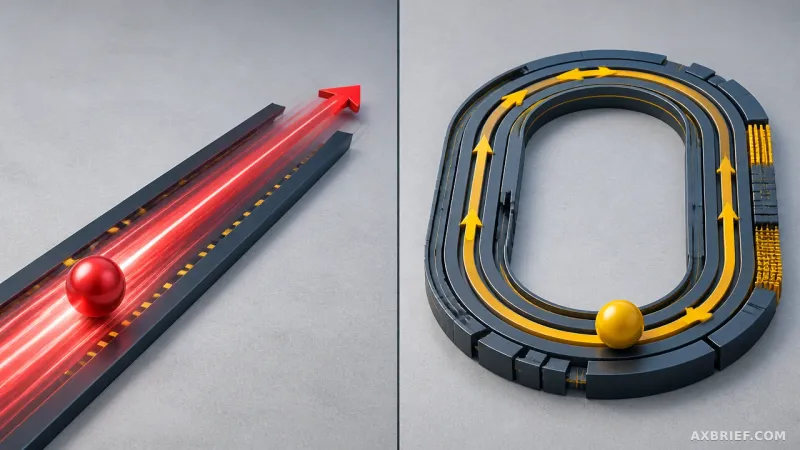
The technical brilliance of NVA lies in its refusal to treat feedback as a simple binary signal of success or failure. Instead, it bifurcates neural feedback into two distinct channels. The first is the Reward Prediction Error (RPE). This signal triggers when there is a discrepancy between the expected result and the actual outcome. In the context of NVA, an RPE signal tells the AI that its current estimation of the user's goal is fundamentally wrong. It is a signal to pivot the objective entirely.
The second channel is the State Prediction Error (SPE). This occurs when the goal is correct, but the trajectory or the method of achieving that goal is unexpected. If the robot is moving toward the correct cup but is doing so in a jerky, inefficient, or frightening manner, the user's brain generates an SPE. This signal instructs the AI to refine its behavioral path without changing the ultimate destination. By separating the what from the how, NVA allows an AI to perform surgical corrections to its logic rather than resetting its entire task parameters.
From Neural Signatures to Simulation Reality
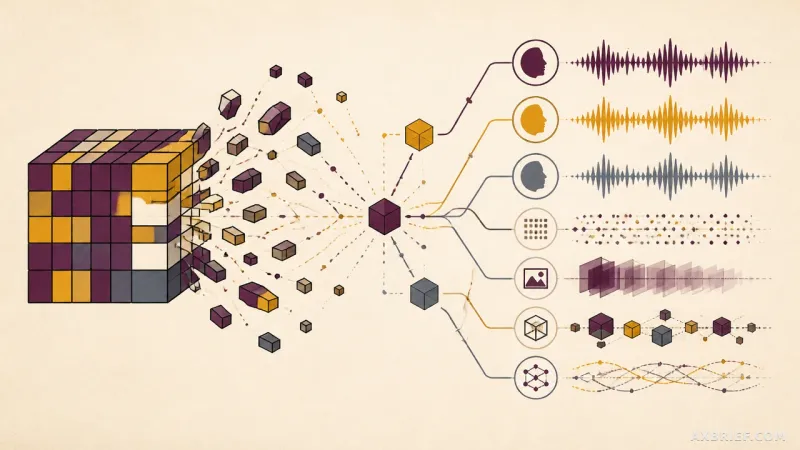
To prove this mechanism, the research team designed specific tasks where they could isolate and record these distinct EEG patterns. Using deep learning models, they successfully demonstrated that RPE signals, SPE signals, and simultaneous occurrences of both could be classified and distinguished. These classified signals were then integrated into the AI's goal-estimation algorithms and behavior-correction pipelines, turning raw brainwaves into real-time steering commands.
When put to the test in simulation environments, the results highlighted a clear hierarchy of efficiency. The AI systems utilizing the combined RPE and SPE feedback loop adapted to changes in user goals significantly faster than those relying on a single signal type. More importantly, this neural-integrated approach outperformed systems that relied exclusively on observed behavioral data. The synergy of the two error signals provided a high-resolution map of user intent that external observation simply cannot replicate.
However, the researchers maintain a necessary level of scientific caution. The current success was achieved within controlled experimental settings. The data does not yet come from a physical robot interacting with a human in a chaotic, real-world environment. This leaves a critical open question regarding the threshold of classification accuracy: at what point does the noise in a real-world EEG signal render the NVA correction mechanism ineffective? The transition from a simulated environment to a physical one will require a rigorous validation of how the system handles degraded signal quality.
This framework shifts the paradigm of AI alignment from explicit instruction to implicit synchronization. It is not telepathy, but rather a sophisticated error-correction system that treats the human brain as a high-fidelity supervisor. For developers looking to implement such a system, the primary hurdles are not the alignment logic, but the hardware interface. Real-world deployment will require aggressive noise cancellation to filter out electromyography (EMG) interference from muscle movements and a drastic reduction in classification latency to ensure the AI reacts before the user becomes frustrated.
For those integrating this into physical AI or rehabilitation robotics, the focus must shift toward building robust fallback mechanisms. If the EEG classifier fails or the signal-to-noise ratio drops too low, the system must seamlessly revert to traditional behavioral observation without compromising safety. The path toward truly intuitive AI lies in this intersection of neuroscience and robotics, where the machine learns to listen to the silence of a user's disappointment.