The modern developer's workflow has become a race toward total automation. For years, the industry has chased the dream of the autonomous agent, where the friction of writing boilerplate and debugging syntax vanishes into a prompt. But as the gap between human intent and machine execution closes, a quiet crisis of meaning is emerging. The very efficiency that AI promises is beginning to erode the intrinsic reward of creation, leaving some of the industry's most influential figures wondering if the digital world still has anything left to offer that is genuinely human.
The Departure of a Tech Leader
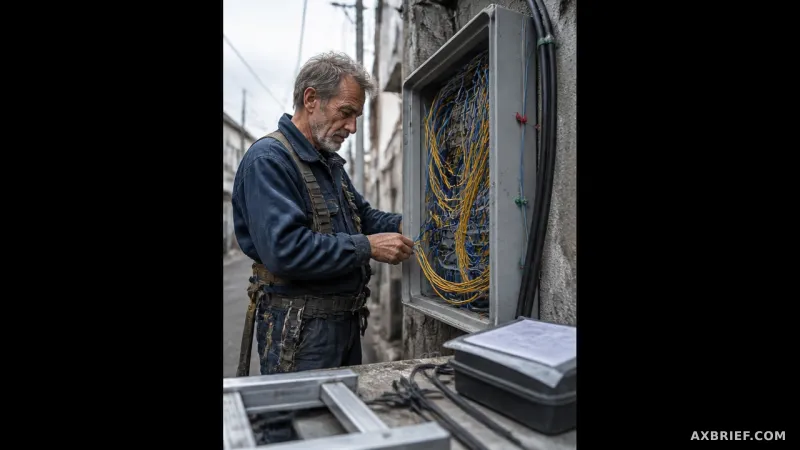
On May 29, 2026, Chad Whitacre, the Head of Open Source at Sentry, officially ended his tenure in the technology sector. This was not a standard transition to a competitor or a move into venture capital. Instead, Whitacre is transitioning to a role at Home Depot, the American home improvement retailer. By moving from the helm of an error-monitoring platform to the floor of a physical retail store, Whitacre is executing a complete departure from the digital ecosystem.
This decision follows a decade of professional evolution. Since 2015, Whitacre's role had shifted steadily away from the act of coding and toward the complexities of leadership and external relations. The time spent managing organizational direction and communicating with the public began to outweigh the time spent interacting with a compiler. This shift created a growing dissonance between his internal values and his daily professional reality, a gap that eventually became irreconcilable.
While the shift in job description provided the initial friction, the rise of generative AI served as the final catalyst. For a leader deeply embedded in the open-source community, the automation of code generation fundamentally altered the nature of contribution. The joy of the craft—the meticulous process of solving a problem and sharing that solution with the world—was replaced by a streamlined efficiency that stripped the act of its creative soul. As AI maximized the output of software development, it simultaneously diminished the perceived meaning of the human developer's contribution.
Whitacre's exit is structured and absolute. He has already begun the process of dismantling his digital presence, having ceased the use of smartphones and the internet in his personal life on February 6, 2026. To ensure the continuity of his professional legacy, he is transferring the leadership of the Open Source Pledge to Vlad-Stefan Harbuz, with support from Konstantin, Jonathan, and Max. He will remain online only until August to facilitate the transition of new board members for the Open Source Endowment, after which he will sever all remaining digital ties.
The Rise of the AI Amish
Whitacre's transition is more than a career change; it is a philosophical rebellion against the attention economy. He describes his new lifestyle as Neo-Amish, a nod to the 18th-century Pennsylvania community that rejected modern conveniences to preserve social and spiritual cohesion. In this framework, Whitacre is not rejecting all technology—he still utilizes electricity and drives a car—but he has strictly excised the tools that facilitate digital addiction: the smartphone and the internet.
This choice is a direct response to a business model that treats human attention as a raw material to be harvested and sold. By returning to a 1980s-style existence, Whitacre is attempting to reclaim his cognitive resources from the algorithms that dictate modern interaction. He has replaced instant connectivity with the deliberate silence of physical constraints, prioritizing the tangible reality of the physical world over the ephemeral nature of the screen.
To facilitate this new way of living, Whitacre has established a communication system based entirely on physical presence and the United States Postal Service (USPS). He has launched an offline magazine titled Gift, which serves as a medium for those seeking a similar detachment from the digital grid. The process of subscribing to Gift is intentionally designed to be inconvenient. There are no one-click payments or digital subscriptions. Instead, interested parties must send 10 dollars to a physical address: P.O. Box 200, Sewickley, PA 15143.
By requiring a physical check and a handwritten address, Whitacre reintroduces the concepts of scarcity and effort into the exchange of information. The wait for the mail to arrive transforms the act of reading from a passive consumption of a feed into a conscious event. This analog approach extends to his social structure, which is centered around his Orthodox Christian faith community. He has opened points of contact for face-to-face meetings in Sewickley and at St. Nicholas, Motees Rocks, Pennsylvania.
This shift represents a move from the loose, algorithmic connections of social media to the dense, high-trust networks of faith and geography. By building a mutual aid system that operates without the need for digital identity verification or profile validation, Whitacre is testing whether a flourishing society can be rebuilt on the foundation of physical proximity and shared belief. He views this not as a retreat into the past, but as an expansive recovery of the human experience.
The trajectory from Sentry's open-source leadership to the aisles of Home Depot signals a broader inflection point for the industry. For decades, the tech world has operated on the assumption that more connectivity and higher abstraction always equal progress. However, as AI begins to handle the abstraction, the value of the human element is shifting back toward the concrete. The prestige of the engineer is no longer found in the ability to manipulate the latest model, but in the ability to apply human agency to the physical problems of the real world.