For decades, the digital divide has been a physical reality. In rural heartlands and remote industrial sites, satellite internet was long regarded as a desperate last resort—a slow, jittery connection that barely sustained basic web browsing. But the conversation in the developer and infrastructure community has shifted this week. We are no longer talking about simply bringing the internet to the underserved; we are talking about building a planetary-scale nervous system for artificial intelligence. The goal is no longer just connectivity, but the seamless integration of billions of AI-powered edge devices into a real-time global fabric.
The Blueprint for a 100,000-Satellite Constellation
SpaceX has formally submitted an application to the Federal Communications Commission (FCC) to deploy 100,000 third-generation Starlink satellites. To understand the scale of this ambition, one only needs to look at the current state of the network, which operates approximately 11,000 satellites. This massive expansion is not merely a quantitative increase in coverage but a qualitative leap in capacity. By increasing network density, SpaceX intends to provide symmetric multi-gigabit communication with ultra-low latency to governments, enterprises, and an estimated billions of AI-driven devices.
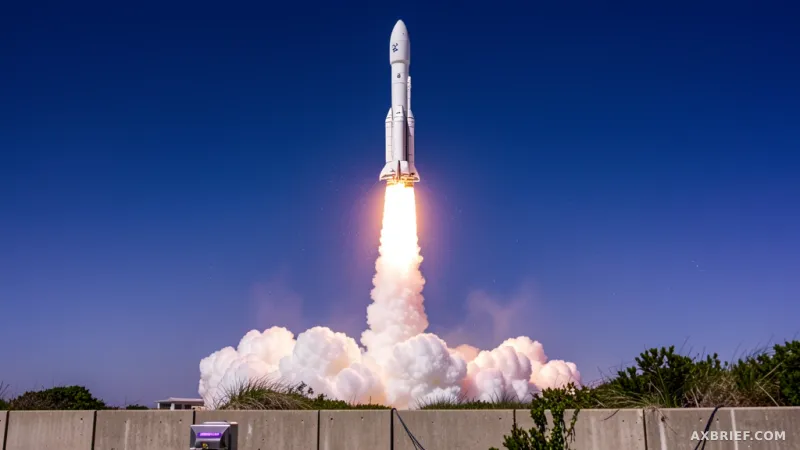
This leap in performance necessitates a complete overhaul of the launch and hardware ecosystem. The third-generation satellites are significantly heavier than their predecessors, with individual units exceeding 2,000kg. This weight makes the workhorse Falcon 9 insufficient for the required launch cadence. Consequently, SpaceX is pivoting toward the full-scale deployment of Starship to handle the bulk of the constellation. Until Starship is fully operational, the company will utilize Falcon Heavy to maintain the deployment pipeline. On the ground, the transition to gigabit speeds will require a hardware refresh, as existing user terminals and antennas lack the specifications to handle the new throughput standards.
To support this data deluge, SpaceX is pursuing an aggressive spectrum strategy. The FCC application requests access to a vast frequency range spanning from 10.7GHz up to 275GHz. Specifically, the company is seeking usage rights across the Ku, Ka, V, E, W, and D bands. The proposed architecture allocates 10.7 to 42.5GHz for downlinks and extends up to 275GHz for uplinks. To facilitate high-capacity fronthaul and backhaul configurations—the critical links between base stations and the core network—SpaceX has even requested an exemption from FCC regulation Section 2.106. This spectrum grab is designed to ensure that AI edge devices can transmit massive datasets to cloud servers instantaneously, even in environments where laying fiber optic cable is physically or economically impossible.
The 20ms Threshold and the Regulatory Wall
While competitors like Amazon Leo, Eutelsat-OneWeb, Telesat Lightspeed, and Blue Origin TeraWave are positioning themselves in the Low Earth Orbit (LEO) market, SpaceX is attempting to move the goalposts entirely. The strategic pivot here is the transition from consumer internet to AI infrastructure. By expanding the total bandwidth by 100 times, SpaceX is targeting a critical technical threshold: reducing real-world latency from the current 30-50ms range to under 20ms.
In the world of AI, 20ms is the difference between a tool and a system. For remote robotic control, real-time industrial analysis, and autonomous edge inference, latency above 20ms often introduces instability or lag that renders a system unsafe or inefficient. By breaking this barrier, SpaceX is effectively removing the network as a bottleneck for AI deployment. The insight is clear: the limitation for deploying high-performance AI in the field is no longer the compute power of the local chip, but the latency of the pipe connecting that chip to the model's brain in the cloud.
However, this vision faces a significant regulatory and scientific counter-pressure. The European Southern Observatory has already raised alarms, noting that a constellation of 100,000 satellites could severely obstruct astronomical observations and pollute the night sky. The FCC is expected to impose stringent conditions on the approval, focusing on space debris mitigation, frequency coordination, and interference prevention. The final approved plan may see a reduction in the number of satellites or a restriction on the frequency bands used, which could potentially throttle the projected 100x bandwidth increase.
As the battle for the orbital shell intensifies, the metric for success is shifting. The ability to deploy AI at the edge will soon depend less on hardware benchmarks and more on who controls the most efficient path through the vacuum of space.