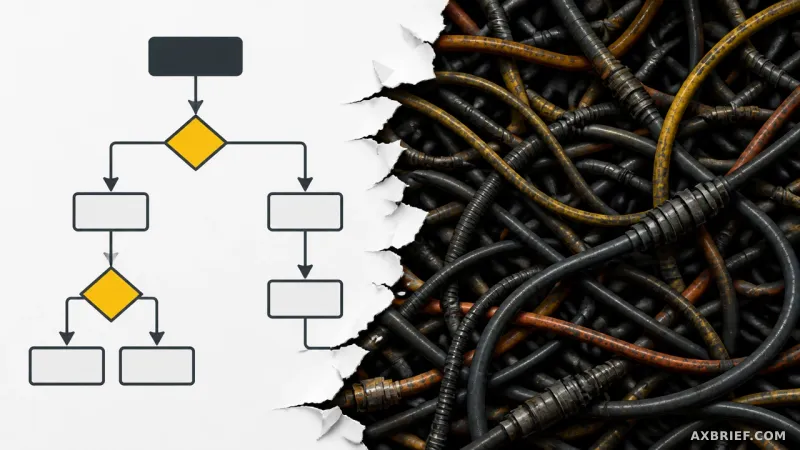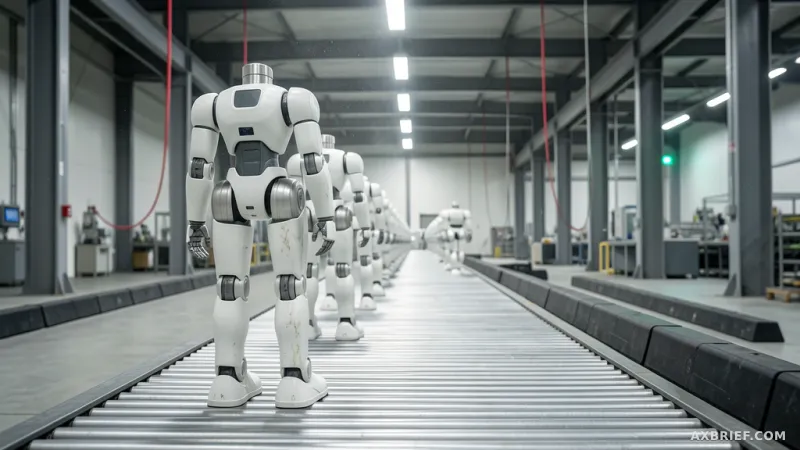
The robotics industry currently exists in a state of perpetual demonstration. Every few weeks, a new video surfaces showing a humanoid robot folding laundry or navigating a warehouse with uncanny precision, yet these machines rarely migrate from the laboratory to the loading dock. This gap between a successful prototype and a deployed fleet is not a failure of intelligence, but a failure of logistics. The bottleneck is no longer the code; it is the physical capacity to manufacture and manage hardware at scale.
The Architecture of the Nanjing Robot Hub
To bridge this divide, AgiBot, Whale Cloud, and the Xingong Group have formed a strategic joint venture to establish a dedicated Embodied Intelligence robot hub in Nanjing. This partnership represents a calculated convergence of three distinct pillars of the AI ecosystem. AgiBot provides the core intelligence and robotics expertise, Whale Cloud contributes the necessary cloud computing infrastructure, and the Xingong Group, a state-owned enterprise under the Nanjing municipal government, provides the industrial muscle.
This consortium is building a city-scale operating system designed to integrate Embodied Intelligence—the field where AI interacts with the physical world through a robotic body—with a robust cloud backend. By leveraging the Xingong Group's deep integration with local supply chains and manufacturing resources, the venture intends to move beyond the research phase and into the mass production of robot chassis and components. The goal is to create a streamlined pipeline that accelerates the speed at which hardware is produced and delivered to the end user.
The scope of this deployment is broad, targeting a wide array of high-impact sectors. The hub is designing specialized solutions for industrial manufacturing, security, logistics, telecommunications, healthcare, government services, and domestic home environments. By combining hardware production with localized software solutions, the partnership aims to drastically reduce the time it takes for Physical AI to move from a conceptual design to a functional asset in the field.
Shifting the Benchmark from Intelligence to Infrastructure
For years, the AI community has treated the development of robots as a software problem, assuming that once a model reached a certain threshold of reasoning, the hardware would simply follow. However, the reality of deploying thousands of units is fundamentally different from operating a single, highly tuned prototype. The challenge is not just making a robot smart, but making the process of building and maintaining ten thousand smart robots efficient.
This is where the Nanjing initiative departs from traditional robotics startups. Instead of focusing solely on the intelligence of the individual agent, the joint venture is focusing on the integration of the entire lifecycle: development, testing, deployment, and operation. By creating a unified platform and a dedicated talent cultivation base, they are treating the city of Nanjing itself as a laboratory for mass deployment. The platform serves as the connective tissue between the manufacturing floor and the development environment, ensuring that hardware iterations happen in lockstep with software updates.
The shift in strategy reveals a critical insight into the future of the industry. The competitive advantage in Physical AI is migrating away from the purity of the model and toward the efficiency of the system. When a state-owned enterprise's supply chain is fused with cloud-native orchestration and cutting-edge robotics, the limiting factor is no longer the AI's ability to perceive the world, but the system's ability to populate that world with machines.
Success in the era of Embodied Intelligence will be measured by the integration of the manufacturing ecosystem rather than the specifications of a single model.