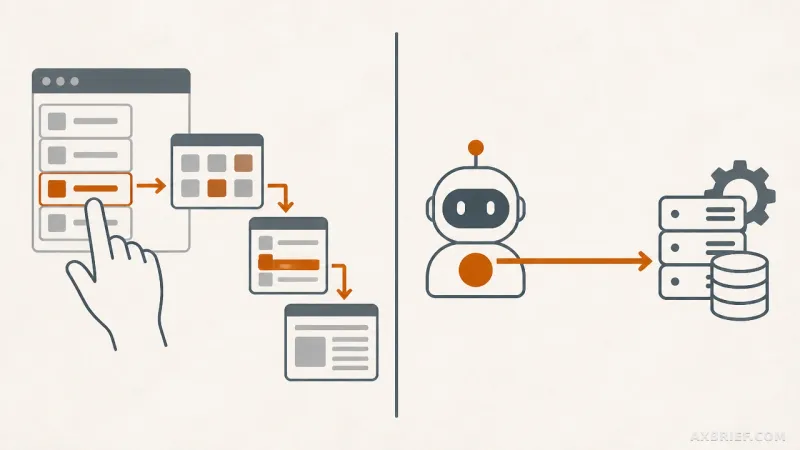
Every AI developer knows the specific frustration of the prototype gap. You spend a weekend on a laptop building a sophisticated agent that can browse the web, execute Python code, and manage a complex state. It works perfectly in a local environment. Then comes the mandate to move it into production. Suddenly, the project stops being about AI and starts being about infrastructure. You are forced to wrestle with container orchestration, sandbox isolation, concurrency limits, and the nightmare of managing identity and access for every external tool the agent touches. The transition from a script to a service usually requires a massive investment in LLMOps that can dwarf the actual development of the agent's logic.
The Architecture of Managed Abstraction
Amazon Bedrock is attempting to erase this friction with the official release of the AgentCore harness. The core value proposition is a radical simplification of the deployment pipeline. Instead of building a custom environment from the ground up, developers can now deploy and execute production-grade agents using only two API calls: `CreateHarness` and `InvokeHarness`. This approach moves the burden of orchestration from the developer to a managed abstraction layer provided by AWS.
To achieve this, the AgentCore harness integrates six fundamental primitives into a single managed unit. These include the Runtime for code execution, Memory for conversational context, a Gateway for external service connectivity, a Browser for web navigation, Identity for permission and authentication management, and Observability for system health monitoring. In a traditional setup, a developer would have to provision these as separate services and manually stitch them together with glue code. The harness transforms these into a configuration-based service, allowing the developer to focus on the agent's task definition and the quality of the model's responses rather than the underlying plumbing.
Execution and monitoring are deeply integrated into the existing AWS ecosystem. Every step of the agent's operation is streamed in real-time and automatically recorded via Amazon CloudWatch tracing. This eliminates the need to write custom orchestration code or build dedicated containers for monitoring. By shifting the environment configuration to API calls, the time required to move from a prototype to a live service is reduced from weeks of infrastructure engineering to a few minutes of configuration.
Security is handled through a MicroVM-based isolation strategy. Each agent operates within a lightweight virtual machine that provides a completely isolated file system and shell. This ensures that the agent can read, write, and execute code without risking the stability or security of the broader host environment. The harness comes with `shell` and `file_operations` built-in, meaning stateful tasks—such as modifying a file and then running a command against it—work immediately without any local environment setup.
Connecting tools to the agent has also been shifted to a declarative model. When a developer calls the `CreateHarness` API, they simply provide a list of tools. The harness then automatically handles the connection, authentication, and execution flow for those tools. This removes the need to write custom adapter code for every single API. For external communications, the system utilizes gateways or the Model Context Protocol (MCP) to control data flow, meaning developers no longer need to manage the lifecycle of MCP servers or build custom containers for every tool integration.
Identity management is further secured through the AgentCore Identity token vault. API keys required for model providers are stored in this encrypted vault. The agent never has direct access to raw credentials; instead, the harness acts as a proxy, performing authentication requests on the agent's behalf. This architecture prevents credential leakage and significantly reduces the time spent on security hardening.
From Manual Mapping to Intelligent State
While the initial preview of AgentCore required developers to manually create an AgentCore Memory resource and pass a specific Amazon Resource Name (ARN) to the agent, the official release introduces managed memory. If a developer omits the memory configuration during the `CreateHarness` call, the system automatically provisions and binds the necessary memory resources. This removes the manual resource mapping process that previously added significant operational overhead.
This managed memory is not a simple key-value store. It employs a dual strategy of SEMANTIC search and SUMMARIZATION. The system identifies information from past conversations that is semantically similar to the current query and summarizes the overall context before passing it to the model's context window. This ensures the agent maintains a coherent long-term memory without overflowing the token limit. Data is retained for 30 days and secured with AWS-owned encryption keys. To handle multi-tenant environments, the system uses an `actorId` based namespace template, ensuring that memories are strictly isolated between different users.
For agents that do not require state, developers can simply disable the feature using the following configuration:
memory: { disabled: {} }
If a team prefers to use their own existing memory resources, they can still provide a specific ARN in the `agentCoreMemoryConfiguration` field. Switching from managed memory to a custom resource is handled via the `UpdateHarness` API, which detaches the managed memory instantly upon the update.
One of the most significant shifts in the AgentCore harness is the decoupling of the agent from a specific model provider. The system allows developers to switch models in the middle of a single session while preserving the entire conversational context. A developer could use Claude Opus to handle complex logical planning, switch to GPT-5.5 to write the actual implementation code, and then use Gemini to summarize the final results—all within one session. This is achieved by setting a default model during `CreateHarness` and then overriding that model during specific `InvokeHarness` calls. This capability is critical for teams performing regression testing or comparing the cost-to-performance ratio of different models in a live production environment.
To give agents domain-specific expertise, the harness uses HarnessSkill, which bundles files, scripts, and instructions. These skills can be sourced from four different paths: S3, GitHub, Bedrock Knowledge Base, or the built-in runtime. The harness fetches the necessary metadata and places the skill into the session file system only when needed. This means knowledge sets can be updated via declarative settings without needing to rebuild containers or manually edit files in a shell.
For those operating within the AWS ecosystem, the `awsSkills` toggle provides instant access to a curated set of optimized workflows. This includes everything from SDK usage and Infrastructure as Code (IaC) to IAM and CloudWatch optimizations. Because these are loaded directly from the runtime, there is no network fetch or URL configuration required. This provides a deep library of workflows across EC2, networking, security, and serverless storage, allowing developers to focus on optimizing the agent's skill set rather than researching AWS API documentation.
Ultimately, the AgentCore harness represents a shift in how AI agents are built. By treating infrastructure as a managed utility, the bottleneck moves from the system engineer to the prompt engineer and the logic designer. The physical constraints of container builds and orchestration code are replaced by the intellectual challenge of refining skill sets and optimizing model interactions. The goal is no longer just to make the agent work, but to make it precise.