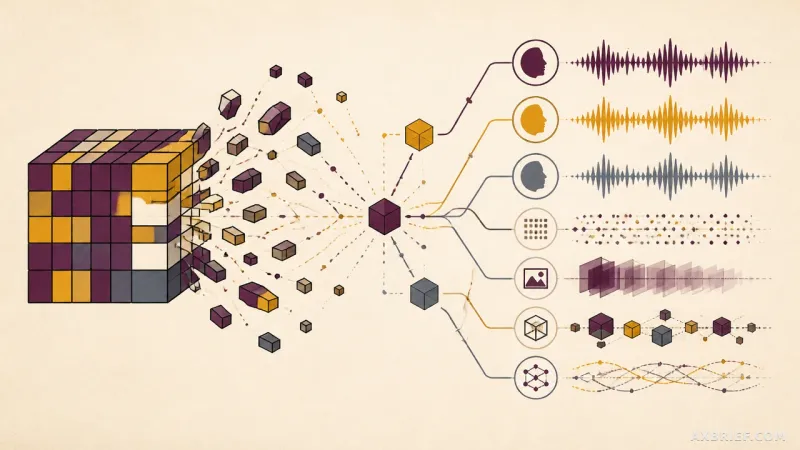
The dashboard is a sea of green. Latency is well within the acceptable threshold, and the success rate sits at a comfortable 99 percent. On paper, the AI agent is performing flawlessly. Yet, the customer support tickets tell a different story. Users are complaining that order modifications are being ignored or that inventory checks are returning outdated information. This is the paradox of modern LLMOps: the infrastructure is healthy, but the behavior is broken. Developers find themselves trapped in a cycle of manual log diving, searching for a needle in a haystack of traces to understand why a system that claims to be successful is failing its users in practice.
The Anatomy of Silent Failures
Amazon Bedrock AgentCore addresses this gap by targeting what is known as the silent failure. A silent failure occurs when a system processes a request without triggering a technical error or a timeout, yet produces a logically incorrect or incomplete result. To solve this, AgentCore moves beyond basic telemetry and implements a rigorous behavioral failure detection system. It analyzes trace data—the detailed record of a system's execution path—to identify patterns that indicate a failure in logic rather than a failure in uptime.
At the heart of this system is a classification framework consisting of 11 distinct behavioral failure categories. These categories allow operators to move from a vague sense of dissatisfaction to a precise diagnosis. The framework tracks issues such as hallucinations, where the agent invents facts, and orchestration errors, where the agent fails to coordinate between multiple tools. It also monitors for violations of task instructions, context processing errors, and incorrect actions. When a failure is detected, AgentCore does not simply flag the session; it records the exact location within the trace, assigns it to one of these 11 categories, and generates a natural language explanation of the error.
Because a high-traffic agent can generate thousands of these failures, reviewing them individually is impossible. AgentCore employs a clustering process that groups similar failure characteristics together. Instead of staring at five hundred separate instances of a failed inventory check, a developer sees a single, named pattern. This transformation allows the operator to visualize the gap between the agent's actual behavior and the original design intent, turning raw log data into actionable intelligence.
Pruning the Path to Root Cause
Identifying that a failure happened is only half the battle. The real challenge lies in Root Cause Analysis (RCA) within complex, multi-step workflows. A single user request might trigger a chain of 50 different steps, including reasoning calls, tool executions, and sub-agent handoffs. In a standard trace, these are recorded as spans, creating a dense graph of activity. Most of these spans are noise—they are logically unrelated to the eventual failure.
AgentCore solves this through a process called pruning. The system analyzes the execution graph and strips away any branches that did not contribute to the failure. By removing the irrelevant paths, AgentCore compresses a sprawling workflow into a lean, core execution path. This pruning drastically reduces the volume of data a developer must analyze and accelerates the time it takes to establish a causal link between an input and a wrong output.
Once the core path is isolated, AgentCore traces the graph backward from the point of failure to find the exact origin of the error. The output of this analysis is a precise Span ID pointing to the problematic log entry, a classification of the causality, and a specific recommendation for a fix. These recommendations are categorized into three actionable buckets: system prompt modifications, tool description updates, or infrastructure tasks. This distinction is critical. It tells the developer whether the agent failed because the prompt was too ambiguous or because the tool's description didn't clearly explain when it should be called. By comparing the input and output values at the identified Span ID, developers can apply a surgical fix rather than guessing and iterating on the prompt.
This granular analysis then feeds back into the clustering engine. If 90 out of 100 failures in a cluster share the same root cause and the same recommended fix, the developer knows exactly where to focus their energy. This shift from session-based debugging to pattern-based optimization allows teams to resolve the most impactful bugs first, rapidly increasing the actual success rate without wasting resources on edge cases.
Prioritizing Optimization via Scope Ranking
Not all failures are created equal. To manage the optimization pipeline, AgentCore introduces scope ranking. This metric sorts failure clusters based on the number of sessions they affect relative to the total analysis volume. For example, a high-level cluster labeled as information gathering bypass might affect 116 sessions. Within that, a more specific sub-pattern, such as missing mandatory information search, might account for 114 of those sessions. By visualizing this hierarchy, developers can prioritize the defects that degrade the experience for the largest segment of their user base.
Beyond failure detection, AgentCore analyzes the alignment between designed use cases and actual user behavior. It uses embedding technology to convert user prompts into numerical vectors, allowing the system to cluster actual requests and compare them against the intended design. An analysis might reveal that 40 percent of traffic fits the primary use case, 30 percent is partially supported, and 30 percent consists of entirely unexpected requests. This insight provides a data-driven basis for deciding whether to implement new guardrails to block unsupported requests or to expand the agent's capabilities to meet an emerging user need.
This behavioral mapping extends to execution summaries. If an agent provides a specific financial figure but fails to call the required data retrieval tool in 10 percent of sessions, the execution summary flags this as a violation of the system prompt. By recording the path where the agent made a numerical claim without utilizing the available tool, AgentCore pinpoints exactly which instruction in the system prompt is being ignored or misunderstood.
Implementing AgentCore Insights
Integrating this level of observability into a production pipeline is handled through AgentCore Insights. The setup is managed via the Optimizations menu in the AgentCore console, where users navigate to Create Insights to configure their analysis environment. Operators can choose to analyze failure modes, user intent, or execution summaries, depending on whether they are hunting for bugs or analyzing user behavior.
Data is ingested by connecting the system to an S3 bucket or directly to Bedrock session data. To accommodate different operational rhythms, AgentCore offers two execution modes. The one-time mode is designed for immediate analysis of a specific data window, while the recurring mode generates reports on a daily, weekly, or monthly basis. The recurring mode is particularly valuable for large-scale deployments, as it automatically processes session data in the background, allowing teams to track how behavioral patterns shift as the model or the prompt evolves.
To maintain efficiency and security, the system includes filtering and sampling settings. This allows developers to limit the analysis to specific sessions or a representative percentage of total traffic. Access is controlled through IAM roles, ensuring that AgentCore can securely access S3 or Bedrock logs without compromising the broader security posture. Once the telemetry pipeline is active, the data flows into the clustering engine, shifting the developer's workflow from manual investigation to high-level strategic optimization.
Ultimately, the goal of AgentCore is to replace the intuition-based approach to prompt engineering with a rigorous, evidence-based methodology. By utilizing scope ranking to identify the most pervasive failures, developers can stop chasing ghosts in the logs and start fixing the structural flaws in their agent's logic.