The tension between open-source accessibility and national security has reached a fever pitch in the AI corridors of Washington and Silicon Valley. For months, a quiet debate has simmered over whether the United States should restrict the use of open-weight models, particularly those originating from adversarial nations like China. Within this fray, Anthropic has often been cast as the cautious sentinel, with critics suggesting the company favors a closed-ecosystem approach to protect its own market dominance. This week, the narrative shifted as the company moved to clarify its position on the fundamental nature of AI distribution.
The Framework for Open-Weight Governance
Anthropic CEO Dario Amodei has officially stated that the company does not advocate for a categorical ban on open-weight models. This clarification comes at a critical juncture where some government factions are considering prohibitions on the use of foreign open-weight models by American firms. Amodei argues that such protectionist bans are an inefficient tool for addressing genuine national security concerns and fail to recognize the inherent utility of open weights. Instead, he defines open-weight models that lack dangerous capabilities as essential public goods. By removing the recurring cost of API calls and allowing developers to run models on their own infrastructure, open weights democratize access to the AI economy and foster a level of competition that benefits the end user.
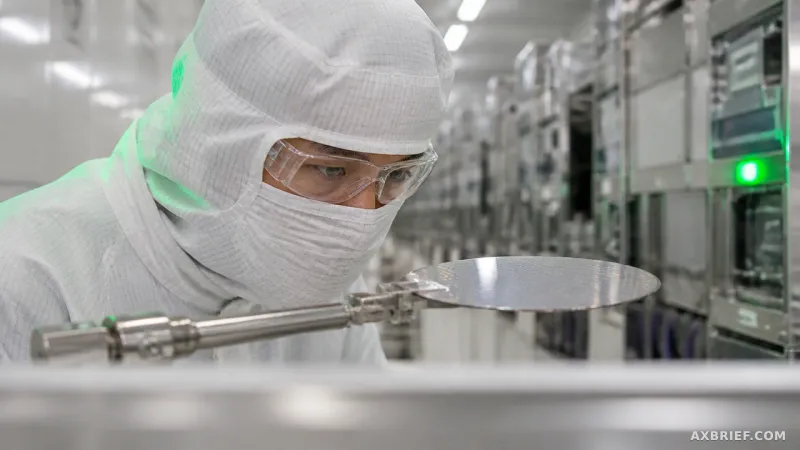
To replace the blunt instrument of a total ban, Anthropic proposes a three-pronged control strategy designed to mitigate risk without stifling innovation. The first pillar focuses on the physical layer: the strict control of high-performance compute chips. By ensuring that the hardware necessary to train and deploy frontier-scale models does not reach authoritarian regimes, the company believes the international community can suppress the capacity for large-scale weaponization more effectively than through software regulation alone. This approach targets the bottleneck of the AI supply chain rather than the resulting weights.
The second pillar addresses the phenomenon of model distillation. Distillation is the process of using a massive, high-performance model to train a smaller, more efficient one, effectively transferring the intelligence of a closed-system giant into a lightweight, open-weight vessel. Anthropic argues that industrial-scale distillation must be curtailed because it allows the high-tier capabilities of closed models to leak into uncontrollable open models at an exponential rate. Rather than relying on technical blocks, Amodei suggests that this risk be managed through targeted legal and commercial frameworks that penalize the unauthorized distillation of frontier capabilities.
The third pillar is a mandate for empirical safety testing. Anthropic demands that any model reaching a certain threshold of capability, regardless of whether it is open or closed, must undergo rigorous safety evaluations before release. This is not a request for theoretical safety claims but a requirement for empirical evidence. Models must be tested against specific, dangerous outputs to ensure they cannot be used to facilitate catastrophic harm. This creates a universal standard of accountability where the weight-distribution method is secondary to the model's actual behavioral profile.
The Asymmetry of AI Weaponization
This policy shift reveals a deeper, more unsettling analysis of the attacker-defender asymmetry in the age of generative AI. For years, the prevailing wisdom in the open-source community has been that transparency leads to security; more eyes on the code and weights mean faster patching of vulnerabilities and better guardrails. Anthropic fundamentally disputes this logic when applied to high-stakes biological and chemical risks. The core of the issue is that the speed at which an attacker can find a way to weaponize a model is vastly superior to the speed at which a defender can build a countermeasure.
In the realm of biological warfare, this asymmetry is lethal. A sufficiently capable AI model could provide a step-by-step guide on how to synthesize a pandemic-level virus using readily available materials. While the AI might have built-in guardrails to prevent this, an open-weight model allows an attacker to simply strip those safety layers away or fine-tune the model to ignore them. Once the weights are public, the guardrails become a mere suggestion. Conversely, the defense against such a threat is not a software patch but a physical, biological response. As seen during Operation Warp Speed, developing a vaccine or a treatment is a massive operational undertaking that takes months or years, even in the best-case scenario. The attacker operates in milliseconds of compute; the defender operates in years of clinical trials.
This realization transforms the open-weight debate from one of philosophy to one of physics. If the cost of removing a safety filter is near zero, but the cost of defending against the resulting biological threat is billions of dollars and years of labor, then the transparency of open weights becomes a liability rather than an asset. Consequently, Anthropic asserts that safety cannot be assumed based on the presence of a community; it must be proven through exhaustive red-teaming and empirical data before the weights ever leave the secure environment of the developer.
Beyond the policy debate, Anthropic is simultaneously pushing the boundaries of what these models can actually do in a production environment. The company has introduced Opus 5, a significant leap in the Opus-tier performance designed specifically for long-running agents. Unlike previous iterations that focused on short-form chat or single-turn reasoning, Opus 5 is optimized for professional office workflows and complex coding tasks that require the model to plan, execute, and iterate on a goal over an extended period. This shift toward autonomous agency marks a transition from AI as a consultant to AI as an operator, capable of managing end-to-end business processes without constant human intervention.
To balance this leap in capability, the company has also launched the Anthropic Economic Futures Research Fund. This initiative is designed to move beyond the engineering of intelligence and into the quantitative analysis of AI's impact on the labor market and global economic structures. By studying the volatility introduced by the rapid deployment of agents like Opus 5, Anthropic aims to provide a data-driven roadmap for societal adaptation. It is an admission that the technical success of a model is only half the battle; the other half is managing the economic displacement that follows.
For enterprises and developers integrating open-weight models into their pipelines, the takeaway is clear: benchmark scores are no longer the primary metric of success. The priority must shift toward verifying the empirical safety tests conducted prior to the model's release. Furthermore, those utilizing distillation to reduce inference costs must ensure their processes align with the emerging legal and commercial frameworks to avoid the risks associated with capability leakage. The era of blind trust in open weights is ending, replaced by a regime of empirical verification and hardware-level control.