
The global race for artificial intelligence supremacy has shifted from a battle of algorithms to a war over electricity. For years, the playbook for data center expansion was simple: find a region with cheap land, a favorable tax climate, and a permissive local government. Developers could practically name their price, receiving massive subsidies and tax breaks in exchange for the promise of high-tech jobs. But as the energy demands of generative AI scale exponentially, the welcome mats are being pulled back. The conversation in state capitals has moved from how to attract these digital monoliths to how to prevent them from collapsing the local power grid.
The 25MW Threshold and the End of Easy Power
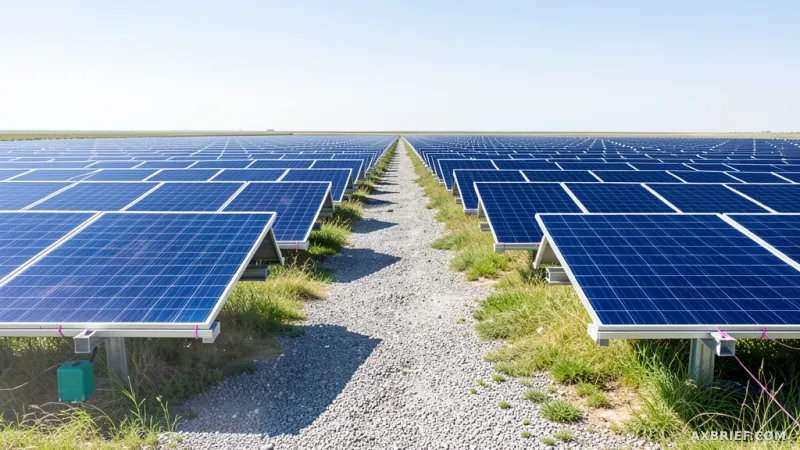
Massachusetts is now drawing a hard line in the sand. Governor Maura Healey has issued an executive order that fundamentally changes the entry requirements for large-scale compute infrastructure. Under the new mandate, any developer seeking to build a data center with a peak demand of 25MW or more must now independently secure a clean energy supply. This is not a suggestion or a goal; it is a prerequisite for development. The state's primary preference is for on-site generation, pushing developers to integrate their own renewable energy production directly into their facility footprints.
For those unable to generate their own power, the state has created a tiered system of compliance. Developers can either fund the construction of new, nearby clean energy facilities or pay into a ratepayer protection fund. This fund is designed to ensure that the massive energy appetite of AI clusters does not drive up electricity costs for residential consumers. The definition of clean energy follows established state law, focusing on approved sources such as wind, solar, and hydroelectric power. The transition is phased, with a critical benchmark set for 2030, by which time at least 40% of the facility's total power must come from these clean sources. This percentage is designed to climb annually, forcing a steady migration away from fossil-fuel reliance.
Beyond the power requirements, the executive order targets the opacity of data center deals. The state has issued guidelines to discourage local communities from signing non-disclosure agreements (NDAs) with developers, a common practice used to keep tax breaks and resource commitments secret from the public. In a more immediate blow to the industry, the state has temporarily suspended applications for data center sales tax exemptions that were implemented only last month. This freeze provides regulatory bodies the necessary breathing room to integrate these new restrictions into the state's fiscal and environmental frameworks.
The Great Pivot from Incentives to Regulation
This move by Massachusetts represents a broader, systemic shift in how American state governments view the AI infrastructure boom. For a decade, the prevailing logic was that data centers were low-impact, high-value assets. Today, they are increasingly viewed as liabilities that threaten grid stability and climate goals. Massachusetts is not an isolated case; it is the third major regulatory pivot in as many months. In July, New York took an even more aggressive stance, with the governor effectively halting the construction of new data centers with a capacity of 50MW or more. In August, Texas Governor Greg Abbott shifted the burden of proof to the developers, requiring all new data center projects to undergo rigorous audits by the Public Utility Commission (PUC) and the Electric Reliability Council of Texas (ERCOT).
The tension arises from a fundamental conflict between the speed of AI deployment and the inertia of physical infrastructure. While a cluster of GPUs can be installed in weeks, a new high-voltage transmission line or a solar farm can take years to permit and build. When a single large data center consumes as much power as a small city, the social contract between the developer and the community breaks. The public backlash against grid instability and rising utility bills has turned data centers into political lightning rods, forcing governors to prioritize voter concerns over corporate investment.
In response, the tech industry is moving its battle from the boardroom to the ballot box. A powerful AI-focused Super PAC called Leading the Future, backed by influential figures including Marc Andreessen, Ben Horowitz, and Greg Brockman, has launched an aggressive advertising campaign. Targeting swing states ahead of the midterm elections, the PAC aims to convince voters that restrictive energy mandates are not just a hurdle for big tech, but a threat to national competitiveness and the future of American innovation. The conflict has evolved into a high-stakes tug-of-war between the immediate needs of the electrical grid and the long-term ambitions of the AI economy.
For international firms and infrastructure providers, particularly those from South Korea looking to expand into the U.S. market, this signals a new era of risk management. The era of relying on federal guidelines or initial state-level incentives is over. The real risk now resides at the state administrative level, where a single executive order can evaporate tax benefits or impose millions of dollars in additional power procurement costs. The trigger for these regulations is becoming increasingly granular, with specific thresholds like 25MW or 50MW acting as the line between a streamlined approval and a regulatory nightmare.
Site selection is no longer a matter of finding the cheapest land or the most generous tax break. It is now a question of energy autonomy. The winners in the next phase of AI infrastructure will be those who can prove they are energy-neutral or energy-positive, treating power procurement not as a utility service, but as a core engineering challenge.



