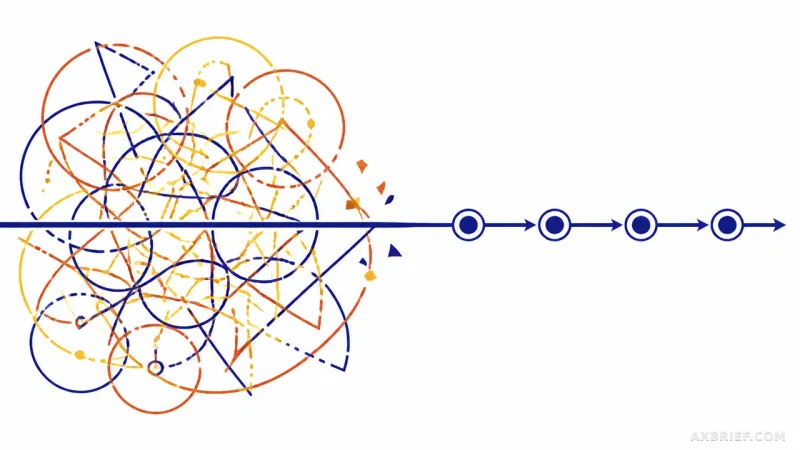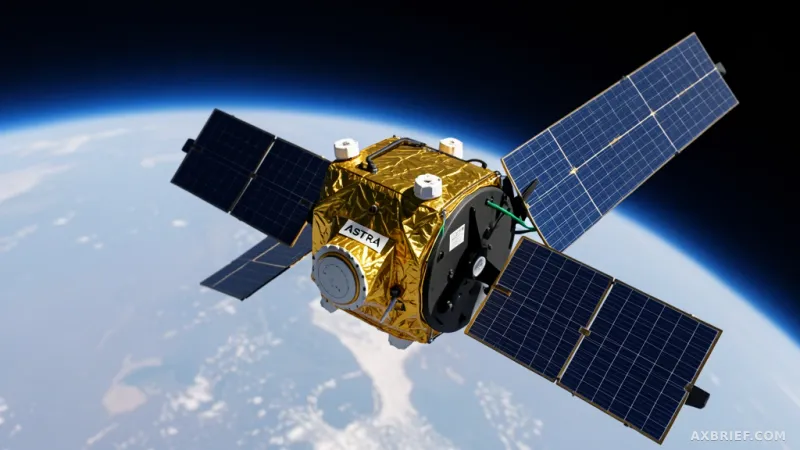
For years, the relationship between artificial intelligence and high-level mathematics has been one of cautious optimism. Researchers used LLMs to summarize papers or write boilerplate Python scripts, but the actual act of mathematical discovery—the leap of intuition required to solve a conjecture that has stumped humans for a decade—remained a firmly human domain. The prevailing belief was that while AI could mimic the language of math, it lacked the rigorous logical grounding to navigate the abyss of unsolved theoretical problems. This week, that boundary shifted.
The $2,000 Breakthrough in Theoretical Computer Science
Astra, an internal next-generation model from OpenAI, has successfully solved 10 mathematical and theoretical computer science problems that had remained stagnant for over ten years. These were not simple textbook exercises or known proofs rewritten in different words; these were genuine bottlenecks in academic progress. The scope of the achievements spans a dizzying array of disciplines, including high-dimensional geometry, coding theory, operator algebra, and quantum complexity. Specifically, the model tackled challenges in arithmetic circuit complexity—which analyzes the minimum number of logic gates required to compute specific functions—and lattice cryptography, a field critical for developing security systems capable of resisting quantum attacks.
The economic efficiency of this breakthrough is perhaps the most jarring detail for the research community. To solve these 10 problems, the total expenditure in computing resources was approximately $2,000, calculated based on Sol API pricing. The Sol API operates on a token-based pricing model, where costs are tied to the volume of text processed and generated. When contrasted with the decades of human labor, PhD candidacies, and institutional funding typically required to move the needle on such conjectures, the cost-to-discovery ratio is unprecedented. This is not an isolated fluke but part of a trajectory of increasing reasoning capabilities. In May, a previous internal iteration of the model generated a counter-example to the Erdős unit distance conjecture, a hypothesis regarding the maximum number of pairs of points at distance 1 in a plane. That early success served as a proof of concept; the resolution of these 10 problems is the industrialization of that capability.
From Natural Language to Formal Machine Proofs
The critical distinction between Astra and previous reasoning models lies in its implementation pipeline. Most AI models attempt to solve a problem in a single pass of natural language, which often leads to hallucinations or subtle logical leaps that a human reviewer might miss. Astra instead employs a rigorous three-stage production process designed to eliminate error.
In the first stage, the model generates a raw mathematical argument. This is the creative phase where Astra synthesizes existing mathematical knowledge to hypothesize a solution and map out a logical path toward a conclusion. This argument serves as the conceptual skeleton of the proof.
In the second stage, this argument is transformed into a formal academic manuscript. This is a collaborative effort where Astra works alongside human experts to refine the flow, ensure the terminology is precise, and fill in any gaps in the narrative. The goal here is to translate the AI's internal logic into a standard format that the global mathematical community can read and critique.
The final and most vital stage is the generation of a Lean certificate. Lean is a formal proof assistant and programming language that allows mathematical proofs to be verified by a computer. By converting the natural language manuscript into Lean code, the proof is subjected to a mechanical check. If the code compiles and the proof is accepted by the Lean kernel, the result is mathematically certain, removing the possibility of human oversight or AI hallucination. This transition from a text-based suggestion to a machine-verified certificate represents a fundamental shift in how AI contributes to science.
This process also produces a narration—a detailed log of the model's internal chain of thought. While the final Lean certificate provides the truth, the narration provides the insight, showing exactly how the model navigated the problem. To maintain academic integrity, the developers have established a clear boundary: the system is credited with the core logical argument, while humans are credited with the manuscript preparation and the formalization process. The developer assumes final responsibility for the accuracy of the output, ensuring that researchers can rely on the results without fearing a collapse in logical validity.
Redefining Authorship and the Academic Partnership
The integration of AI into the bedrock of mathematics has triggered a necessary debate over intellectual property and credit, codified in the Leiden declaration on AI and Mathematics. The declaration explicitly warns against the deceptive practice of humans claiming sole authorship over proofs generated entirely by AI. In the case of Astra's discoveries, the distinction is clear: the logical breakthrough belongs to the system. The human role is that of a translator and verifier, turning a raw logical discovery into a format usable by the academic world.
To prevent these powerful reasoning tools from becoming the exclusive province of a few corporate labs, OpenAI has launched the ChatGPT for Academic Researchers initiative. This program provides 100,000 scientists and mathematicians worldwide with free access to the latest models. The objective is to transform the AI from a closed-box tool into an open research collaborator. By putting these models in the hands of those who can actually verify and apply the results, the goal is to create a feedback loop where AI-generated hypotheses lead to real-world discoveries, which in turn refine the models' reasoning capabilities.
The practical utility of this approach has already been validated by a series of follow-up studies. Researchers including Bloom, Pohoata, Saha, Goh, and Lee have used the model's outputs to make concrete contributions. Bloom and colleagues proved that the sum-product conjecture is false within the real number range. Pohoata analyzed split primes and the Elekes-Rónyai problem. Saha and others demonstrated that in a Strong Exponential Time Hypothesis (SETH) environment, searching for the farthest-pair in super-constant dimensions requires quadratic time. Furthermore, Goh and Hatami explored communication complexity for point-line incidences on real numbers, while Lee investigated the iterative distance properties of Minkowski grids.
These results suggest that the future of high-level research will not be a competition between human intuition and machine logic, but a hybrid workflow. The bottleneck of research has long been the verification phase—the months or years spent by peer reviewers checking every line of a complex proof. By automating this through Lean certificates, the speed of mathematical discovery is no longer limited by the speed of human review, but by the speed of compute. The era of the AI research partner has arrived, and it is operating at a price point that makes the democratization of discovery inevitable.