In most high-performance computing environments, the word unlimited is a polite fiction. For the average research scientist, computing power is a rationed resource, governed by ticket systems, manager approvals, and the agonizing wait of a queue. The distance between a sudden scientific epiphany and the first line of code executing on a GPU is often measured in days of administrative friction. This latency is more than an inconvenience; it is a hidden tax on innovation that breaks the cognitive flow of discovery. Bristol Myers Squibb (BMS) has decided to eliminate this bottleneck by fundamentally redefining how its scientists interact with silicon.
The Architecture of the SuperDuperPOD
To move beyond the era of rationed compute, BMS has deployed its second DGX SuperPOD, an AI infrastructure cluster they have internally dubbed the SuperDuperPOD. The core of this system consists of eight NVIDIA DGX Vera Rubin NVL72 systems. This is not a simple horizontal scaling of existing hardware but a strategic shift toward a combination of NVIDIA Vera CPUs and Rubin GPUs designed to maximize both computational density and energy efficiency. According to data released by BMS, this new infrastructure has improved performance per megawatt (MW) by up to 10 times compared to their previous systems.
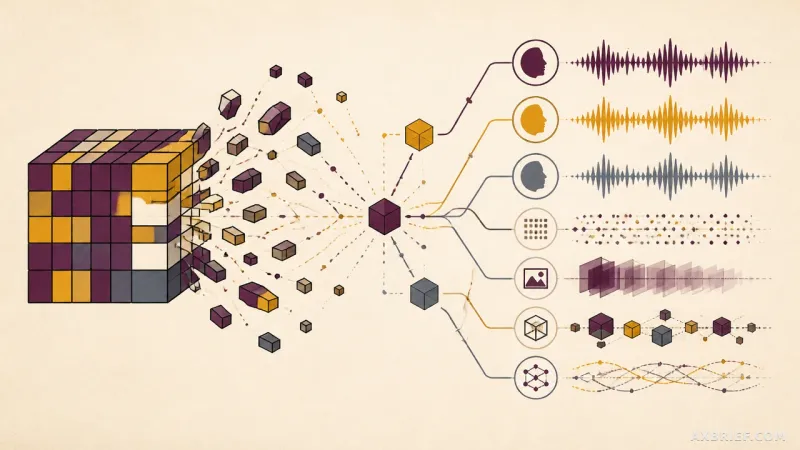
This 10x leap in power efficiency is the critical enabler of their unlimited computing vision. By extracting ten times more output from the same energy footprint, BMS can execute ten times more predictive models or explore vastly larger regions of chemical space without a linear increase in operational costs. However, the hardware is only half of the equation. The most significant structural change is the implementation of a single data plane. Historically, like many pharmaceutical giants, BMS dealt with fragmented data silos resulting from years of mergers and acquisitions. Data and compute resources were tethered to specific physical sites, creating digital borders that hindered collaboration.
By establishing a single data plane, BMS has effectively erased the physical distance between its global research hubs, including sites in Lawrenceville, New Jersey, and San Diego, California. Researchers can now access the integrated AI platform and trigger massive computations regardless of their geographic location. The infrastructure is no longer a destination that a scientist must request access to; it is a transparent utility that exists everywhere across the organization. This shift transforms the system from a collection of powerful machines into a unified organizational brain where knowledge is accumulated and shared in real time.
From CUDA Scripts to Plain English
Raw GPU power is useless if the interface to access it requires a PhD in computer science. The true innovation at BMS lies in the abstraction layer that sits between the scientist and the Rubin GPUs. To achieve this, BMS integrated the NVIDIA BioNeMo Agent Toolkit, a specialized environment for biological AI prediction and model training. This toolkit removes the need for researchers to manually configure complex environments or manage low-level infrastructure settings. It allows them to focus entirely on scientific hypothesis testing and model refinement rather than the logistics of compute allocation.
Managing these tools is handled by NVIDIA Mission Control, an AI-native tooling management system. In a traditional setup, a biologist would need to navigate terminal windows, write complex shell scripts, and troubleshoot CUDA version mismatches to run a protein folding simulation. Under the Mission Control framework, this process is replaced by a natural language interface. Researchers can now request high-level computational tasks, such as predicting a specific protein structure or analyzing molecular binding affinity, using plain English. By lowering the barrier to entry to the level of everyday language, BMS has democratized supercomputing, allowing chemists and biologists to wield the full power of the Rubin GPUs without becoming DevOps engineers.
This accessibility is further amplified by the introduction of agentic workflows. Rather than using AI as a static tool, BMS has deployed a fleet of virtual scientist agents. These agents operate across the single data plane, breaking down the silos between different research programs and departments. They act as an augmented intelligence layer, synthesizing the company's vast internal knowledge base to assist human researchers. A single scientist can now operate with the efficacy of an entire specialized team, using these agents to generate quantitative insights and predictions that inform final scientific decisions. The human provides the intuition and the strategic direction, while the AI provides the numerical evidence and predictive validation.
The Predict First Methodology
The impact of this infrastructure is most visible in the shift from experimental trial-and-error to a Predict First methodology. In traditional drug discovery, a hypothesis is typically followed immediately by physical synthesis and laboratory validation. This cycle is slow and expensive, as many candidates fail only after significant resources have been spent in the wet lab. BMS has inverted this process by placing AI predictive models as a mandatory gate before any physical molecule is synthesized. This is known as experimental gating.
By using AI to predict the success probability of a candidate, BMS only moves molecules into the synthesis phase that have passed a rigorous digital screen. This approach has been particularly effective in expanding the CELMoD (selective protein degraders for cancer) library. These compounds are designed to selectively degrade proteins that cause cancer, and by using AI to expand this library, BMS has identified new targets and potential drug candidates for a broader range of diseases, including hematologic malignancies. The AI does not just increase the number of candidates; it increases the precision of the selection.
This process is supported by multi-parameter optimization, where the AI simultaneously optimizes for efficacy, toxicity, and solubility. Instead of optimizing one variable at a time, the system evaluates the entire property landscape of a molecule. If a candidate does not fit the required physicochemical profile, it is discarded before it ever reaches a lab technician's bench. This ensures that the most expensive and time-consuming resources—human experts and laboratory equipment—are focused exclusively on the candidates with the highest probability of success. The goal is not to increase the volume of experiments, but to increase the hit rate of every single experiment performed.
Erasing the Knowledge Silo
Beyond the molecular level, the SuperDuperPOD serves as a mechanism for organizational learning. In many research environments, the failures of one project are rarely communicated to another, leading to the repetition of the same mistakes across different teams. Because the BMS system integrates data and models across its global sites, a dataset generated in San Diego can be immediately used to train a model in New Jersey. This creates a continuous learning loop where every experiment, clinical result, and partnership outcome contributes to a centralized intelligence.
This integration extends across the entire drug discovery pipeline, from small and large molecule design to clinical application and digital twins. By embedding AI into every node of the process, BMS has ensured that the infrastructure is not just a calculation tool but a neural network connecting the entire research organization. The focus has shifted from owning the largest amount of compute to ensuring that compute is seamlessly woven into the fabric of the scientific workflow.
For AI practitioners, the BMS case study offers a critical lesson: the value of infrastructure is not found in its peak TFLOPS, but in its accessibility. As Erin Davis, Vice President at BMS, emphasizes, the core challenge is not the technology itself, but putting the tools in the hands of the scientists and learning from that interaction. When researchers are bogged down by resource queues or complex configurations, the most powerful GPU in the world becomes a stranded asset. The success of an AI-native lab is measured by how short the distance is between a scientist's question and the system's answer. The future of discovery belongs to those who can make their infrastructure invisible.