For decades, the large-scale code migration has been the software engineer's version of a death march. Whether porting a legacy system to a modern language or refactoring a massive codebase for performance, the process is traditionally a grueling exercise in manual precision, where a single missed edge case in a million lines of code can trigger a production catastrophe. Developers have long hoped for an AI that could handle this, but until now, LLMs have been trapped by their own context windows, losing the thread of complex architectures the moment the project grew beyond a few dozen files. This week, the industry shifted from AI as a coding assistant to AI as a structural architect.
The Architecture of Claude Opus 4.8 and Dynamic Workflows
On May 28, 2026, Anthropic introduced Claude Opus 4.8 alongside a research preview of Dynamic Workflows, a system designed to compress the time required for complex feature implementation and system migrations. The fundamental shift here is the move away from a linear, single-model response pattern toward a JavaScript-based orchestration layer that can deploy and manage hundreds of sub-agents in parallel. To access these capabilities, developers must be running Claude Code v2.1.154 or higher, with the functionality available across the CLI, desktop applications, and VS Code extensions. Access is granted by default for Max and Team plan users, while Enterprise users require administrator authorization.
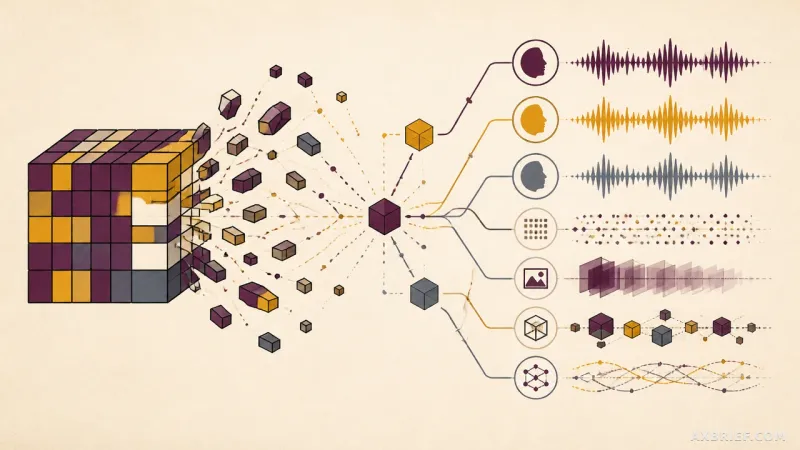
Unlike previous iterations that attempted to cram every detail of a project into the model's context window, Dynamic Workflows treat the execution plan as a separate piece of code. Anthropic utilizes JavaScript scripts to orchestrate sub-agents at scale, storing intermediate results in script variables rather than within the model's active context. This ensures that the final context window contains only the definitive answer, drastically reducing token waste and maintaining session responsiveness. The runtime environment imposes specific guardrails: a maximum of 16 agents can run concurrently, with a total cap of 1,000 agents per single execution run. For security, the orchestration scripts themselves are isolated from the file system and shell; only the individual sub-agents are granted the authority to read, write, or execute commands.
This technical leap is paired with the introduction of Fast mode, a high-speed configuration of Claude Opus designed to lower the barrier to entry for iterative development. Fast mode delivers output token speeds 2.5 times faster than standard settings. More importantly, the pricing for Opus 4.8 in Fast mode is 3 times cheaper than its predecessors, Opus 4.7 and 4.6. Users can toggle this mode within Claude Code using the `/fast` command, which triggers a ↯ icon in the session UI. Unlike standard plan quotas, Fast mode draws from the account's usage credits, creating a cost-effective environment for live debugging and rapid prototyping.
Shifting the Paradigm from Context to Orchestration
To understand why this matters, one must look at the failure point of traditional AI coding: context saturation. When an AI attempts to manage a massive project, it eventually hits a wall where the sheer volume of data leads to information loss or a degradation in reasoning quality. Dynamic Workflows solve this by moving the control plane outside the LLM. When a user provides a prompt, Claude does not simply start writing code; it first analyzes the requirement and writes an execution script. This script acts as the manager, spawning independent agents to tackle sub-tasks in parallel.
This creates a competitive reasoning environment. Agents do not simply produce a result; they enter a loop of mutual critique and verification. One agent proposes a solution, and another agent is tasked with debunking it or finding errors. This adversarial process continues until the agents converge on a verified answer, which is only then integrated into the broader workflow. Because this coordination happens outside the primary chat window, the session remains fluid. If a process is interrupted, it can be resumed from the exact point of failure, with completed agent results cached to prevent redundant computation.
Users can trigger this behavior by including the keyword `workflow` in their prompts or by enabling `ultracode` in the settings. The `ultracode` mode is a powerhouse configuration that combines xhigh reasoning effort with automatic workflow orchestration. This is the same underlying logic that powers the `/deep-research` feature in Claude Code, where the model decomposes a complex research query into parallel tasks, verifies the findings, and synthesizes a final report. By shifting the burden of state management from the model's memory to an external execution script, Anthropic has increased the predictability and scalability of AI-driven engineering.
The 99.8% Benchmark: Porting Bun to Rust
The most striking validation of this system comes from Jarred Sumner, the creator of the Bun JavaScript runtime. In a project that would typically take a team of engineers months of manual labor, Sumner used Dynamic Workflows to port Bun's codebase from Zig to Rust in just 11 days. The result was a staggering 750,000 lines of Rust code that passed 99.8% of the existing test suite.
This was not a simple find-and-replace operation. The workflow first deployed agents to map the complex lifetimes of Rust structures to the existing Zig fields. Once the mapping was established, hundreds of agents were deployed in parallel, each taking responsibility for individual files to ensure behavioral parity. To maintain quality, the system assigned two reviewer agents per file. These reviewers operated in a continuous loop of build, test, and refine, ensuring that every line of generated code met the project's rigorous standards.
This case study highlights the difference between a coding assistant and a coding engine. A standard AI assistant might help a developer write a single function in Rust; Dynamic Workflows allowed a single developer to oversee the structural migration of a massive runtime. By storing intermediate state in variables and utilizing parallel verification, the system avoided the "hallucination drift" that usually occurs when AI handles large codebases. While the Rust port is currently in a pre-production stage, the 99.8% pass rate serves as a definitive proof of concept for AI-led architectural transitions.
Optimizing the Developer Experience and Cost
Beyond the raw power of multi-agent orchestration, the introduction of Fast mode addresses the psychological friction of AI development. The gap between a developer's thought process and the AI's response time is where flow state is often lost. By increasing output speed by 2.5x, Anthropic has aligned the AI's latency more closely with human cognitive speed, making real-time debugging a viable reality rather than a slow exchange of prompts.
From an economic perspective, the 3x cost reduction for Opus 4.8 Fast mode is a strategic move to capture the professional development market. In high-pressure environments where developers must run dozens of iterations to find a specific bug, the cost of high-reasoning models often becomes prohibitive. By slashing the price while maintaining the intelligence of the Opus line, Anthropic makes it feasible to deploy high-performance models for every single commit and test cycle.
Integration is streamlined through existing cloud infrastructure. Organizations can deploy Opus 4.8 via Amazon Bedrock, Vertex AI, or Microsoft Foundry, allowing them to leverage these efficiency gains without overhauling their entire API stack. This ensures that the transition to agentic workflows is a configuration change rather than a migration project in itself. By combining the raw intelligence of Opus 4.8 with the structural efficiency of Dynamic Workflows and the economic accessibility of Fast mode, Anthropic is effectively redefining the role of the software engineer from a writer of code to an orchestrator of AI agents.
This shift suggests a future where the primary skill of a developer is no longer syntax mastery, but the ability to design the orchestration scripts that govern thousands of autonomous agents.